From Humble Tuber to Global Superstar
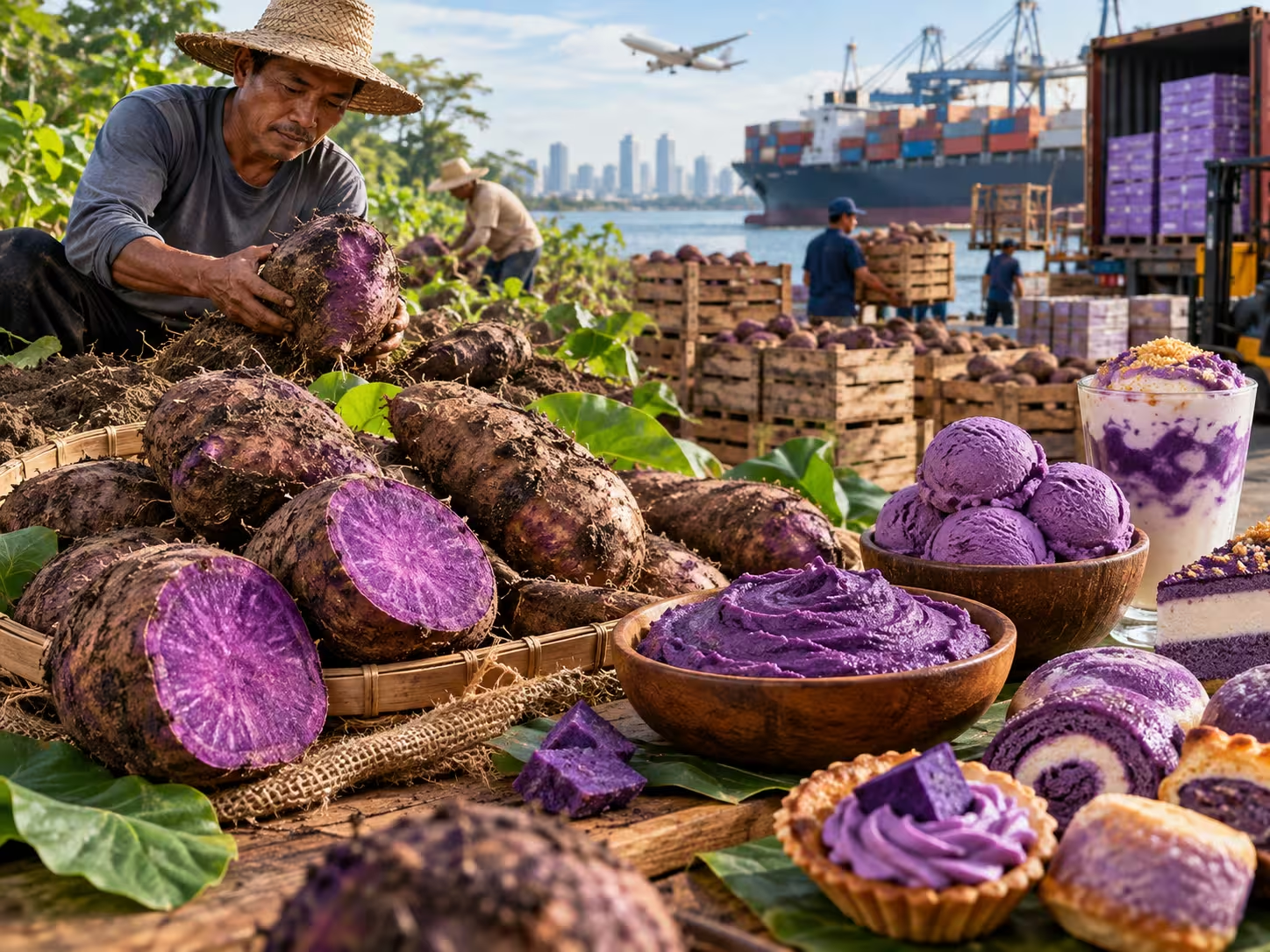
The purple yam, known locally as ube, has long been a beloved ingredient in Filipino kitchens. From the vibrant halaya jam to the purple-hued pastries of Baguio City, ube has been a quiet constant in Philippine cuisine. But in recent years, this humble root crop has undergone a remarkable transformation, evolving from a traditional ingredient into a premium export product commanding attention—and increasingly higher prices—in global markets.
The numbers tell a compelling story. In 2025, Philippine exports of ube and ube-based products surged to $3.06 million, a sharp increase from just $1.4 million in 2024, according to the Department of Trade and Industry (DTI) . The global ube market itself is estimated at USD 520.3 million in 2026 and is projected to reach USD 830.0 million by 2033, growing at a compound annual growth rate of 6.9% .
The “Purple Gold Rush” Phenomenon
Industry observers have dubbed the current ube frenzy a “purple gold rush.” The driver behind this surge is a global consumer shift toward natural food colorants, authentic Asian flavors, and visually striking products that perform well on social media . Ube’s naturally sweet, nutty-vanilla taste and vibrant purple color make it an attractive ingredient for food brands seeking differentiation in a crowded market.
Japan, China, and the United States have emerged as key innovation markets. In Japan, ube appears in chilled and shelf-stable desserts; in China, in cakes, pastries, and hot beverages; and in the U.S., in dairy-based ice cream, frozen yogurt, and cookies . Major global brands, from Starbucks to Costco and Trader Joe’s, have jumped on the bandwagon, incorporating ube into their product lines .
Challenges Beneath the Surface
Yet beneath the purple-hued success lies a more complicated reality. Production has struggled to keep pace with demand. The Philippines produced 13,535 metric tons of ube in 2022, down from over 15,000 metric tons in 2021 . This shortfall has forced the country to import ube from Vietnam just to meet local demand .
The root of the problem lies in how ube is cultivated. Unlike staple crops, ube is often grown on small, seasonal plots by small-scale farmers. The crop grows faster from cut tubers than from seeds, forcing farmers to choose between selling their harvest and reserving portions for replanting . This biological constraint, combined with fragmented supply chains and inconsistent quality standards, has created a structural bottleneck that threatens to undermine the industry’s global ambitions.
Government Steps In
Recognizing the stakes, the Philippine government has moved to impose structure on what has been a loosely organized industry. In June 2026, the Department of Agriculture (DA) and the DTI-Export Marketing Bureau gathered 249 stakeholders to discuss standardization, coordination, and export-ready systems . “Demand is booming but supply and structure are struggling to keep up,” said Agriculture Undersecretary Philip C. Young .
A proposed Steering Committee and Technical Working Group would define the official scope of ube, standardize raw and processed products, and harmonize quality requirements across agencies . The DA has also reserved funding under its proposed 2027 budget to support ube development .
Meanwhile, production is showing signs of recovery. Philippine Statistics Authority data show ube production rose by 17% to a two-year high of 5,658 metric tons in the first half of 2026 . Whether this momentum can be sustained will determine if ube truly becomes the Philippines’ next agricultural export star.
About the Author