A Strategic Shift Toward Local Sourcing
The Philippine culinary landscape is undergoing a quiet but consequential transformation. For decades, restaurants, hotels, and institutional kitchens across the archipelago have relied heavily on imported ingredients—from mushrooms and specialty vegetables to dairy and meat. In 2025 alone, the country imported 6,536 metric tons of fresh mushrooms, accounting for roughly 95 percent of the commercial market. That dependence is now being challenged by a wave of domestic production initiatives aimed at shortening supply chains and keeping value within local economies.
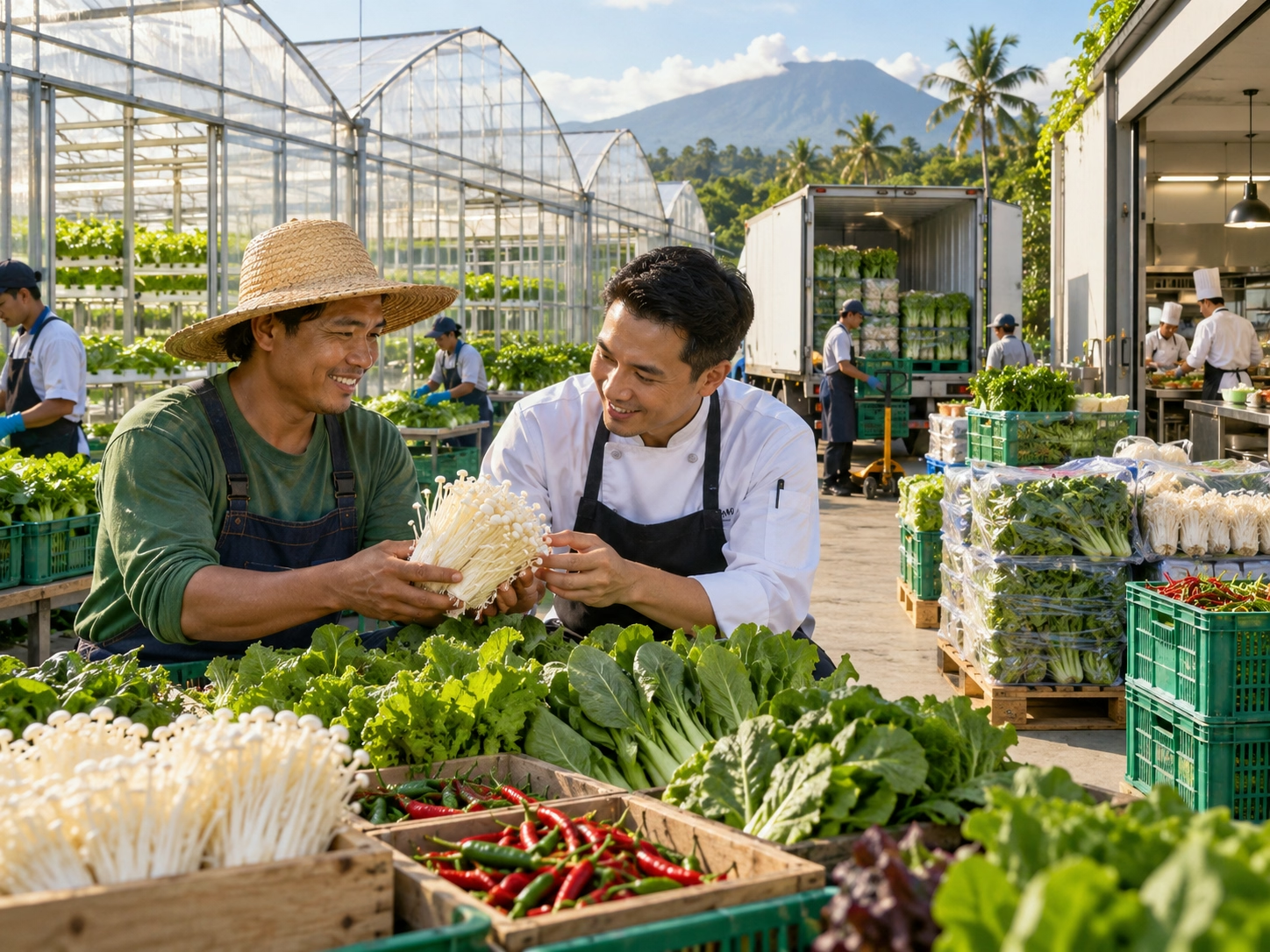
The most visible example arrived in August 2026, when the country’s first commercial enoki mushroom facility opened in Silang, Cavite. The eight-hectare plant, owned by local firm Basic Necessity Inc., integrates controlled-environment cultivation, processing, packing, cold storage, and refrigerated distribution under one roof. Its output is destined for supermarkets, restaurants, hotels, and online grocery platforms—segments that previously had little choice but to source enoki from abroad.
Beyond Mushrooms: A Broader Localization Push
The enoki project is not an isolated case. In January 2026, the Department of Agriculture announced a push to stabilize chili pepper supply after recurring price spikes—driven largely by weather disruptions—squeezed both households and food businesses. The logic is straightforward: when local production is reliable, restaurants can plan menus with greater confidence, and farmers gain access to institutional buyers who offer volume and consistency.
This localization strategy also extends to value-added processing. In Davao City, local businesses are giving added value to agricultural products such as coconut, durian, and cacao, with some operations incorporating farm-to-table and culinary tourism into their models. These ventures signal a broader recognition that the Philippines’ agricultural base can support not just raw commodity exports but also the sophisticated supply chains that modern restaurants demand.
The Economic Logic Behind Import Substitution
For restaurant operators, the calculus is compelling. Imported ingredients carry not only the sticker price but also freight, insurance, tariffs, and the risk of supply disruption. MacroAsia Corp., which operates inflight kitchens and food commissaries, launched a farm-to-kitchen project in Cavite projected to produce up to 100,000 kilograms of leafy vegetables annually. The company explicitly framed the initiative as a way to “reduce procurement costs, mitigate exposure to price volatility and lower logistics-related expenses, while enhancing reliability, quality control and predictability of supply”.
That language—reliability, quality control, predictability—resonates across the food service industry. Chefs and procurement managers have long complained about inconsistent sizing, post-harvest losses, and the difficulty of coordinating with fragmented smallholder farms. Domestic production initiatives that integrate cold storage and standardized handling address these pain points directly.
What This Means for Local Farmers
The shift toward domestic sourcing is not merely a corporate strategy; it is also a rural development agenda. The Cavite enoki facility is expected to directly employ about 50 workers while creating livelihood opportunities for farmers supplying agricultural biomass and other raw materials. Agriculture Undersecretary for High-Value Crops Cheryl Marie Caballero noted that the project transforms materials “that previously had little economic value into productive inputs”.
For farmers, the opportunity lies in moving from spot-market selling—where prices fluctuate wildly and buyers are anonymous—to contract growing arrangements with institutional partners. These arrangements offer steadier income, technical support, and access to markets that were previously out of reach. The challenge, as several industry observers have noted, is ensuring that farmers have the training, certification, and logistical support needed to meet the quality and volume requirements of commercial kitchens.
The Road Ahead
The Philippines’ agribusiness market was estimated at $44.7 billion in 2025 and is projected to reach $56.5 billion by 2034, expanding at an annual rate of 2.55 percent. Much of that growth will depend on whether the country can continue converting import dependence into domestic capability. The enoki facility, the chili program, and the farm-to-kitchen projects are early signals that the answer may be yes—provided that infrastructure, financing, and farmer capacity-building keep pace with ambition.
About the Author