A Suman That Breaks Every Rule
In a country where suman is synonymous with sticky rice, a quiet town in northern Cebu is quietly subverting everything you thought you knew about the beloved Filipino rice cake. Budbod kabog, found almost exclusively in Catmon, is made not from glutinous rice but from kabog—millet seeds that were cultivated in the Visayas long before Spanish colonization reshaped local agriculture and diets.
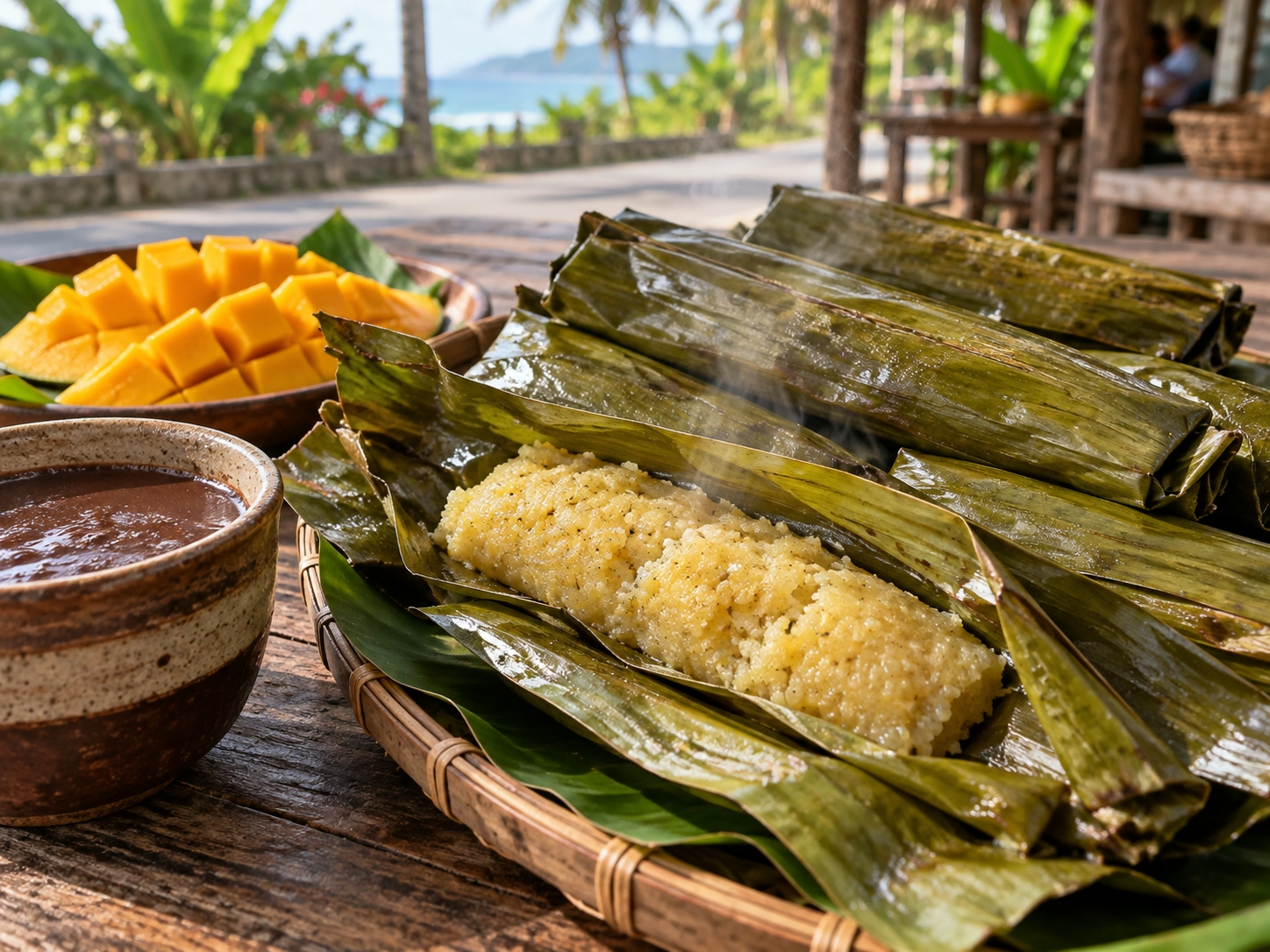
The result is a suman that feels almost ethereal. Light, airy, with a delicate grainy texture and a natural golden hue, it carries the gentle richness of coconut milk and a subtle nutty finish that lingers rather than clings. It is, by many accounts, the rarest suman most Filipinos have never even heard of, let alone tasted.
The Folklore and the Festival
The grain itself is steeped in local mythology. Named after kabog—the bats believed to have first discovered the wild millet—the delicacy carries a narrative that predates colonial influences. Today, its production is painstaking and increasingly rare, relying on traditional methods passed down through generations of Catmon residents.
Every year, the town celebrates this heritage through the Budbod Kabog Festival, where locals reenact the entire process—from planting to wrapping—through dance. It is both a tribute and a quiet act of resistance against the fading of an heirloom food. The festival serves as a reminder that in the Philippines, food is never just sustenance; it is memory, identity, and defiance wrapped in banana leaves.
Why This Matters in 2026
The Philippines is experiencing what the Department of Tourism has called a defining period for culinary tourism, with Filipino travelers increasingly placing food and cultural identity at the center of their journeys. Yet amid this surge, dishes like budbod kabog remain on the margins—known to locals, celebrated in festivals, but largely absent from the national culinary conversation.
Beyond Cebu, sightings of budbod kabog are sporadic at best. You might chance upon it in markets in Dumaguete City or, occasionally, in specialty shops in Metro Manila. But nothing compares to tasting it where it truly belongs—fresh, warm, and unassuming, by the roadside in Catmon. Paired with ripe mangoes or a cup of thick sikwate, it transforms into a breakfast that feels both rustic and indulgent.
The Slow Food Connection
This is not an isolated phenomenon. Across the Philippines, slow food communities are gaining recognition for their commitment to preserving indigenous ingredients and traditional preparation methods. Kalinga, for instance, became the first Slow Food Community in the Philippines, and the movement is spreading. Budbod kabog fits squarely within this ethos: a food that resists industrialization, that demands time and attention, that exists because someone chose to keep making it.
For travelers seeking authentic experiences beyond the algorithm-driven food trails, Catmon offers something increasingly precious: a taste of pre-colonial Philippines, preserved not in museums but in banana-leaf bundles sold by the roadside.
The Road Ahead
The challenge, of course, is sustainability. As the older generation of makers ages and younger Filipinos migrate to cities, the knowledge required to produce budbod kabog risks disappearing. The festival helps, but festivals alone cannot sustain a food tradition. What is needed is a broader recognition—from tourism boards, from chefs, from consumers—that dishes like this are not merely curiosities but living heritage.
In a country rich with culinary traditions, budbod kabog stands as a reminder: not all treasures are loud. Some are wrapped in banana leaves, waiting patiently to be rediscovered.
About the Author