The Numbers Behind the Bean
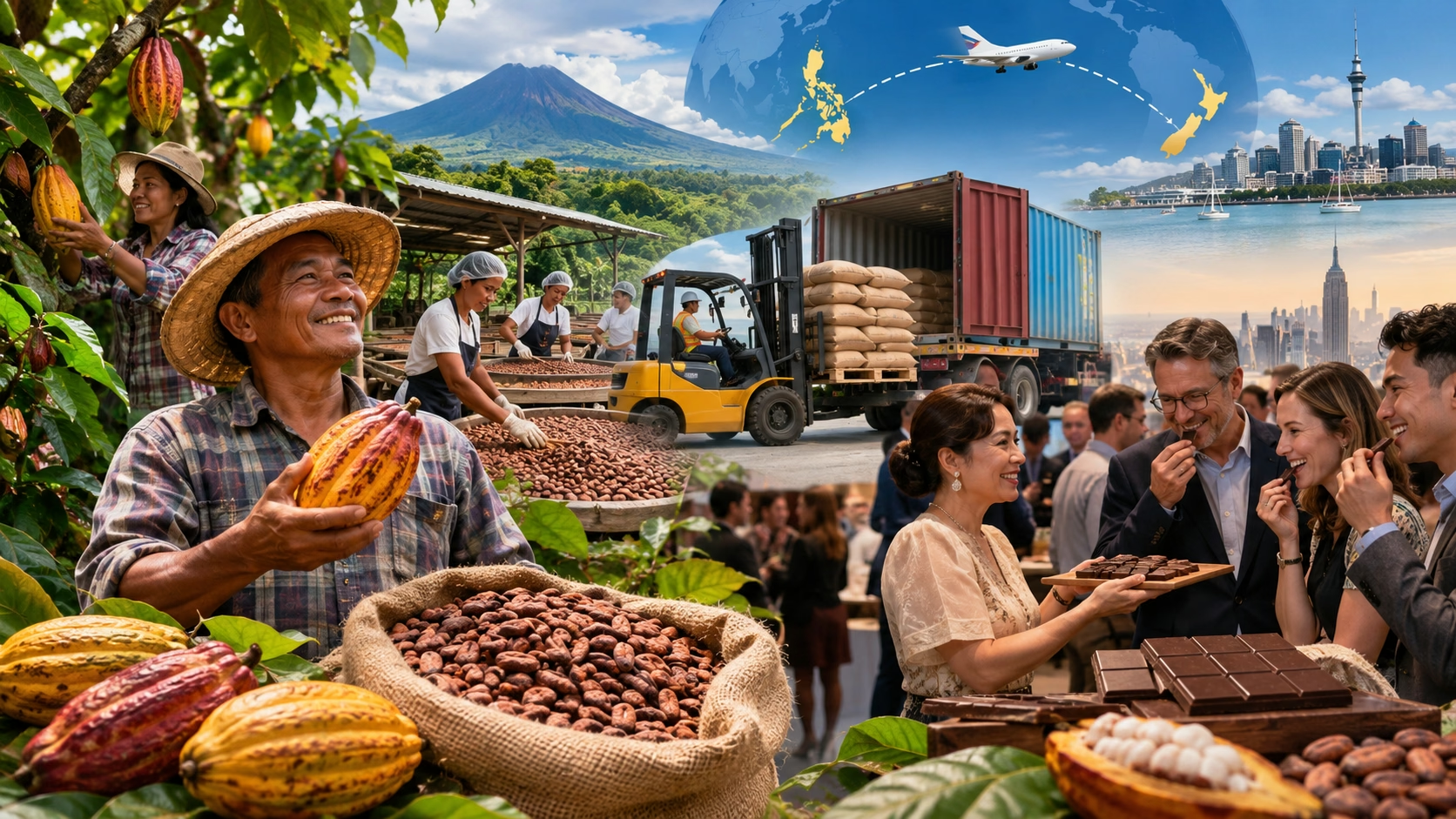
The Philippines’ cacao story is no longer a niche agricultural anecdote; it is a robust economic narrative anchored in the fertile soils of the Davao Region. Recent data underscores a formidable reality: Davao is not just a participant in the cacao industry but its undisputed powerhouse. In 2024, the region produced 7,807 metric tons (MT) of cacao, accounting for a staggering 72 percent of the nation’s total output. This dominance is further solidified by the region’s 19,969 hectares of harvested area, representing 60 percent of the national total. Such volume provides the essential raw material needed to sustain a thriving bean-to-bar sector and a credible single-origin proposition for international buyers.
From Volume to Value: The Premium Pivot
While volume is crucial, the real revolution lies in the strategic shift toward premium, value-added products. The ambition is clear: to have 80 percent of cacao production follow traceable, high-quality fermentation protocols by 2030. This is not merely an agricultural goal but an economic imperative. By focusing on fermentation and post-harvest practices, the industry is unlocking the unique terroir of Davao—flavor profiles that command higher prices in the global fine chocolate market. The 2025 national production of approximately 11,868 metric tons, with Davao contributing over 90 percent, sets a strong foundation for this value-driven future.
The Roadmap to Global Competitiveness
The pathway to premium markets is paved with strategic investments and institutional support. The Philippine Cacao Roadmap (2026–2030) and initiatives like the Philippine Rural Development Project (PRDP) are addressing historical bottlenecks head-on. These programs focus on establishing community-managed fermentation and drying centers, providing farmer field schools, and developing a regional cacao hub. The goal is to standardize quality and ensure that every bean leaving Davao meets the rigorous standards of international chocolatiers. This infrastructural backbone is what transforms raw potential into a reliable, export-ready commodity. For stakeholders, this represents a compelling case: the Philippines is not just selling beans; it is building a traceable, high-quality supply chain that mitigates risk and promises consistency.
About the Author