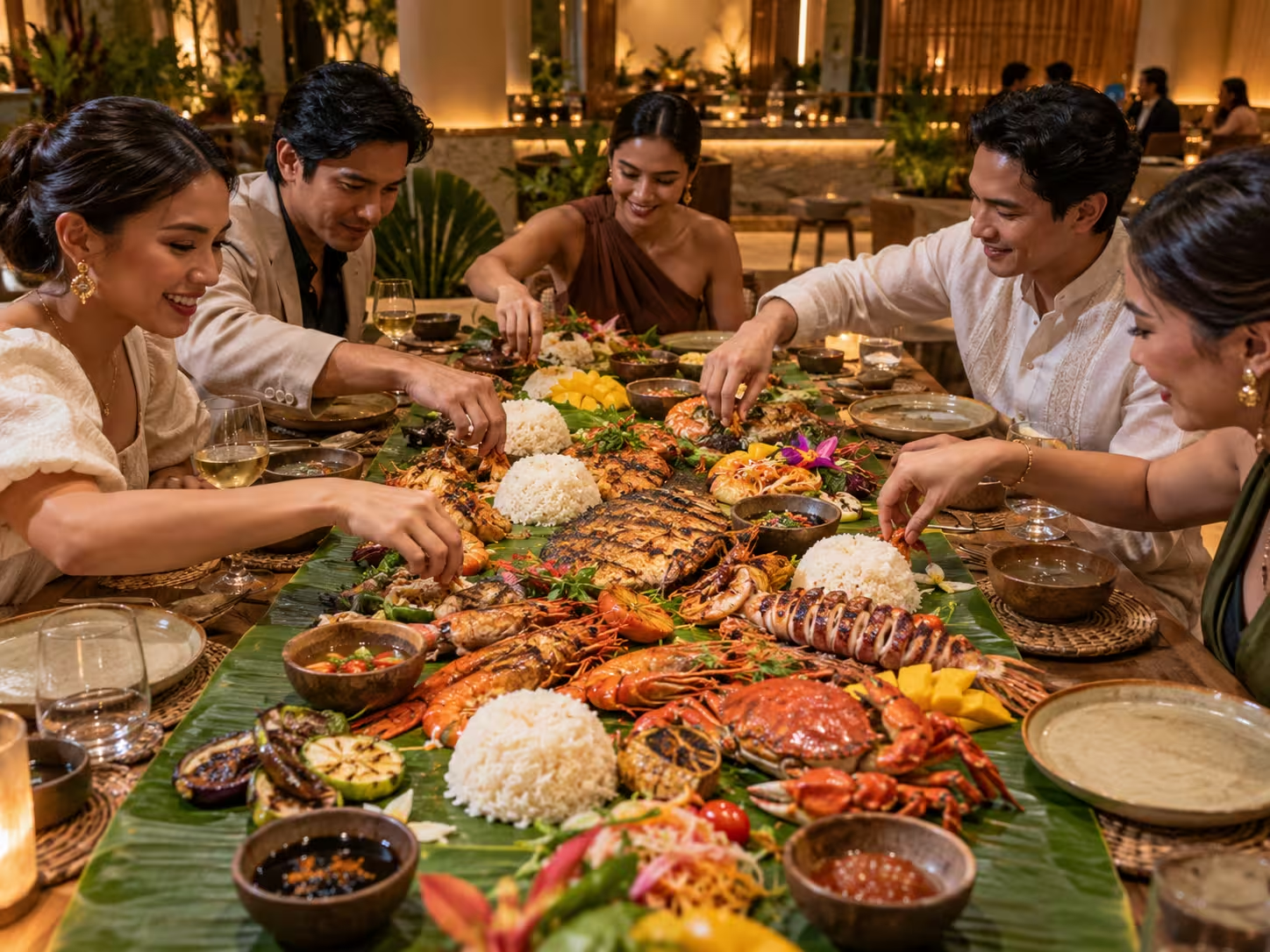
The image of a kamayan feast—a lavish spread of grilled seafood, meats, and rice laid out on banana leaves, eaten with bare hands—has long been associated with family reunions, provincial fiestas, and casual beach gatherings. Yet a quiet revolution is underway in the Philippines’ fine-dining capital. The modern kamayan is no longer confined to the home or the roadside eatery; it has become a canvas for culinary innovation, commanding tasting-menu prices and international acclaim.
The Rise of the Elevated Boodle
At the forefront of this movement is Toyo Eatery in Makati, named Restaurant of the Year at the 2026 Tatler Best Philippines awards. For a decade, chef-patron Jordy Navarra has treated Filipino cuisine not as a trend but as a lifelong inquiry, and his kamayan feasting menu is a testament to that philosophy. Unlike the chaotic abundance of a traditional boodle fight, Toyo’s version is a carefully composed sequence—seafood, pork, rice, and dessert presented on banana leaves, with guests invited to forgo cutlery entirely. The experience is priced at ₱3,900 per person, a figure that underscores how far the communal feast has traveled from its humble origins.
What makes this modern kamayan resonate is its duality. It preserves the tactile, unpretentious joy of eating with one’s hands—what Navarra describes as a return to basics “where it’s no longer about what is trendy or what looks good on social media”—while simultaneously deploying the precision of a tasting menu. The result is a format that feels both deeply rooted and decidedly contemporary.
Beyond Toyo: A Broader Shift
Toyo is not an isolated case. In Quezon City, Gubat (“forest”) offers a kamayan experience set in a lush open-air garden, where diners roll up their sleeves and dig into grilled and fried dishes served on individual banana leaves with adobo rice and pako salad. The ambiance is deliberately rustic, yet the execution is polished—a signal that the modern kamayan thrives on contrast.
This shift is also being recognized globally. Toyo Eatery won the Gin Mare Art of Hospitality Award at Asia’s 50 Best Restaurants 2025, with judges specifically citing its kamayan menu as a hallmark of Filipino conviviality. The award lends institutional weight to the idea that communal eating, far from being a relic, is a viable vehicle for world-class hospitality.
Why Fine Dining Is Embracing the Feast
The appeal is multifaceted. For restaurateurs, kamayan offers a high-margin, low-plating-cost format that encourages group bookings. For diners, it provides an experiential counterpoint to the formality of European fine dining—a way to engage physically with food, to share, and to connect. And for the broader Philippine culinary identity, it represents a reclamation: a deliberate elevation of indigenous practice after centuries of colonial influence that prioritized utensils and individual plating.
As the country’s food tourism sector projects a compound annual growth rate of 14.5%, expanding from $950 million in 2026 toward $3.69 billion by 2036, the fine-dining kamayan is poised to become a flagship export. It is no longer a question of whether the boodle fight can be elegant—it is already happening, one banana leaf at a time.
About the Author