From Local Staple to International Sensation
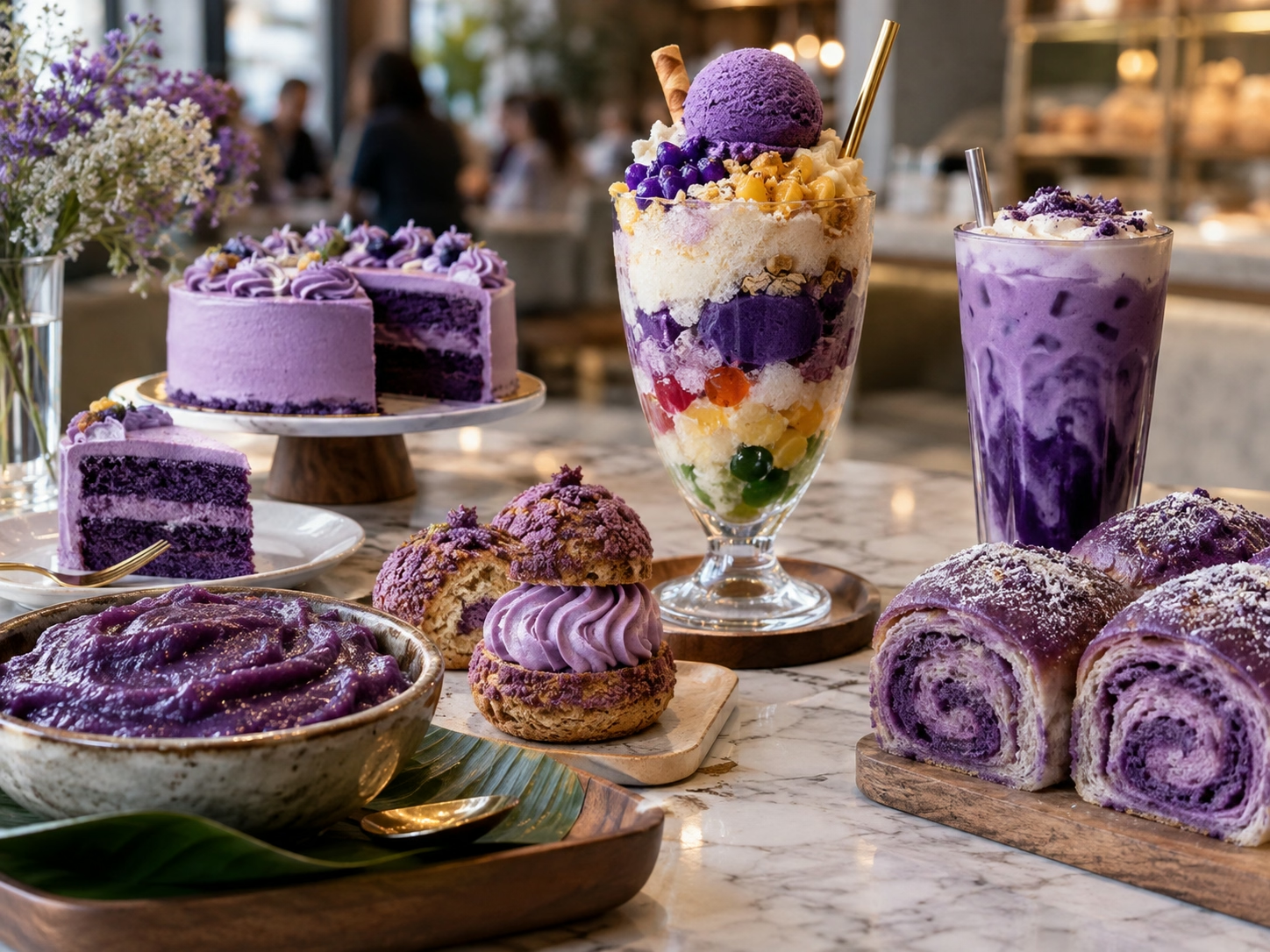
The deep purple yam known as ube has long been a cornerstone of Filipino desserts. From the layered chaos of halo-halo to the velvety smoothness of ube halaya, this vibrant ingredient has been part of Philippine kitchens for generations. But in 2026, ube is no longer just a Filipino favorite—it has become a global phenomenon that is reshaping dessert menus from New York to London to Tokyo.
According to trend monitoring data, interest in Filipino flavors and concepts in bakery and patisserie is up by 16% compared to last year, with online mentions of ube specifically growing by 38%. This surge is not a fleeting moment. It represents a fundamental shift in how the world perceives Filipino cuisine.
The Data Behind the Purple Craze
The numbers tell a compelling story. Ube exports from the Philippines reached $3.06 million in 2025, a 20.4% increase from the previous year, according to the Department of Trade and Industry. The United States remains the largest buyer, importing approximately 956,000 kilograms worth $1.5 million—double the previous year’s volume.
Industry analysts report that ube has grown by more than 200% on US menus since 2022. Major American brands have taken notice. King’s Hawaiian launched Ube Coconut Sweet Rolls nationwide in April 2026, following an online release that sold out in minutes the previous year. Starbucks added an Iced Ube Coconut Macchiato to its spring US menu, while Trader Joe’s continued its seasonal “Ube Season” with products ranging from mochi pancake mix to cookies and spreads.
Why Ube Resonates with Global Consumers
The appeal of ube extends beyond its striking visual presence. Its subtle sweetness—often described as reminiscent of vanilla with hints of pistachio—makes it approachable for international palates. The color itself is a powerful marketing asset in a social media-driven food landscape where visual appeal drives engagement.
Taste Tomorrow, a global food trend intelligence platform, identifies local authenticity as a major driver of this growth. Consumers are increasingly seeking products connected to communities and traditions, a trend projected to grow by 29% this year. Ube embodies this perfectly: it is deeply rooted in Filipino heritage yet adaptable to modern dessert formats.
Filipino bakers and patissiers abroad have played a central role in this movement. Often of Filipino descent, they are celebrating their culinary heritage through traditional flavors and rich storytelling, turning products into cultural experiences. The much-hyped ube choux at London-based restaurant Donia, filled with ube ice cream, ube praliné and coconut chantilly, became a viral sensation that helped propel Filipino flavors into the global spotlight.
Beyond Ube: A Broader Filipino Dessert Renaissance
While ube may be the entry point, Filipino cuisine offers a much broader palette. Ingredients like pandan, often described as the Asian vanilla, coconut in all its forms, calamansi, and cassava are increasingly inspiring bakers worldwide. The fusion flavor trend is another significant driver, with 63% of consumers now saying they want to try unusual taste combinations.
For Filipino dessert enthusiasts and industry watchers, the message is clear: this is not a passing trend. Ube has transitioned from a niche ethnic ingredient to a globally recognized flavor profile, and the momentum shows no signs of slowing down.
About the Author