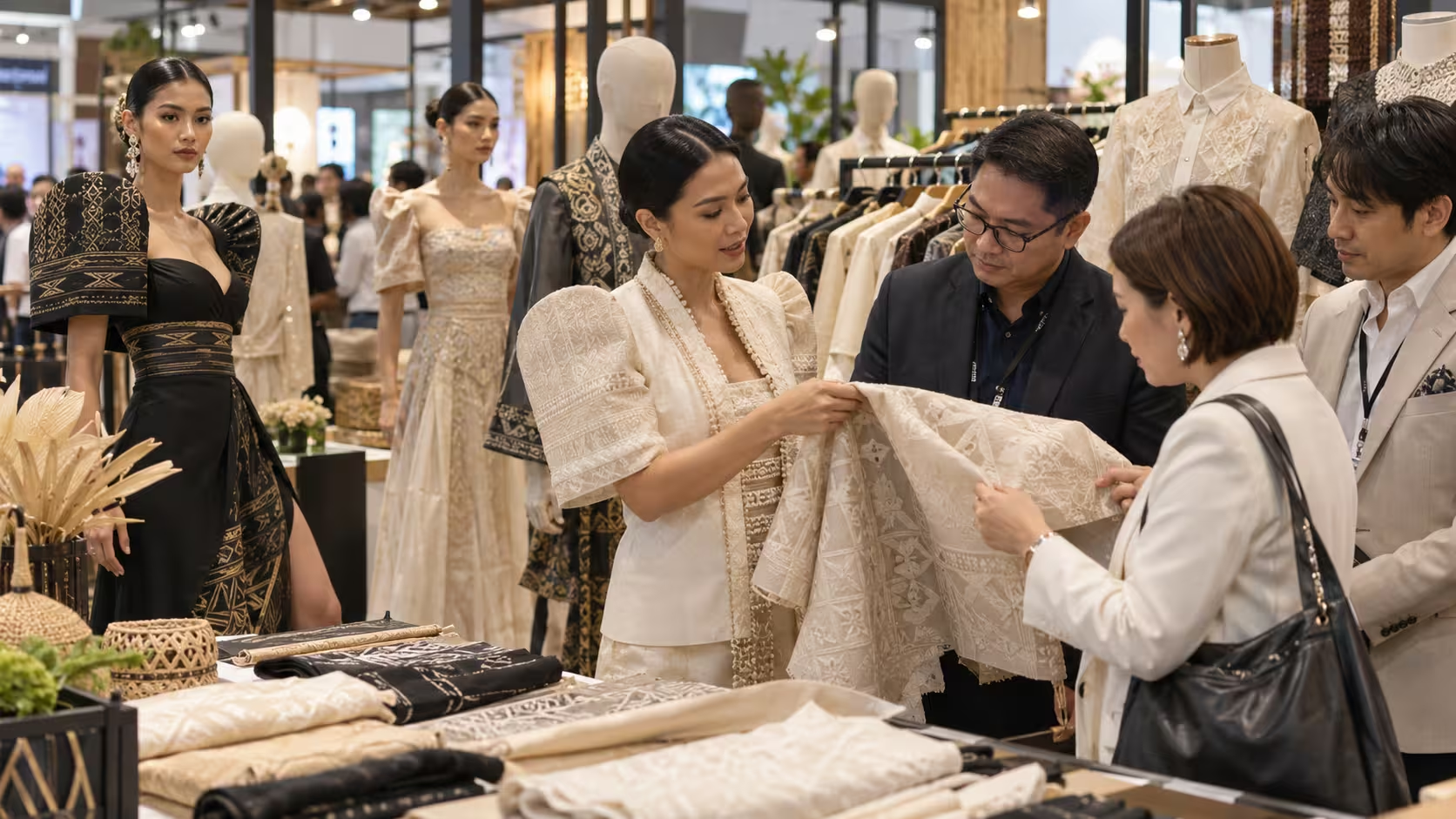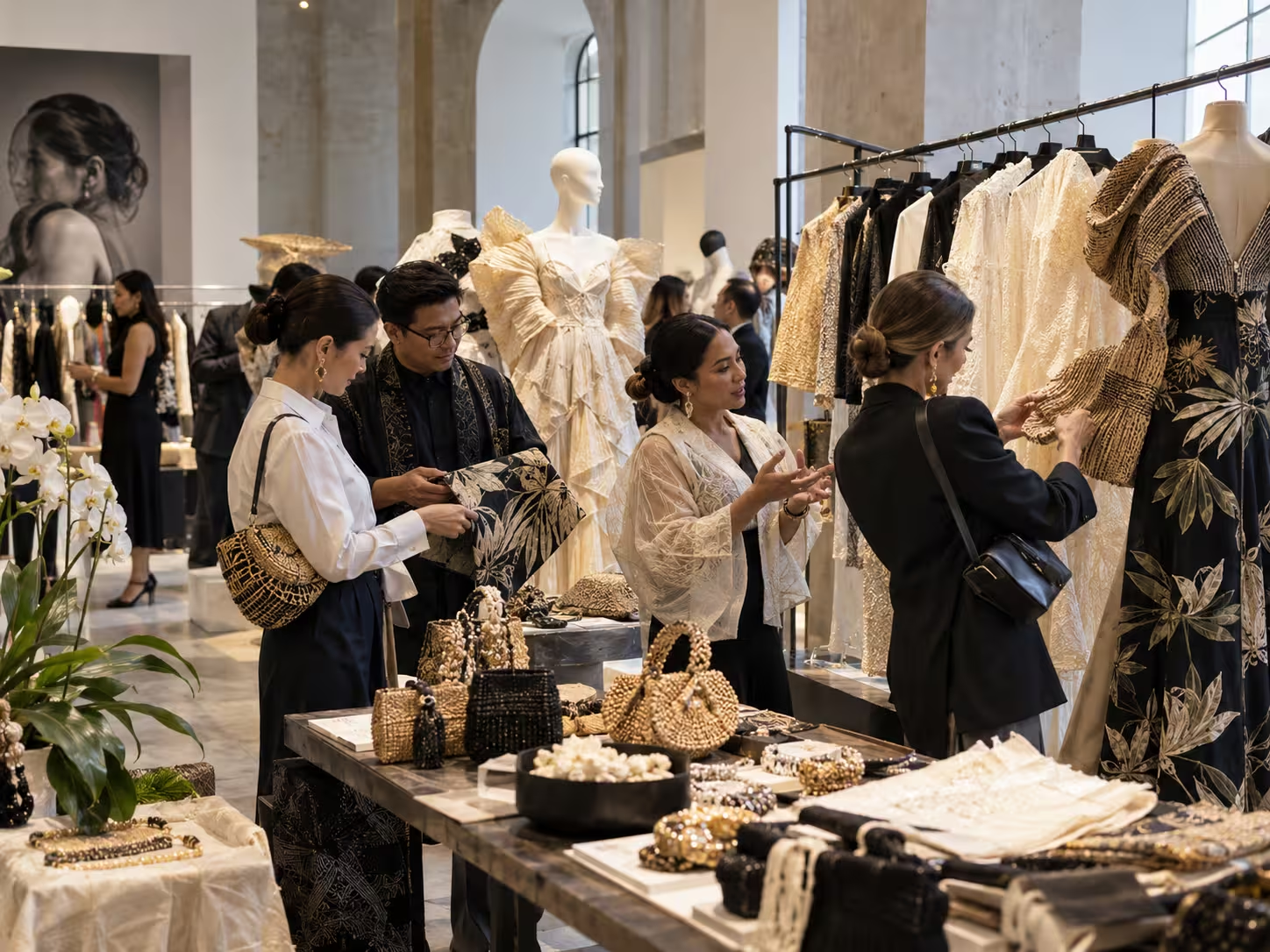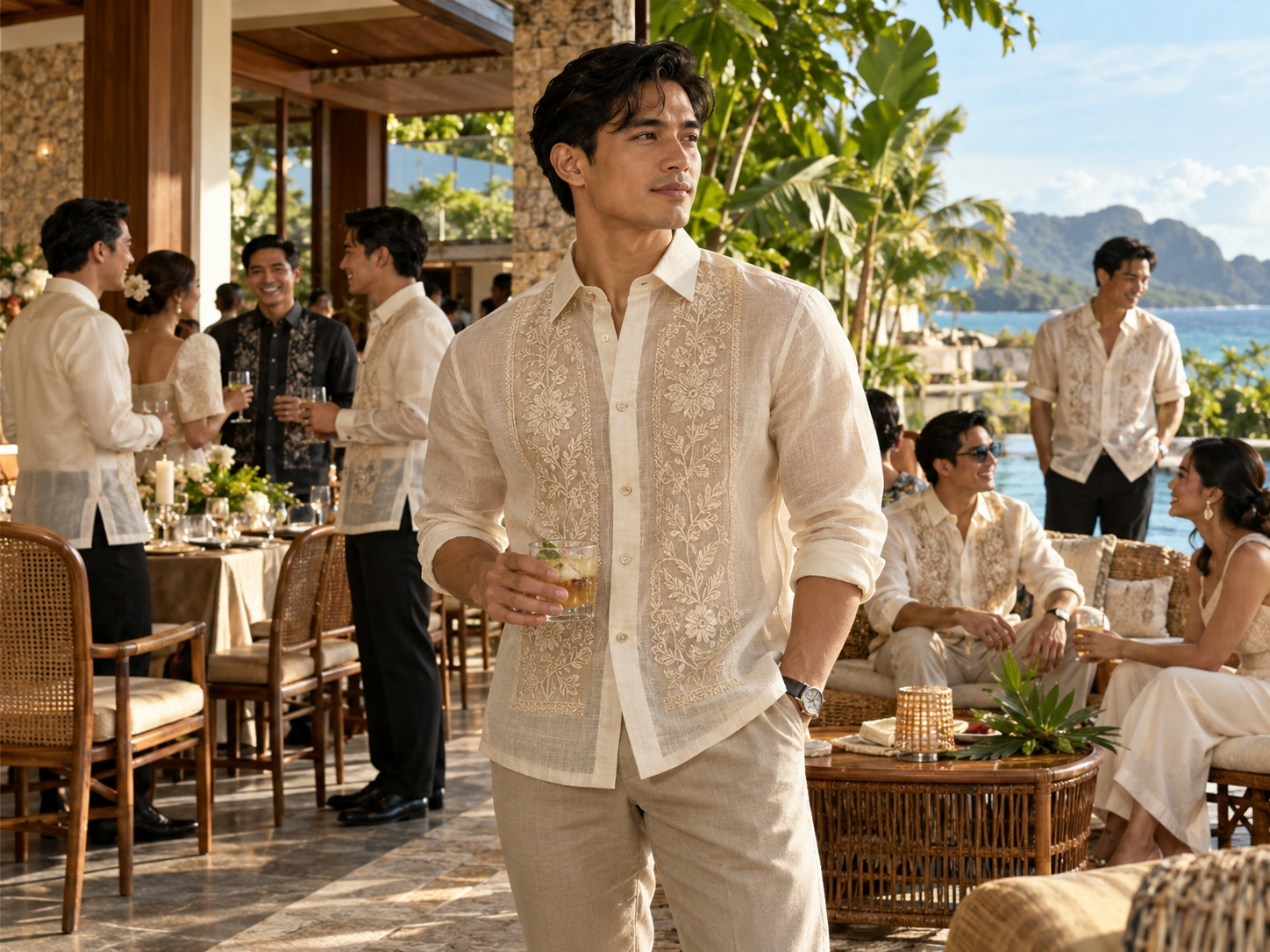
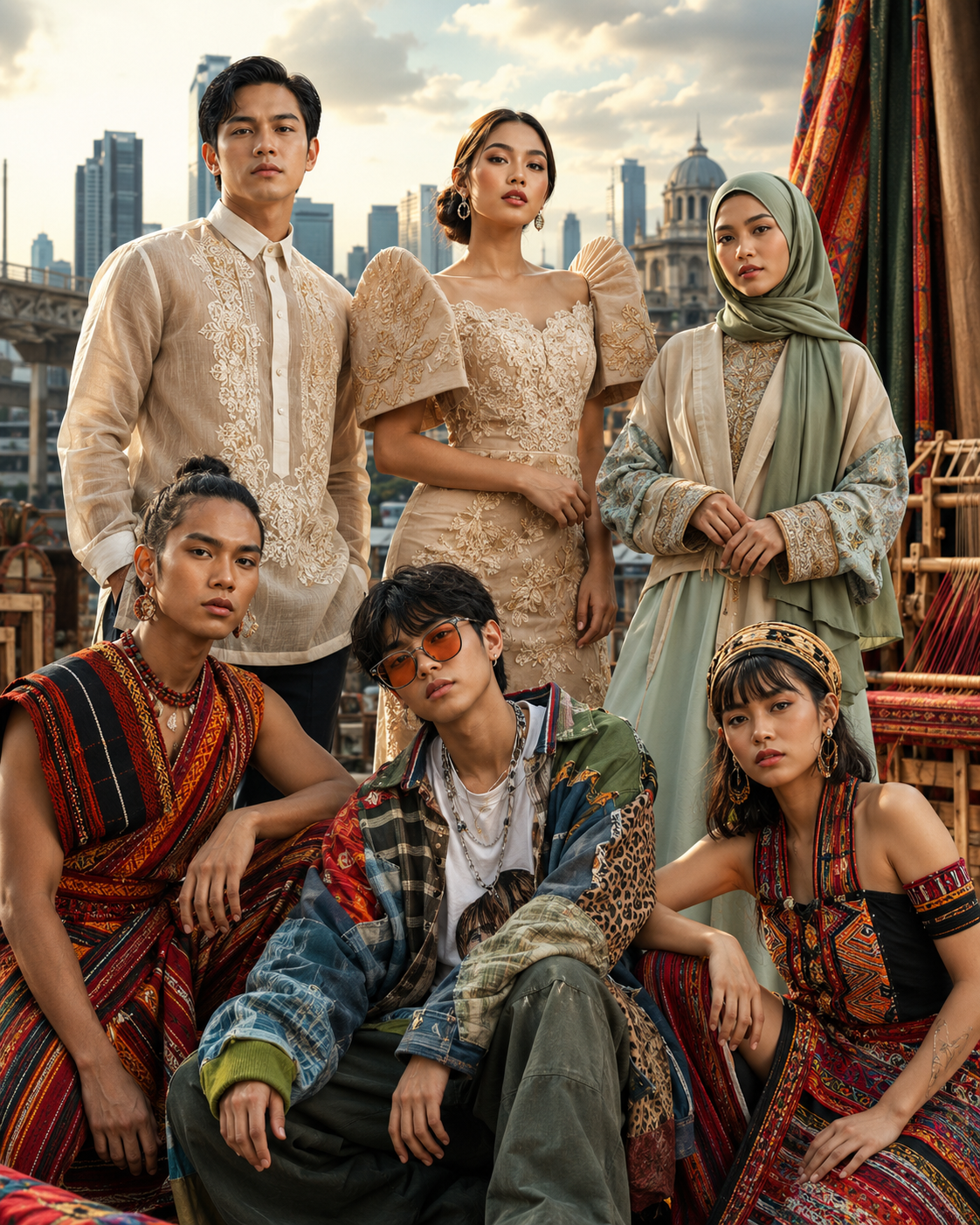
Fashion in the Philippines is more than a matter of personal style. It is a visible expression of social identity, cultural memory, economic position, and historical experience. Because the Philippines has been shaped by indigenous traditions, Spanish colonization, American influence, Asian trade, and global media, Filipino fashion reflects a layered society where clothing often communicates belonging, aspiration, resistance, and pride.
Traditional Filipino garments remain important symbols of national and social identity. The barong Tagalog, often worn by men during formal events, is one of the most recognizable examples. Usually made from piña, jusi, or other lightweight fabrics, it reflects both elegance and practicality in a tropical country. It is associated with dignity, professionalism, and national pride. For women, the terno and baro’t saya carry similar cultural meaning. The butterfly sleeves of the terno have become a powerful visual marker of Filipino femininity, refinement, and heritage. These garments are commonly seen during state occasions, weddings, cultural celebrations, and formal ceremonies, showing how fashion connects individuals to a wider national story.
Fashion also reveals class identity in the Philippines. In urban centers such as Manila, Cebu, and Davao, clothing can signal economic status and lifestyle. Designer labels, imported brands, and carefully styled outfits are often associated with wealth, cosmopolitan taste, and social mobility. Shopping malls, which are central spaces in Filipino urban life, have helped make fashion a public display of identity. For many middle-class Filipinos, dressing well is not only about appearance but also about respectability and ambition. Clothes can project professionalism, success, and modernity.
At the same time, everyday fashion among working-class communities reflects practicality, creativity, and adaptation. Ukay-ukay, or secondhand clothing markets, play a major role in Filipino fashion culture. These markets allow people to access stylish, affordable, and sometimes branded clothing. Ukay-ukay fashion challenges the idea that identity must be tied to expensive consumption. It shows how Filipinos create personal style through resourcefulness and imagination.
Regional identity is another important aspect of Filipino fashion. The Philippines is home to many ethnolinguistic groups, each with distinct textile traditions. Indigenous fabrics such as T’nalak from the T’boli, Inabel from Ilocos, Yakan weaves from Basilan, and textiles from Mindanao communities carry deep cultural meaning. Patterns, colors, and weaving techniques often represent ancestry, spirituality, and community history. When these textiles are worn or incorporated into modern designs, they become statements of cultural pride.
Younger generations are also reshaping the relationship between fashion and identity. Filipino youth often combine streetwear, K-pop-inspired looks, Western trends, thrifted items, and local designs. Social media platforms have made fashion more visible and experimental. Through clothing, young Filipinos express gender identity, political beliefs, creativity, and membership in subcultures.
Fashion in the Philippines is therefore not simply decorative. It is a social language. It communicates where a person comes from, what they value, how they see themselves, and how they want to be seen by others. From traditional garments to thrifted streetwear, Filipino fashion continues to reflect the country’s complex identity: local and global, historical and modern, practical and expressive.
About the Author