A Fashion Movement Rooted in Identity
Hijab fashion in the Philippines is developing into a distinctive style movement shaped by religion, regional culture, urban life, and digital media. Unlike modest fashion scenes in Indonesia, Malaysia, or the Gulf states, the Philippine market grows within a predominantly Christian country where Muslim communities have their strongest historical presence in Mindanao, the Sulu Archipelago, and parts of major cities.
This demographic context is important. According to the Philippine Statistics Authority, the 2020 Census of Population and Housing recorded nearly seven million people affiliated with Islam. That figure is census-era data rather than a 2026 population estimate, but it highlights the size of the community supporting demand for culturally relevant clothing, including hijabs, abayas, long dresses, modest office wear, and contemporary streetwear.
For many Filipino Muslim women, the hijab is not simply a fashion accessory. It represents faith, personal identity, family tradition, and increasingly, creative self-expression.
From Mindanao Heritage to Contemporary Wardrobes
Traditional Influences Are Becoming More Visible
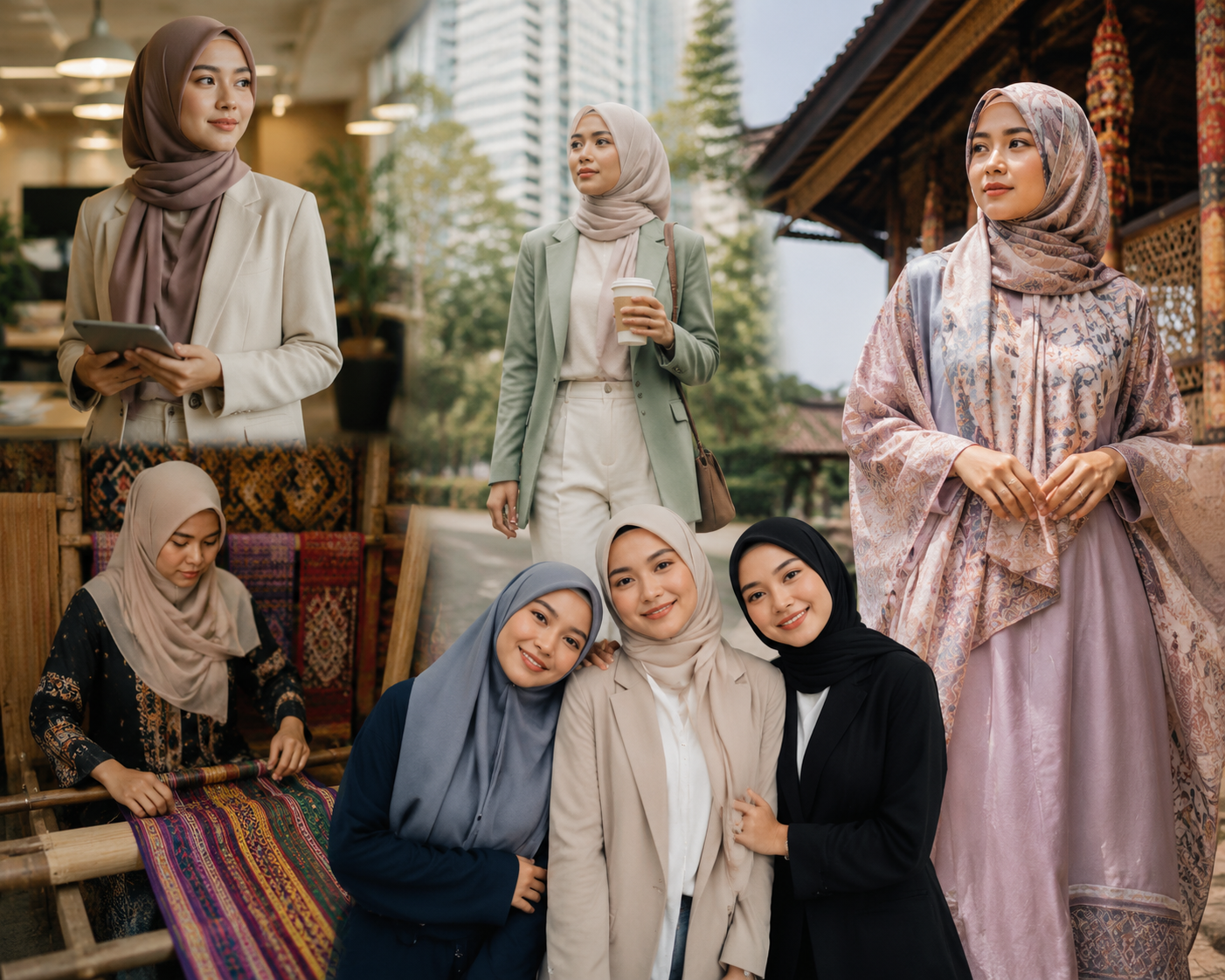
The most interesting development in Philippine hijab fashion is the interaction between modern silhouettes and local cultural identity. Designers and independent sellers increasingly draw inspiration from the visual traditions associated with Maranao, Maguindanaon, Tausug, and Yakan communities.
Rich colors, geometric patterns, detailed weaving, and decorative motifs can influence scarves, outerwear, dresses, and accessories. Instead of reproducing ceremonial clothing directly, contemporary fashion often translates these visual elements into pieces suitable for university, office work, travel, celebrations, and everyday urban life.
This creates a style that feels distinctly Filipino Muslim rather than imported entirely from abroad.
At the same time, global modest fashion continues to influence local tastes. Turkish layering, Malaysian shawl styling, Indonesian printed scarves, Korean-inspired color palettes, and Middle Eastern abaya silhouettes can all be seen in the wider fashion environment. Filipino consumers often reinterpret these influences according to the tropical climate, local budgets, and daily routines.
Why Manila and Mindanao Produce Different Hijab Looks
In Metro Manila, hijab fashion often reflects the demands of professional and metropolitan life. Neutral scarves, structured blazers, loose trousers, long skirts, and minimalist dresses are practical choices for workplaces and universities.
In Mindanao, fashion can be more closely connected to community celebrations, religious occasions, weddings, and regional identity. Brighter colors, embroidered details, elegant fabrics, and culturally influenced accessories may play a stronger role.
The contrast is not absolute, but it demonstrates how geography affects style.
Social Media Is Accelerating the Trend
Instagram, TikTok, Facebook, and online marketplaces have made modest fashion more visible across the country. A small seller in Mindanao can now reach customers in Cebu or Manila, while young women can discover styling techniques from creators across Southeast Asia.
The most successful content tends to be practical rather than purely aspirational. Tutorials showing heat-friendly fabrics, secure scarf styles for commuting, modest university outfits, and professional clothing are particularly relevant to Filipino consumers.
This digital environment is also giving Muslim women greater control over how their identities are represented. Instead of being portrayed only through religious or political narratives, they can present themselves as students, entrepreneurs, designers, athletes, professionals, and creators with diverse approaches to modest dressing.
Philippine hijab fashion is therefore becoming more than a niche clothing category. It is emerging as a visible cultural conversation about faith, regional heritage, modern womanhood, and belonging in a diverse nation.
About the Author