
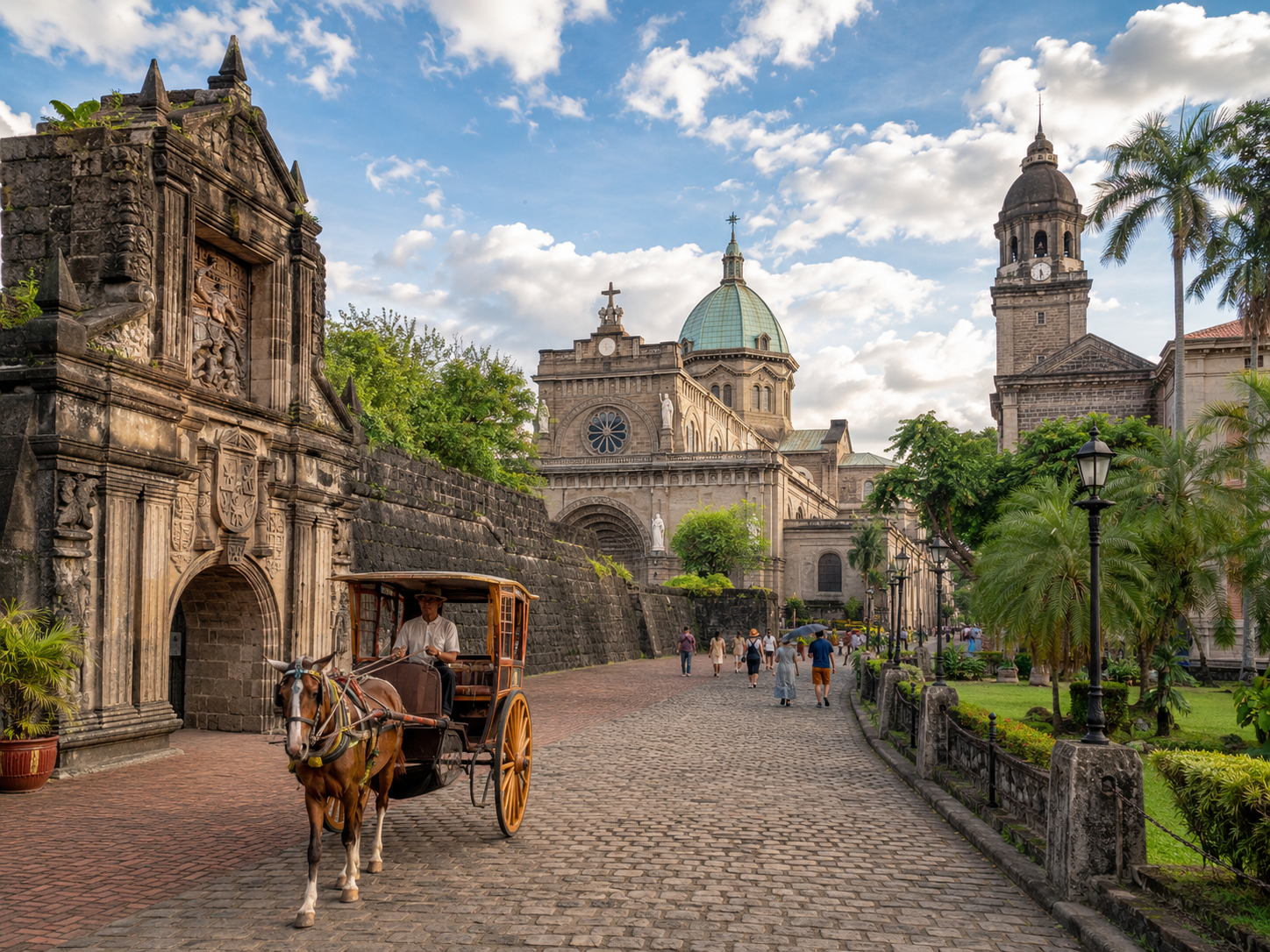
Nestled within the bustling capital of the Philippines lies Intramuros, the historic walled city that serves as a testament to Manila’s colonial past. Known as the “Walled City,” Intramuros has been the center of Spanish colonial rule since the late 16th century. Its cobblestone streets, centuries-old churches, and fortified walls transport visitors back in time, making it an essential destination for history enthusiasts.
The origin of Intramuros dates back to 1571 when Spanish conquistadors, led by Miguel López de Legazpi, established Manila as the colonial capital. The walls, constructed from adobe stones, were built to protect the city from foreign invaders and local uprisings. Today, the remaining fortifications, including Fort Santiago, are among the most prominent historical landmarks. Fort Santiago, a citadel within Intramuros, served both as a military fortress and a prison during World War II. Visitors can explore its dungeons, halls, and the Rizal Shrine, dedicated to José Rizal, the Philippine national hero who was imprisoned here before his execution in 1896.
Walking through Intramuros, one can observe the architectural influences from Spain, particularly in structures like San Agustin Church. Designated as a UNESCO World Heritage Site, San Agustin Church is the oldest stone church in the Philippines. Its baroque architecture, intricate trompe-l’oeil murals, and ornate altarpieces provide insight into the artistry and religious devotion of the colonial era. Another notable religious landmark is Manila Cathedral, rebuilt multiple times due to earthquakes and wars. Its neo-Romanesque design and stained-glass windows highlight Manila’s resilience and enduring faith.
Intramuros is not just about historic buildings—it also serves as a hub for cultural activities. The streets are lined with museums, galleries, and souvenir shops offering traditional Filipino crafts. The Casa Manila Museum recreates colonial-era lifestyle with period furniture, décor, and artifacts, giving visitors a glimpse into how the elite lived during Spanish rule. Guided walking tours, kalesa (horse-drawn carriage) rides, and cultural performances offer immersive experiences that make the history of Intramuros accessible and engaging.
Moreover, Intramuros plays a crucial role in understanding the broader historical context of the Philippines. Its fortifications, churches, and civic buildings reflect centuries of political, social, and religious evolution. From resisting foreign invasions to becoming a center of education and governance, the stories embedded in its walls narrate the country’s struggles and triumphs.
Visiting Intramuros is more than a sightseeing activity; it is an educational journey. Whether strolling along Plaza de Roma, admiring the restored Spanish houses, or attending a cultural workshop, every corner offers a connection to the Philippines’ colonial past. For travelers seeking to combine history, culture, and architecture, Intramuros remains an unparalleled destination that captures the essence of Manila’s heritage.
About the Author