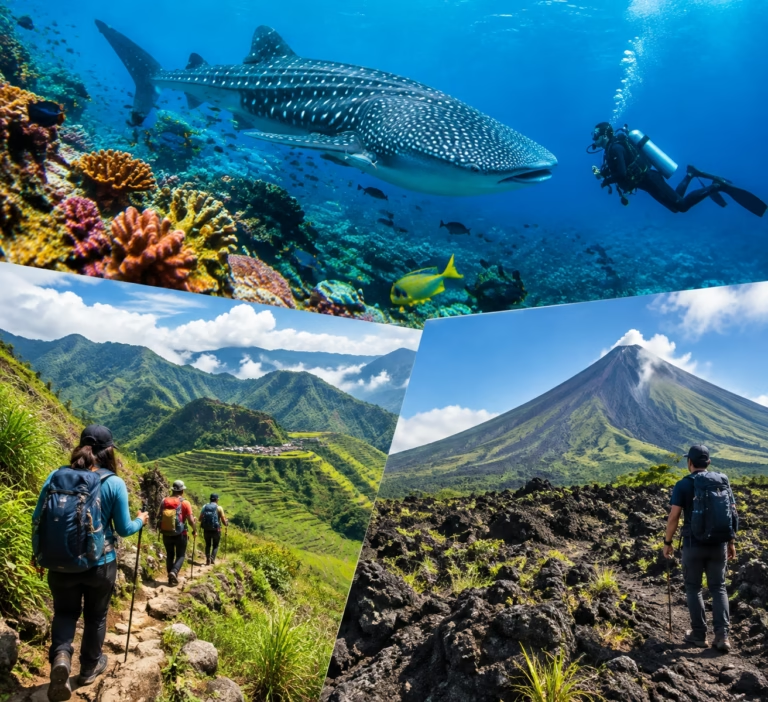
The Philippines is no longer promoting only postcard-perfect beaches. Across the archipelago, ecotourism has developed into a practical conservation strategy that connects visitor spending with reef protection, forest restoration, ranger patrols, environmental education, and community income.
This model is increasingly important because the Philippines is home to exceptional biodiversity that remains vulnerable to climate change, illegal fishing, deforestation, plastic pollution, habitat loss, and poorly managed tourism development.
One leading example is Tubbataha Reefs Natural Park in the Sulu Sea. This UNESCO World Heritage Site is known for dramatic coral walls, sea turtles, reef sharks, rays, seabirds, and other pelagic species. UNESCO identifies Tubbataha as one of the Philippines’ most significant marine ecosystems. Further information is available at https://whc.unesco.org/en/list/653/.
Why Ecotourism Works in the Philippines
Ecotourism becomes effective when access is controlled, local people receive direct economic benefits, and nature is not treated merely as a disposable tourism backdrop.
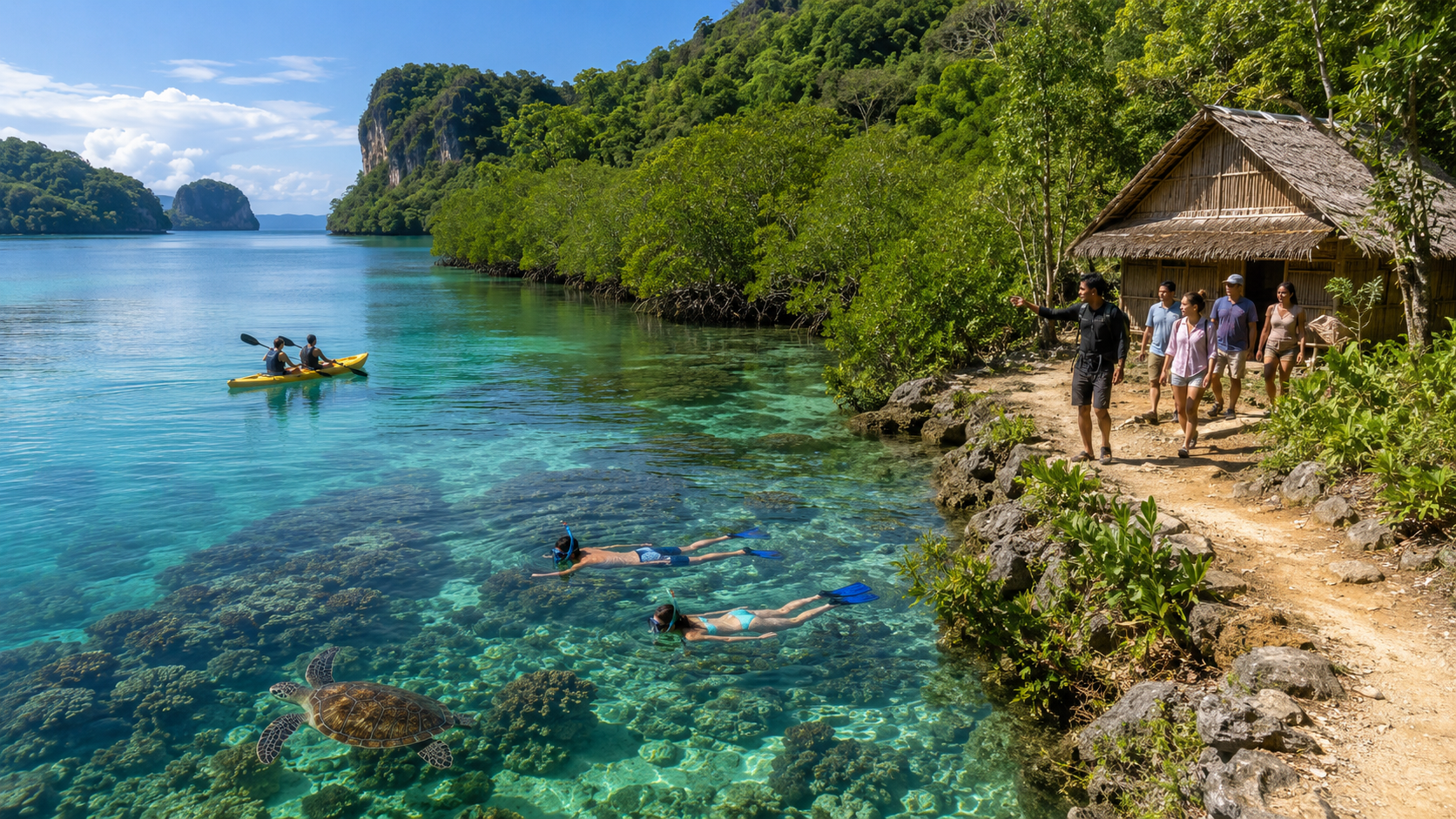
In the Philippines, this approach may involve dive permits that finance marine patrols, guided forest treks that reduce visitor damage, environmental fees that support waste management, and community homestays that keep tourism income within villages.
The main challenge is balancing tourism growth with environmental protection. Popular destinations such as Palawan, Bohol, Cebu, Negros Oriental, and Rizal attract travelers seeking authentic nature experiences. Without clear regulations, growing demand can damage the same ecosystems tourists travel to experience.
With responsible management, tourism can provide communities and local governments with a strong financial reason to preserve natural areas.
Reef Diving and Marine Protection
Diving in protected destinations such as Tubbataha, Apo Island, and selected parts of Palawan is more than a recreational activity.
Responsible dive operators educate visitors about buoyancy control, coral-safe behavior, wildlife interaction rules, plastic reduction, and proper waste management. Visitor and diving fees can support conservation teams, scientific monitoring, ranger stations, mooring buoys, and enforcement against illegal fishing.
Forest Trails and Geopark Experiences
Destinations such as Masungi Georeserve near Metro Manila introduce visitors to limestone formations, native trees, forest restoration areas, and watershed protection.
The attraction is based on guided and controlled access rather than mass tourism. This approach creates a more educational experience while reducing pressure on sensitive landscapes.
Wildlife Watching With Clear Limits
The Philippines also offers birdwatching, turtle conservation visits, mangrove tours, dolphin watching, and other wildlife-focused activities.
The most responsible experiences avoid feeding animals, chasing wildlife, touching marine species, or transforming conservation areas into entertainment parks. Ethical wildlife tourism prioritizes natural behavior over guaranteed sightings.
Travelers Increasingly Demand Proof of Sustainability
Modern travelers are becoming more skeptical of environmental claims. A resort or tour operator calling itself “eco-friendly” is no longer enough.
Visitors increasingly want to know where environmental fees are spent, whether guides are locally hired, how waste is managed, whether wildlife encounters are ethical, and whether visitor numbers are controlled.
This shift encourages tourism businesses to become more transparent. It also gives responsible destinations a competitive advantage among travelers who value credible conservation practices.
What Makes a Philippine Trip Truly Sustainable
A sustainable ecotourism experience should involve locally owned services, conservation-linked operators, small-group activities, responsible wildlife practices, and respect for indigenous and local communities.
Travelers should also examine whether a destination has visitor-capacity regulations, emergency procedures, effective waste systems, trained guides, and measurable conservation programs.
The future of Philippine tourism depends on protecting the ecosystems that make the country extraordinary. When managed responsibly, ecotourism does more than create memorable journeys. It helps keep coral reefs alive, forests standing, watersheds protected, and local communities financially invested in conservation.
About the Author