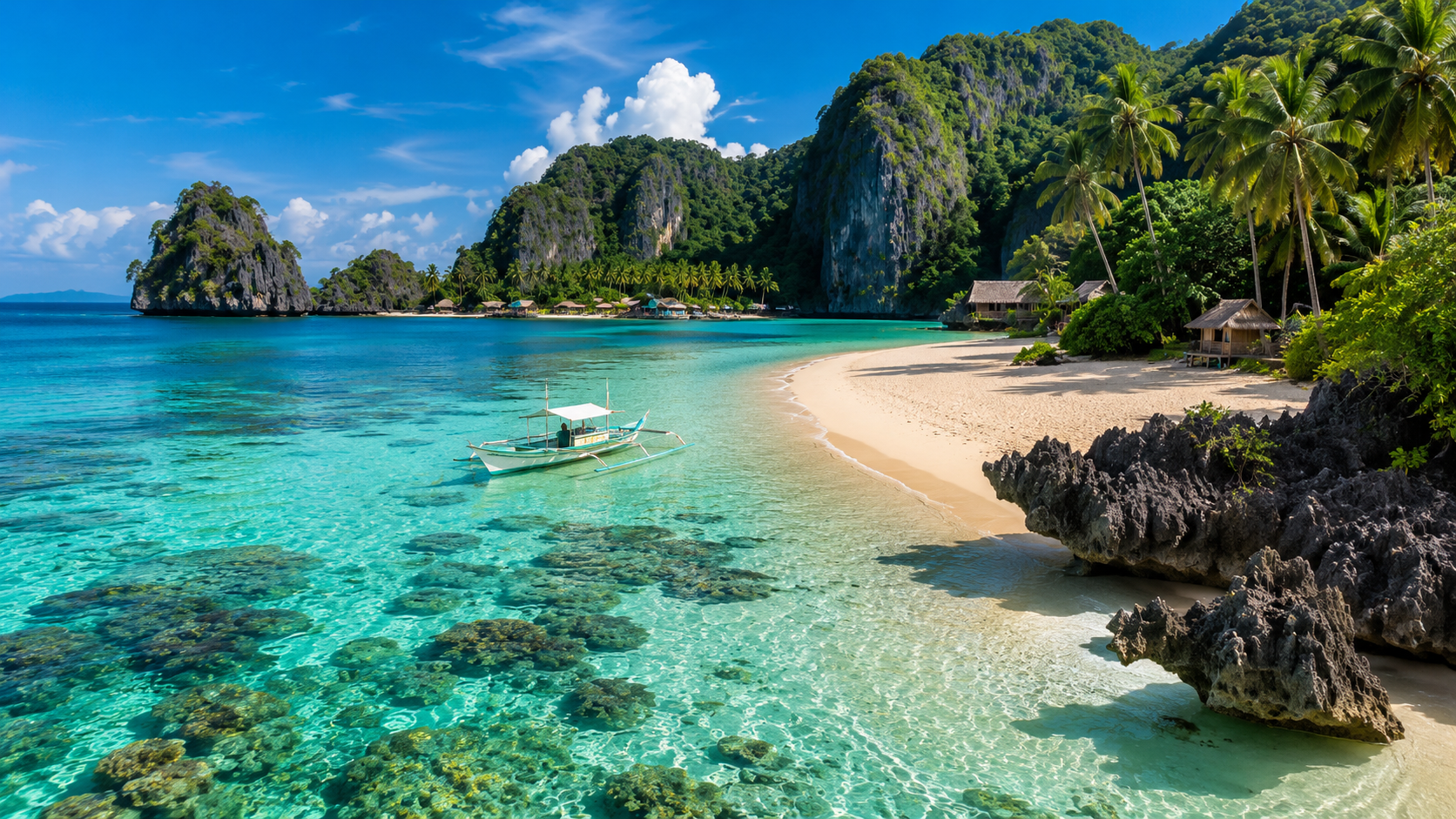
The Philippines is often associated with world-famous destinations such as Boracay, Palawan, Cebu, and Siargao. Yet beyond these popular names lies another side of the country: remote islands where white sand beaches remain quiet, coral reefs are still vibrant, and local traditions continue without the pressure of mass tourism. Exploring these hidden islands offers travelers a deeper and more intimate experience of the Philippine archipelago.
One of the most captivating remote destinations is Balabac, located in the southern part of Palawan. Unlike the more commercialized areas of El Nido and Coron, Balabac feels raw and peaceful. Its islands are known for powdery sandbars, shallow turquoise lagoons, and rich marine biodiversity. Onuk Island, Punta Sebaring, and Candaraman Island are among the most admired stops in the area. Visitors can snorkel above coral gardens, watch starfish in clear waters, and enjoy long stretches of beach with very few people around. Because Balabac is close to sensitive marine ecosystems, travelers should avoid stepping on corals, collecting shells, or disturbing wildlife.
Another lesser-known paradise is Jomalig Island in Quezon Province. Reaching it requires patience because the boat journey can take several hours, but that distance is exactly what keeps the island quiet. Jomalig is known for golden beaches, coconut-lined shores, and a slow rural rhythm. Salibungot Beach and Kanaway Beach offer wide open coastlines, while inland paths reveal small communities, farms, and simple island homes. This is not a place for luxury resorts; it is better suited for travelers who appreciate simplicity, local hospitality, and natural scenery.
For those seeking dramatic seascapes, the Caramoan Islands in Camarines Sur are worth exploring. The area features limestone cliffs, hidden lagoons, small coves, and beaches framed by rugged rock formations. Although Caramoan has gained some attention, many of its islands still feel secluded compared with mainstream beach destinations. Island-hopping tours often include Matukad Island, Lahos Island, and Sabitang Laya. The combination of cliffs, clear waters, and quiet beaches makes Caramoan ideal for photography, kayaking, and snorkeling.
Dinagat Islands, located northeast of Mindanao, also deserve attention. This province has mystical landscapes, unusual rock formations, blue lagoons, caves, and peaceful coves. Places such as Lake Bababu and the beaches around San Jose show a different side of the Philippines, one that feels mysterious and deeply connected to nature. Dinagat is still developing as a tourism destination, so visitors should expect basic facilities and flexible travel arrangements.
Exploring these hidden islands requires preparation. Boat schedules may depend on weather, accommodation can be simple, and mobile signal may be weak. However, these challenges are part of the experience. Travelers who come with patience, respect, and environmental awareness will be rewarded with rare beauty and genuine encounters.
The hidden islands of the Philippines remind us that paradise is not always found in crowded resorts. Sometimes, it waits quietly in distant shores, in fishing villages, in untouched reefs, and in the calm sound of waves meeting an empty beach.
About the Author