
The long history of Spanish colonization in the Philippines has left a profound impact on many aspects of Filipino culture, and one of the most enduring legacies is in the country’s cuisine. Spanish culinary traditions, brought to the Philippines during the colonial era, have significantly shaped Filipino food, resulting in a fusion of Spanish and indigenous flavors that define the modern Filipino palate.
One of the key areas where Spanish influence is most visible is in Filipino stews and braised dishes. Spanish colonizers introduced various slow-cooked stews, such as cocido (a meat and vegetable stew) and callos (a beef tripe stew), which became staples in Filipino cooking. These dishes evolved as they were adapted to local tastes, with Filipino cooks incorporating ingredients like plantains, chayote, and local leafy vegetables. The rich, savory broths that are characteristic of these stews are a direct reflection of Spanish culinary traditions, which favored slow-cooked, flavorful dishes.
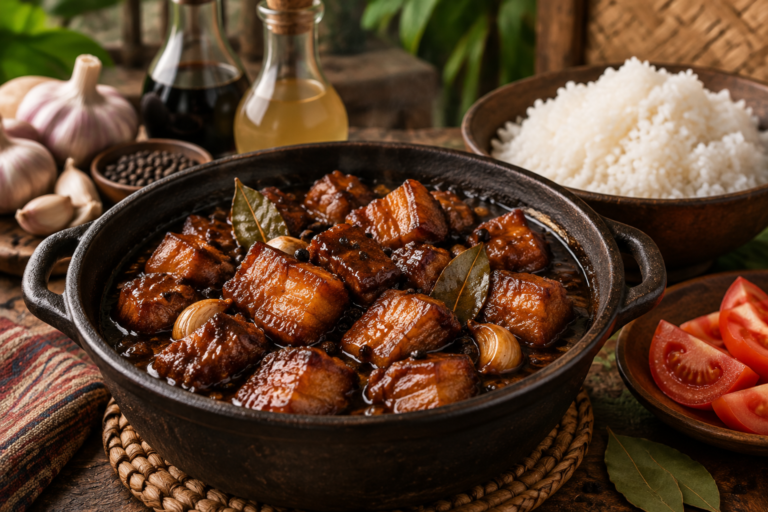
The Spanish influence on the Filipino dish adobo is another clear example of how Spanish techniques were integrated into Filipino cooking. The word adobo itself comes from the Spanish “adobar,” meaning to marinate or season. The Filipino version, which includes vinegar, soy sauce, garlic, and spices, has become a unique creation over time, incorporating local ingredients like soy sauce, which was introduced to the Philippines by Chinese traders. While the Filipino adobo has diverged from its Spanish origins, the technique of marinating and slow-cooking meat in a tangy sauce remains a direct connection to Spanish culinary practices.
Desserts are another area where Spanish influence has left a lasting mark on Filipino cuisine. Leche flan, a creamy custard dessert, is perhaps the most famous example. The Spanish introduced the concept of flan to the Philippines, but Filipinos adapted it by using local ingredients, such as carabao’s milk, to create a richer version that is now a favorite in Filipino households. Other popular Filipino desserts, such as tarta and ensaymada, also have Spanish roots, showcasing the fusion of Spanish and Filipino culinary traditions in sweet treats.
Even in Filipino street food and snacks, Spanish influence is evident. Empanadas, for instance, are savory pastries filled with meat or vegetables, which were adapted from the Spanish empanada recipe. Similarly, churros, a deep-fried dough pastry, became a popular snack in the Philippines, often enjoyed with hot chocolate or sugar.
The lasting Spanish influence on Filipino cuisine is a testament to the blending of two distinct culinary traditions, resulting in a rich and diverse food culture. Filipino food today is an amalgamation of local ingredients, indigenous practices, and foreign influences, with Spanish culinary contributions remaining a significant part of the nation’s food heritage.
About the Author