The End of Mediocre Fashion
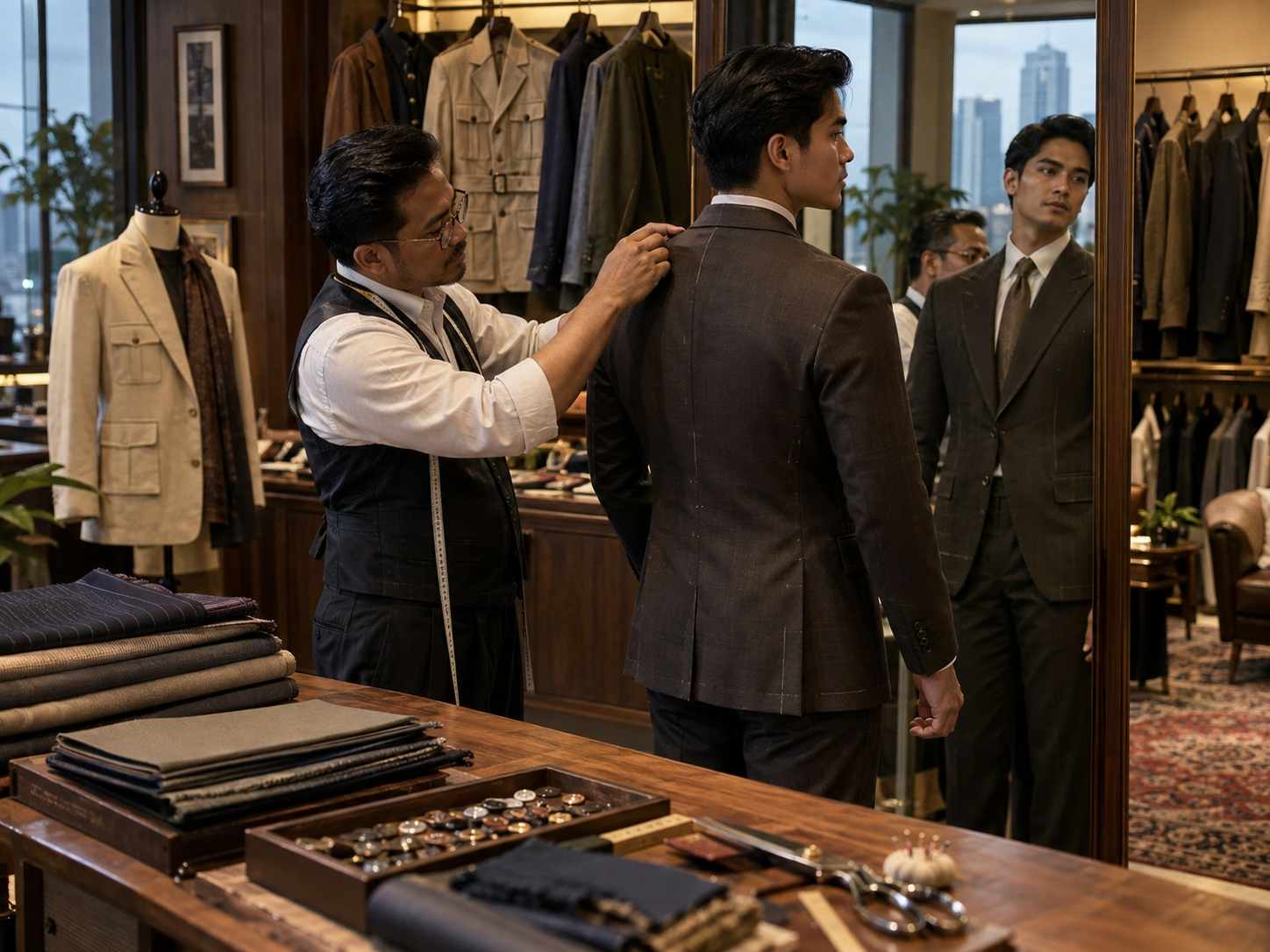
A quiet revolution is unfolding in the Philippines—not in the streets, but in the fitting rooms of premium tailors. Across Metro Manila, a new generation of Filipino men is rejecting off-the-rack uniformity in favor of made-to-measure craftsmanship. The driving force? A desire for garments that actually fit their bodies and reflect their identities.
At the heart of this movement is Omerta, a bespoke tailoring service that began as a Cebu-exclusive operation before expanding to Shangri-La Plaza in Metro Manila. According to store manager Edward Cuenco, the clientele has diversified dramatically. “Before, it was only for the established people, the professionals,” he told Esquire Philippines. “Now, even the Gen Z people are aware that a made-to-order suit is better than an off-the-rack”.
Why Gen Z Is Driving the Shift
The numbers tell a compelling story. The Philippines clothing market was valued at USD 8.92 billion in 2025 and is projected to grow at a CAGR of 7% through 2035. While casualwear dominates volume, the premium end is experiencing a surge in demand for intentional, long-lasting wardrobe investments.
Jorge Briones, a master cutter with 30 years of experience, attributes the bespoke advantage to three elements: the pattern, the fabric, and the making. “For me, the first thing is the pattern,” he said in Filipino. “The making of the pattern. The fitting of the person”.
This emphasis on individuality resonates with younger professionals who are dissatisfied with what they perceive as fashion mediocrity and overconsumption of subpar fads. For them, a bespoke suit is not just clothing—it is a statement of self-respect.
Beyond the Boardroom: New Silhouettes for Modern Men
The bespoke revolution is not confined to traditional business attire. Designers are experimenting with silhouettes that blur the line between formal and casual. At Randy Ortiz Man, the designer’s first major menswear show held in March 2026 at the Peninsula Manila, models walked in safari suits, deconstructed jackets, and bellbottom trousers with military-inspired lampasse strips. Ortiz described the collection as “a love letter to all Filipino males,” adding that “there is life more than just ordinary men’s clothes”.
The practical takeaway for Filipino men is clear: formalwear is no longer a rigid uniform. It is a canvas for personal expression, and bespoke tailoring provides the brush.
A Market Built for Flexibility
The broader garment industry supports this trend toward smaller, more flexible production. According to the Foreign Buyers Association of the Philippines, garment exports are projected to grow by around 10% to approximately $1.2 billion in 2026, driven partly by global buyers seeking smaller production runs that larger manufacturing bases cannot accommodate. This shift creates space for local tailors and niche brands to thrive alongside established labels.
For the Filipino man who once settled for a suit that “almost” fit, the message is unmistakable: the era of compromise is over.
About the Author