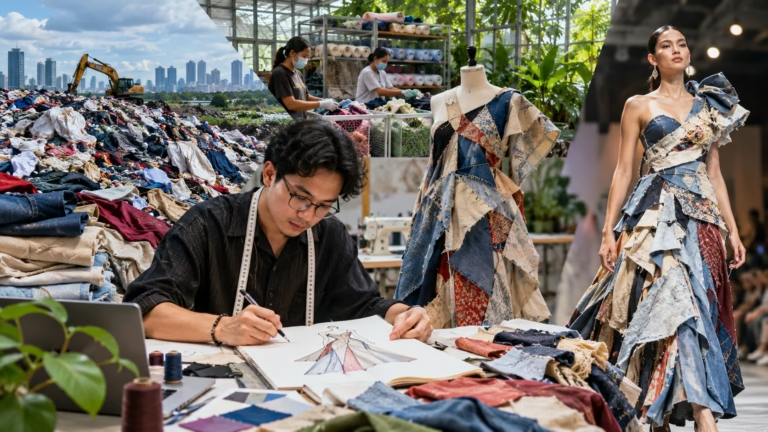
The Philippines’ fashion industry is at a structural inflection point. For decades, the dominant model has been linear: import, produce, wear briefly, discard. In Metro Manila, this has translated into overflowing landfills and a informal waste sector absorbing the consequences of global overproduction. But 2026 marks a decisive shift from rhetoric to regulation, anchored by local government leadership.
The Ordinance That Turns Scraps into Strategy
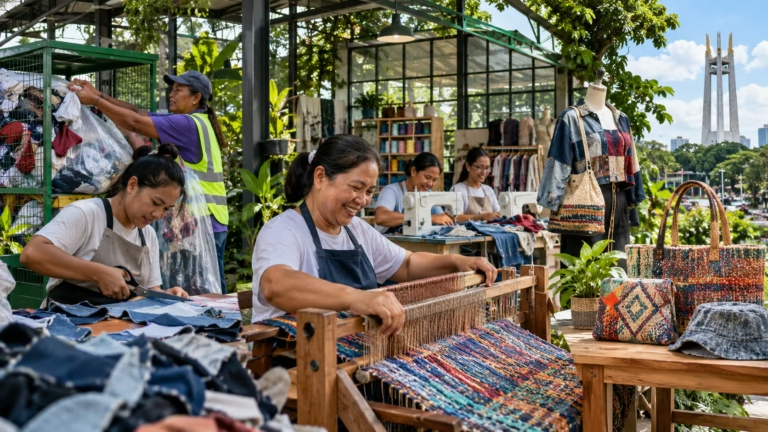
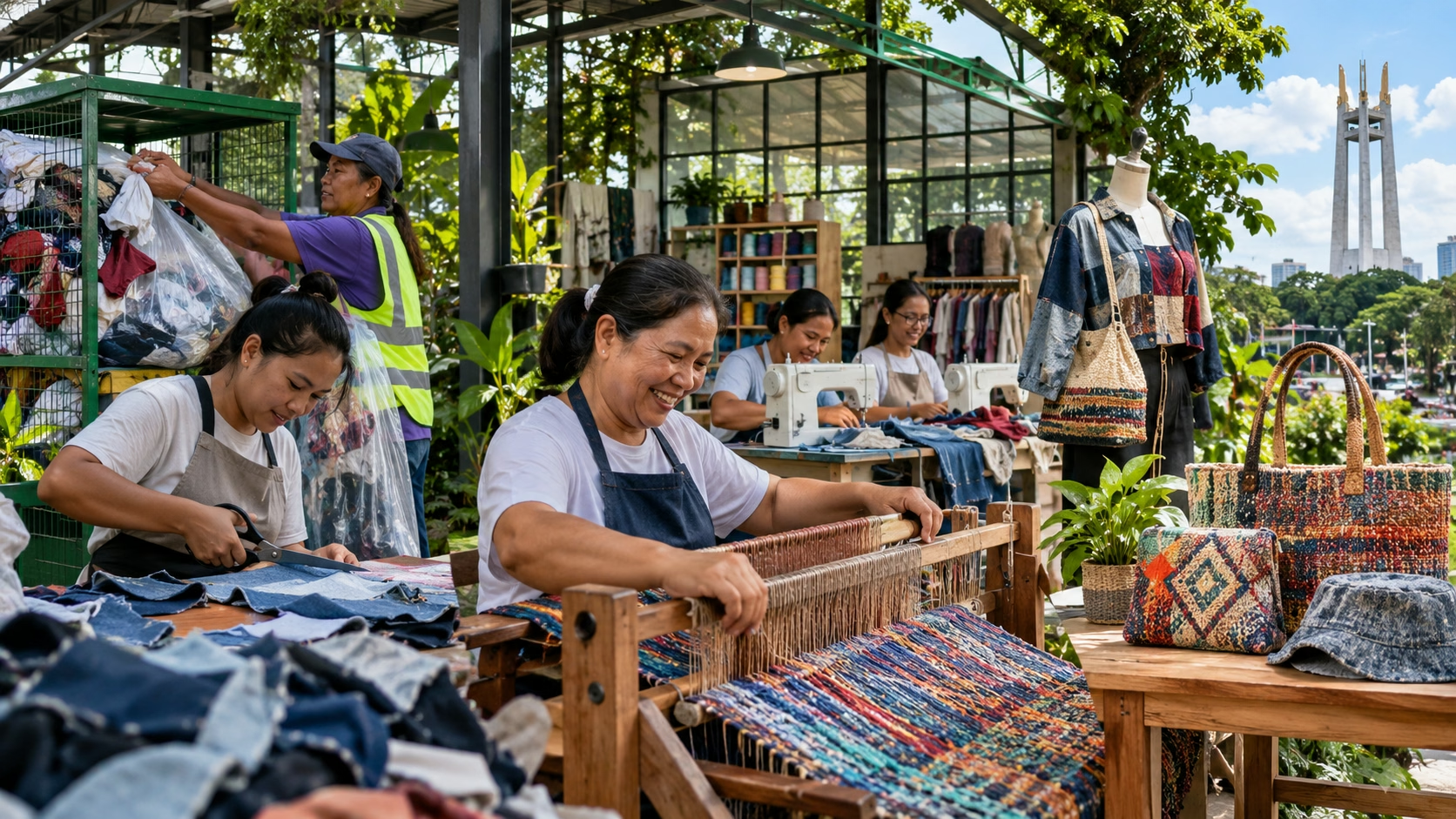
In December 2025, the Quezon City Council approved the Textile Sustainability and Circularity Ordinance, a landmark measure that formally establishes a citywide circular system for fashion waste. Rather than treating textile discards as mere refuse, the ordinance reframes them as a resource stream requiring dedicated infrastructure. The centerpiece is the creation of Circularity Hubs—physical facilities designed for the collection, sorting, repair, upcycling, and recycling of fabric materials.
The first of these hubs opened in Barangay Payatas in October 2025, in partnership with Cebu-based social enterprise ANTHILL Fabric Gallery. Equipped with weaving looms, cutting machines, and showroom space, the facility allows local artisans to convert discarded scraps into marketable products. This is not a pilot program operating in isolation; it is embedded within a formal policy framework that includes a five-year action plan and a committee chaired by the mayor.
Beyond Diversion: Livelihoods and Social Inclusion
The policy’s ambition extends beyond waste diversion. By linking circularity to livelihood creation, Quezon City is addressing a critical gap in the just transition conversation. The women of Payatas—many of whom previously depended on informal waste picking—are now receiving training in traditional handloom weaving and zero-waste production techniques. According to city government data, the initiative has already diverted approximately 10,000 kilograms of clothing waste from landfills.
This model offers a replicable template for other local government units. The ordinance mandates incentives for businesses that participate in the circular textile economy and fosters partnerships with national agencies and academic institutions. The shift is not merely about recycling; it is about re-localizing production cycles so that value is captured within the community rather than exported as environmental cost.
The Data Imperative
Policymakers are increasingly armed with hard numbers. The Philippines discards roughly 267,111 tonnes of textile waste annually, much of it linked to imported waste and unsold secondhand clothing. Household spending on clothing and footwear reached nearly PHP 232 billion in 2023, underscoring the scale of consumption that feeds the waste stream. These figures provide the evidentiary basis for moving from voluntary brand initiatives to enforceable circular standards.
Quezon City’s ordinance demonstrates that the transition away from single-use fashion begins with governance. Infrastructure, incentives, and social inclusion must be designed together—otherwise, circularity risks becoming a boutique solution for affluent consumers while leaving informal workers behind.
About the Author