When the sun sets over the Philippine archipelago, its major cities switch into a different gear. Neon signs flicker on, live bands tune their instruments, and night markets begin to steam with grilled skewers. In 2026, urban nightlife in the Philippines is more diverse and traveler-friendly than ever. The official Philippines travel portal (https://www.philippines.travel/) regularly updates its event listings, offering current guidance for visitors who want to explore after dark safely.
Manila’s Layered Entertainment Districts
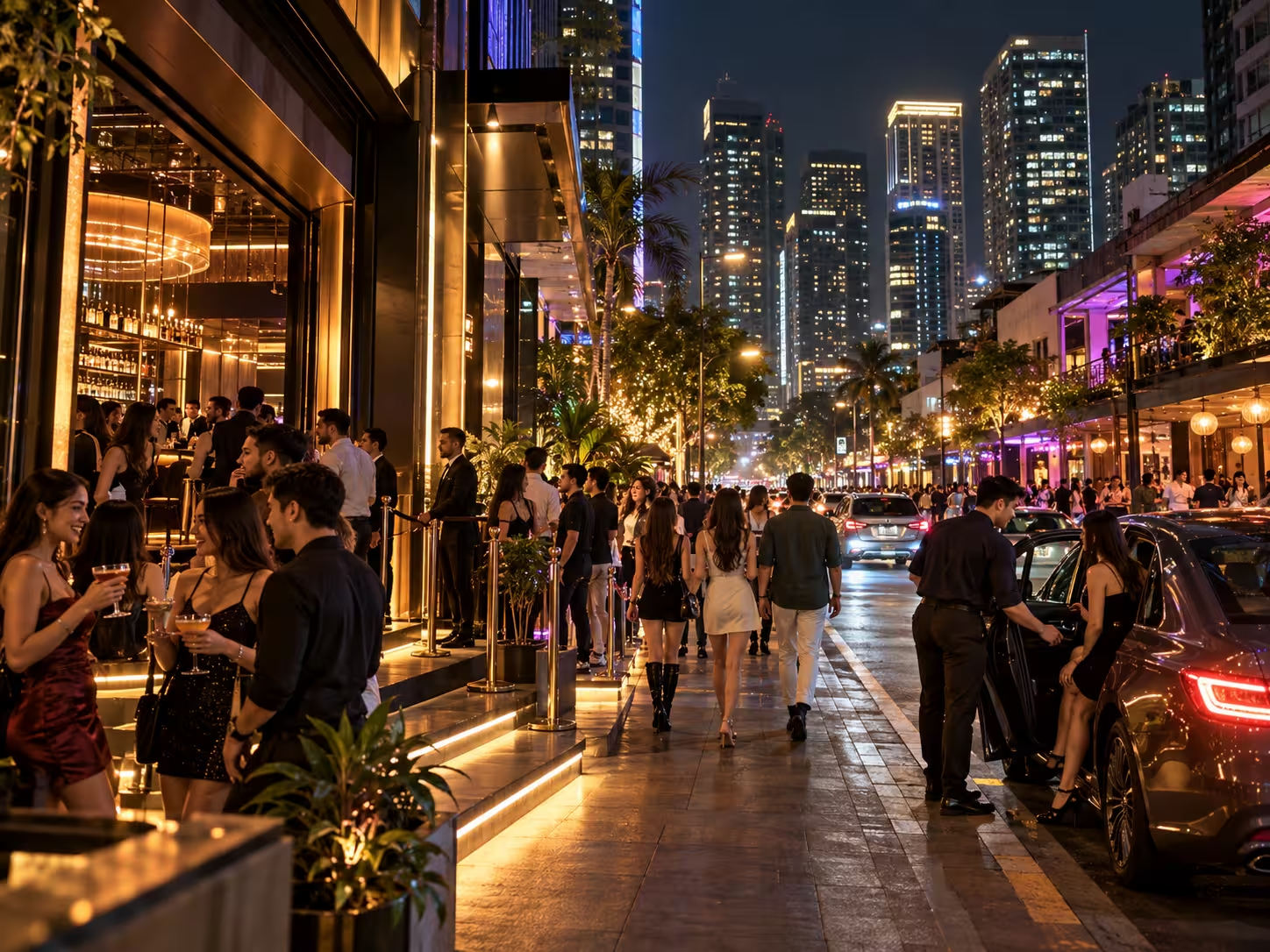
The capital region is a patchwork of after-dark experiences. Makati’s Poblacion neighborhood is the bohemian heart, where old houses have been converted into cocktail bars, vinyl lounges, and open-air restaurants. Nearby, Bonifacio Global City offers a more polished scene with rooftop bars and high-energy clubs. For culture, Malate’s live band venues and Intramuros’ nighttime heritage tours blend history with entertainment. Each district has its own rhythm, from indie music in Poblacion to K-pop nights in BGC. Visitors can spend one night hopping between intimate speakeasies and the next dancing in a sleek rooftop lounge without ever leaving the metro.
Cebu City’s Party Hubs and Chill-Out Zones
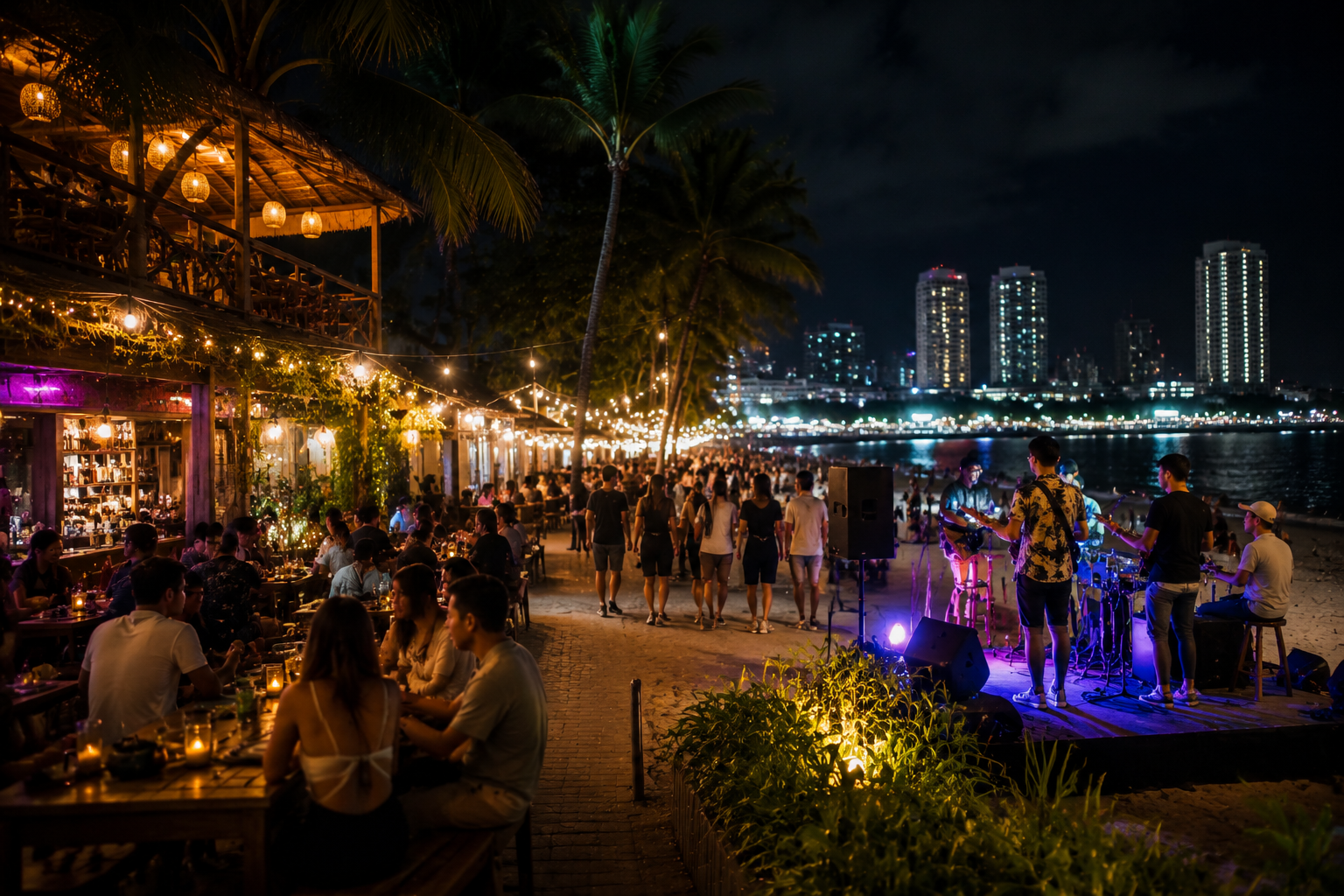
Cebu, the Queen City of the South, balances high-energy and relaxed venues. Mango Square remains the go-to strip for dance clubs and late-night karaoke, popular with students and backpackers. In contrast, Cebu IT Park has evolved into a district of gastropubs, craft beer gardens, and rooftop lounges where the after-work crowd unwinds. Along the waterfront, open-air bars feature live Visayan bands and seafood night markets, giving the city a distinct coastal flavor. The mix of loud party streets and calm rooftop hangouts makes Cebu a well-rounded destination for different travel styles.
Other Major Destinations Worth Exploring
Outside Manila and Cebu, several cities offer notable nightlife. Davao City is known for its orderly yet lively scene, with craft breweries and music lounges operating under local safety regulations. Angeles City in Pampanga has a walkable entertainment strip near Clark International Airport, making it a convenient stopover for late arrivals. Boracay, though not a city, remains a top beach nightlife destination with fire shows and beachfront DJ sets, regulated to protect the island’s environment. These regional options show that Philippine nightlife extends far beyond the two largest metropolises.
Local Rituals: Music, Cocktails, and Night Markets
Beyond specific venues, Philippine urban nightlife is defined by shared rituals. Live band bars are everywhere, with local musicians covering OPM and international hits. Craft cocktail lounges now incorporate local ingredients like calamansi and coconut wine. Meanwhile, night markets in Manila, Cebu, and Davao offer late-night street food such as grilled meat, seafood, and halo-halo. These spaces are often family-friendly and give travelers a glimpse of how Filipinos socialize after dark.
About the Author