The Strategic Shift from Celebrity Endorsement to Fandom Infrastructure
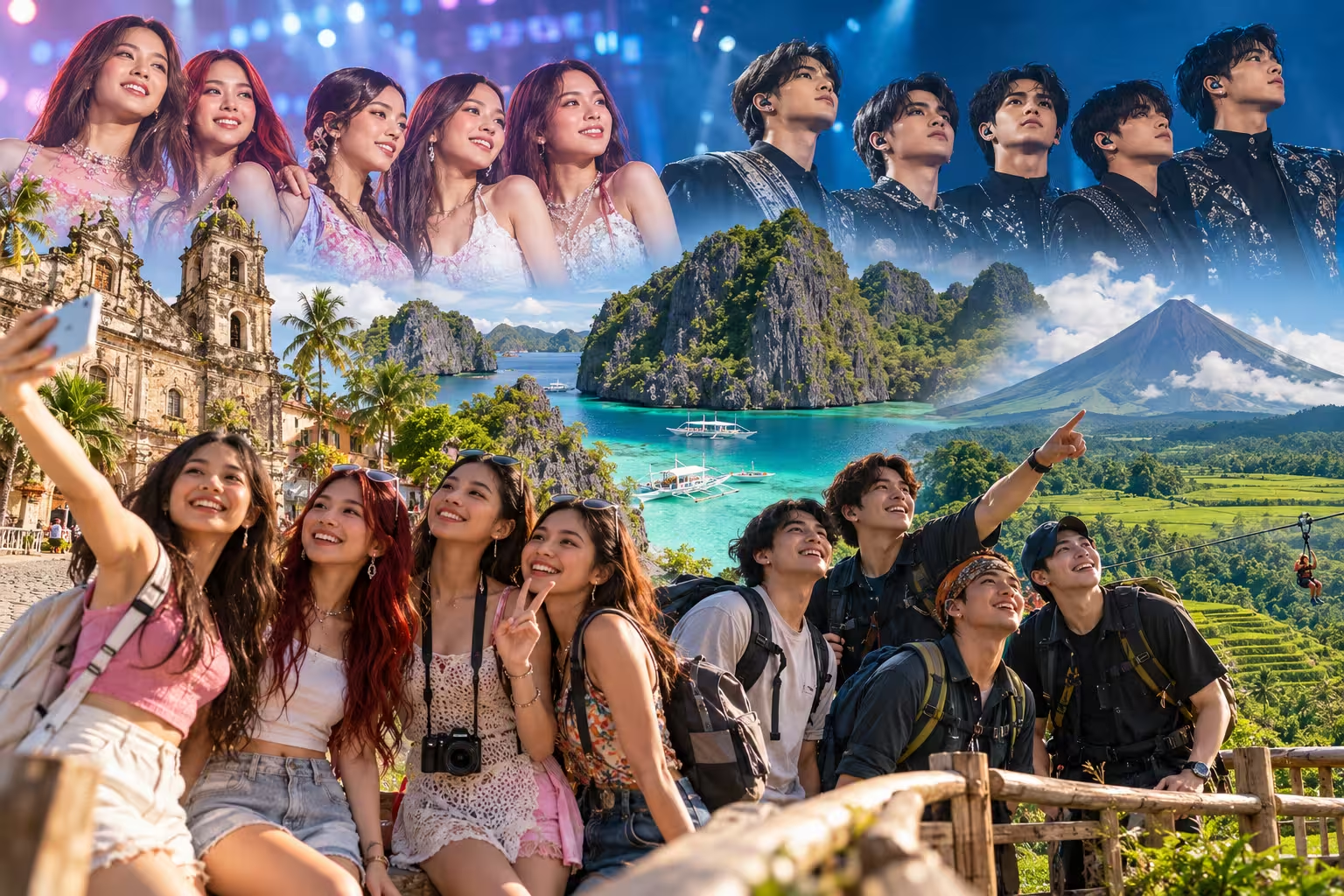
On August 12, 2026, the Philippine Department of Tourism (DOT) did something no other national tourism board had attempted at scale: it launched dedicated travel microsites for two musical acts—BINI and SB19—transforming fan passion into a structured travel-planning pathway. The move represents a fundamental shift in how destination marketing operates, moving beyond passive celebrity endorsement into what tourism officials describe as “participatory travel promotion.”
The microsites, accessible through tourism.gov.ph, allow fans to explore destinations personally chosen by each group member, paired with discounted packages from DOT-accredited travel partners. BINI’s fanbase, known as BLOOMs, can submit #BloomTrails posts featuring their own travel photos from destinations the group has highlighted. SB19’s A’TIN community can write dedication messages linked to their favorite songs from the group. These interactive features transform what would otherwise be standard promotional content into shareable fan-generated material.
The Economic Logic Behind Fandom-Driven Travel
Tourism Secretary Dita Angara-Mathay framed the initiative in explicitly economic terms. “A fan who travels to see an artist may also stay in a hotel, eat at local restaurants, explore nearby attractions or discover a destination for the first time,” she stated. “Each trip creates an opportunity for tourism spending to reach the businesses and communities that make those experiences possible”.
The timing reflects broader travel recovery dynamics. The Philippines recorded 2,955,014 international visits by mid-June 2026, a 6.16 percent increase year-on-year, with the United States contributing 591,569 arrivals and China adding 219,796. The P-Pop campaign specifically targets these markets—BINI’s “Pantropiko” has gained traction in China, while SB19’s “Gento” became prominent on Douyin, positioning both groups as cultural bridges into high-value source markets.
How Interactive Fan Mechanics Create Measurable Engagement
The DOT’s strategy relies on measurable digital engagement. Teaser posts published on August 10 generated more than 100,000 Facebook engagements within 24 hours—before the microsites were even live. This immediate response gave the department a real-time indicator of promotional reach that traditional advertising cannot replicate.
The campaign forms the second phase of “Discover More To Love,” a domestic tourism initiative launched in June 2026 aimed at stimulating local travel through discounted fares, hotel rates, and attraction fees. By integrating fan participation into the tourism value chain, the DOT is effectively outsourcing content creation and destination advocacy to the most motivated segment of the traveling public.
Beyond Metro Manila: The Regional Impact Potential
While BINI and SB19 are Manila-based acts, their fanbases span the archipelago and overseas Filipino communities. The microsite destinations include locations across different regions, encouraging travel dispersion beyond the capital. This aligns with the DOT’s stated goal of strengthening tourism demand across the value chain—supporting airlines, hotels, tour operators, and attractions as they navigate elevated international fuel costs.
The campaign also benefits from the groups’ international visibility. BINI’s Signals World Tour and SB19’s Lollapalooza debut, along with both groups’ performances at Summer Sonic Music Festival in Japan, provide continuous international exposure that the DOT promotes through its official channels. Each international appearance becomes a tourism marketing touchpoint, reinforcing the Philippines’ cultural credibility in markets where both acts have established followings.
About the Author