A Wildlife Experiment That Refused to Fail
Deep in the Busuanga archipelago of northern Palawan, a 3,700-hectare island holds one of Southeast Asia’s strangest conservation stories. In 1976, under Presidential Proclamation No. 1578, President Ferdinand Marcos ordered the translocation of 108 African animals from Kenya — giraffes, zebras, elands, impalas, and gazelles — to Calauit Island, ostensibly to save them from drought and conflict in their native range. The operation displaced roughly 254 families of indigenous Tagbanua and Pala’wan peoples, a controversial chapter that conservation historians still debate.
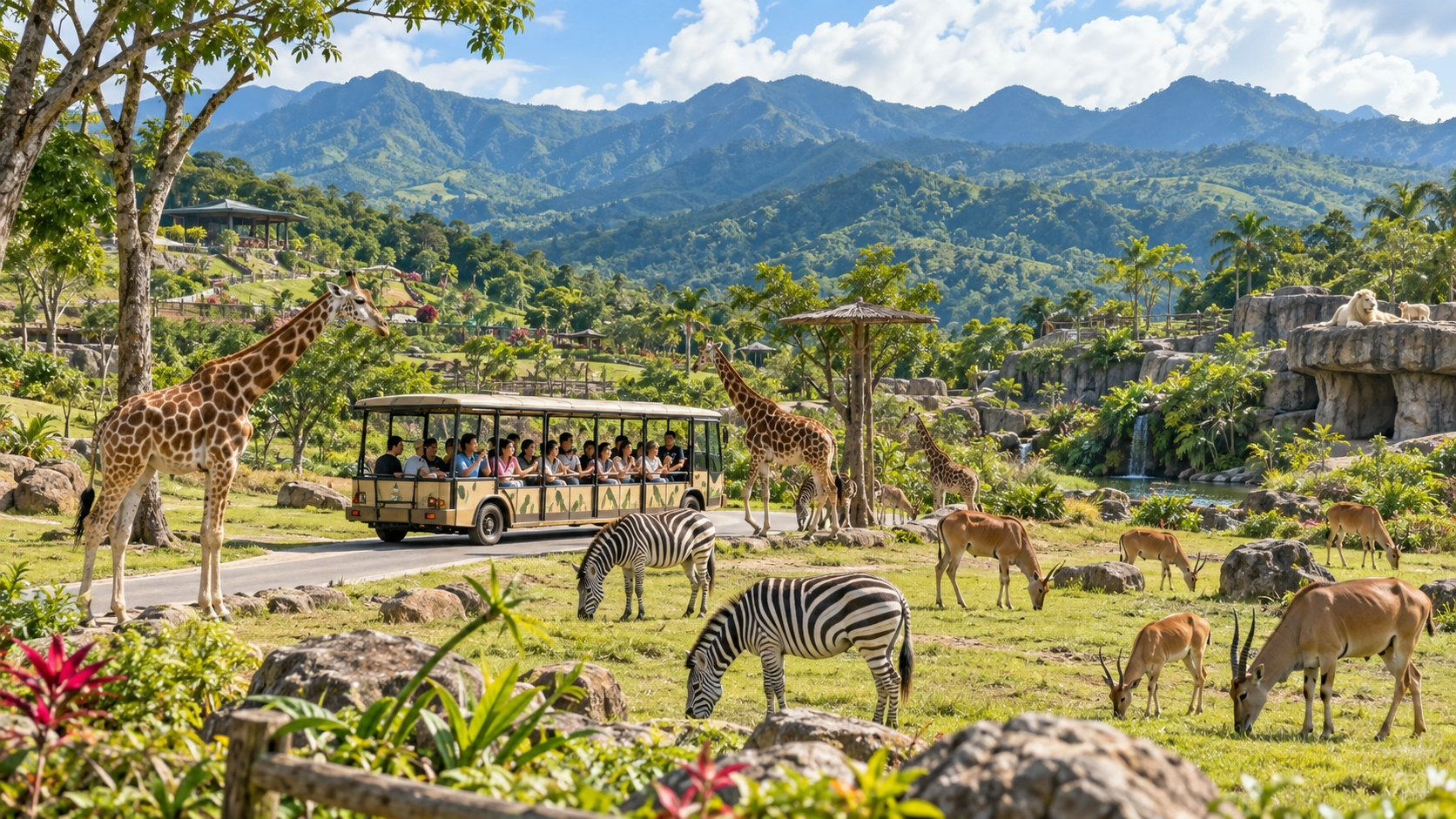
What emerged, however, became an ecological anomaly worth studying. Today, 18 reticulated giraffes and 27 Grévy’s zebras — all born on the island — graze freely alongside endangered Philippine species like the Calamian deer, Palawan peacock-pheasant, and Philippine pangolin.
Why This Safari Feels Different
Unlike conventional wildlife parks, Calauit has no predators. That absence allowed African herbivores to breed explosively, creating a self-sustaining population that now behaves almost like a native species. Visitors board open trucks that rumble across rolling grasslands where giraffes approach within meters, bending their long necks to accept leaves from outstretched hands.
Practical Access for 2026 Travelers
Reaching Calauit requires commitment. From Coron town, a 90-minute bangka (outrigger boat) crossing delivers visitors to the island’s reception area. Alternatively, a land route through Busuanga’s interior takes roughly the same duration. Entrance fees stand at ₱725 for foreign tourists and ₱525 for locals, with an optional ₱200 open-truck transfer.
The park’s official tourism guide, updated in May 2026, confirms that day tours combine the safari with island-hopping extensions to Black Island and Ocam Ocam.
The Real Conservation Question
Calauit raises uncomfortable questions about what “safari” means in a Philippine context. Is it conservation, or is it a relic of colonial-era wildlife management imposed on sovereign territory? The park’s defenders point to its role as a genetic reservoir for Africa’s threatened Grévy’s zebra. Critics note that the displacement of indigenous communities remains unresolved. Either way, Calauit offers something no zoo can replicate: a living, breathing experiment in accidental rewilding — and a safari that forces travelers to confront the complicated ethics of moving animals across oceans.
About the Author