The Data Behind the Calm
The global wellness economy has found a new epicenter, and it is not where industry analysts predicted a decade ago. According to new research from the Global Wellness Institute developed in collaboration with the Department of Tourism, the Philippines’ wellness economy has reached $47.3 billion, growing 31% since 2019 and now contributing over 10% of national GDP. This is not a niche trend. It is a structural shift in how the archipelago positions itself within the competitive Southeast Asian tourism landscape.
The momentum is visible in booking behavior. The Philippines has emerged as the world’s fastest-growing retreat destination, with interest surging 323 percent year-on-year on the BookRetreats platform, placing it ahead of Australia and Hungary. A separate survey of U.S. travelers found that 64 percent plan to take a retreat focused on rest, nature, and mental clarity in the coming year. The demand is not merely for a massage at a beachside cabana. It is for transformation.
From Hilot to High-Tech: The Evolution of Filipino Spa Culture
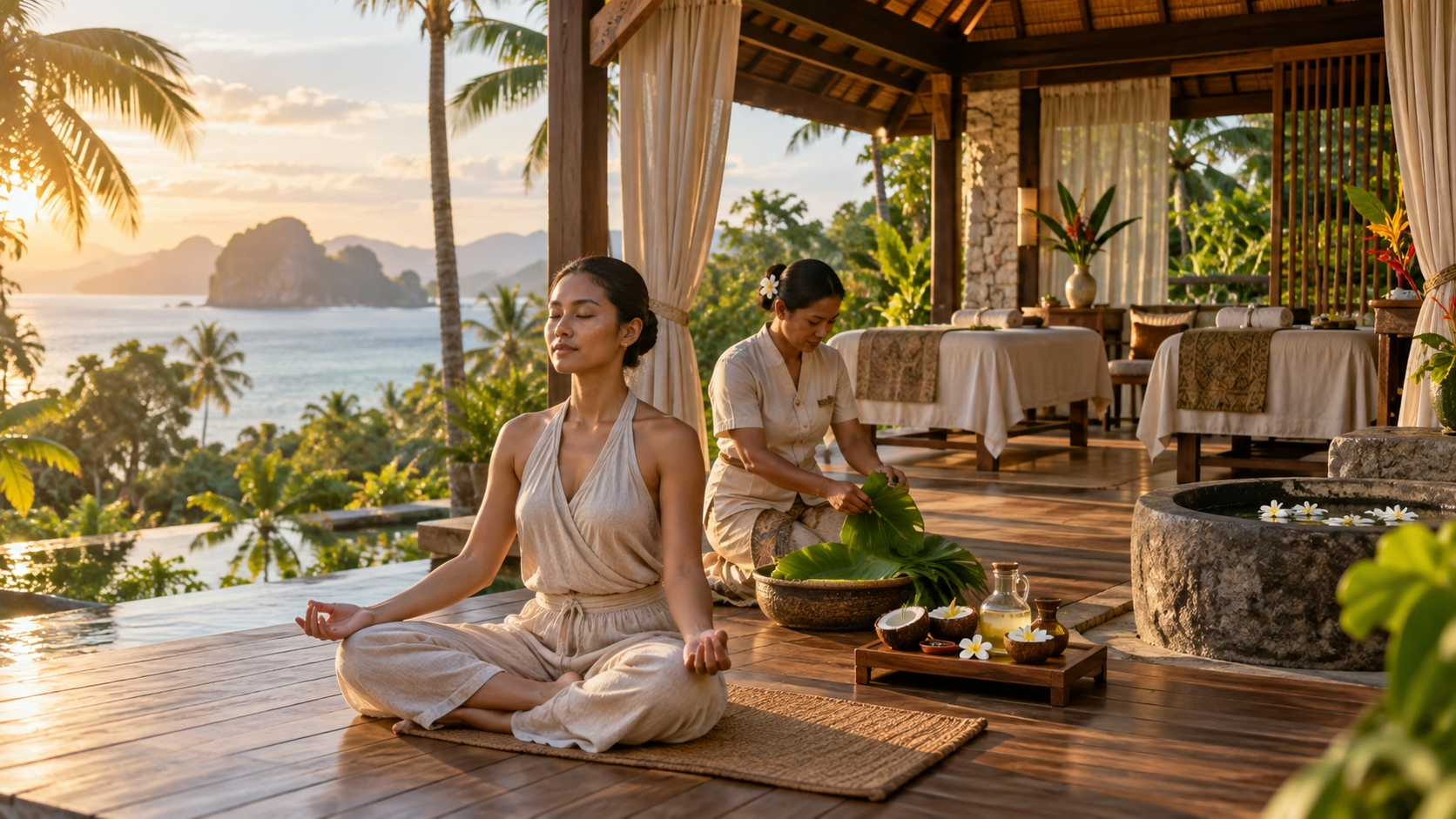
What distinguishes the Philippine wellness offering from regional competitors is its ability to fuse centuries-old indigenous healing traditions with contemporary clinical precision. At Forbes Five-Star properties such as The Retreat Spa at Okada Manila, the signature Indayog ng Duyan therapy uses warmed banana leaves soaked in virgin coconut oil, a hilot-inspired technique where the leaves help therapists identify areas of tension while restoring the body’s natural equilibrium. This is not folklore repackaged for tourists. It is a living practice rooted in Filipino understanding of energy flow and holistic restoration.
At Nüwa Spa, the first Five-Star spa in the Philippines, personalization has become an art form. Treatments draw from Ayurveda, reiki, and traditional Chinese medicine, with therapists designing regimens around a guest’s constitution, emotional state, and even the changing seasons. The spa’s use of Biologique Recherche products, beginning with individual skin analysis, reflects a broader movement toward evidence-informed relaxation.
Island Sanctuaries and the Rise of the “Calmcation”
Beyond Manila’s urban spas, the archipelago’s geography itself has become a therapeutic asset. Travel + Leisure’s 2026 wellness report identifies the Philippines as the fastest-growing destination for immersive wellness experiences, noting that its island landscapes combined with surf, yoga, and meditation make retreats feel both immersive and accessible.
The Farm at San Benito, a 52-hectare eco-luxury sanctuary just 90 minutes from Manila, exemplifies this integration. Named Tatler Asia’s Best Wellness Retreat for 2026, the property integrates evidence-based medical programs with restorative Filipino heritage, offering organic farm-to-plate vegan cuisine and diagnostic therapies designed for deep reconnection with nature. Guests are invited to meditate beneath a 300-year-old mango tree, a living symbol of the patience that defines genuine restoration.
This shift toward what the industry calls “calmcations” represents more than a travel trend. It reflects a collective recalibration of what rest means in a post-burnout world. The Philippines, with its combination of ancient healing wisdom, modern wellness infrastructure, and landscapes that demand stillness, has positioned itself at the center of that conversation.
About the Author