A Surging Market Defies Global Headwinds
The Philippine childrenswear sector has emerged as one of Southeast Asia’s most dynamic apparel segments, with retail value sales climbing to PHP50.4 billion in 2025—a robust 10% year-on-year increase. This growth trajectory, documented in Euromonitor International’s January 2026 country report, reflects a confluence of macroeconomic tailwinds and shifting generational priorities among Filipino parents.
A 5% GDP expansion in the first quarter of 2025, coupled with a steadily rising employed female population, has injected disposable income into households that were previously constrained by pandemic-era uncertainty. The result is a childrenswear market that no longer treats kids’ clothing as an afterthought but as a legitimate fashion category deserving of curation, investment, and brand loyalty.
The Polarisation Paradox
What makes the Philippine case particularly compelling is its pronounced market polarisation. Budget-friendly local players and premium global brands are both gaining traction, while mid-tier labels struggle to maintain relevance. This “barbell effect” means a Filipino mother in Cebu might simultaneously browse Shopee for affordable school uniforms and consider a Chloé Kids dress for a family reunion.
Euromonitor’s analysis identifies Guess Kids and Uniqlo as the leading brands, each employing distinct strategies. Guess Kids appeals to higher-income families in metropolitan areas with premium, fashion-forward designs, while Uniqlo leverages its reputation for quality basics and inclusive sizing.
Generational Shifts Reshape Buying Behaviour
The Rise of the “Good Parenting” Consumer
A 2026 academic study examining mothers’ motivations for purchasing secondhand children’s clothing on peer-to-peer platforms reveals that economic, sustainability, and “good parenting” motivations are all significant drivers of purchasing decisions. This trifecta of concerns—financial prudence, environmental responsibility, and the desire to be seen as a conscientious parent—is reshaping how Filipino families approach childrenswear.
Dentsu’s 2025 Philippines Consumer Trends Report adds nuance to this picture. While 77% of Filipinos believe owning expensive things is important, 48% are actively trying to live minimally and only buy new items when necessary—a figure 18 percentage points higher than the global average. This tension between aspiration and restraint creates a complex landscape for brands: parents want the best for their children but are increasingly unwilling to pay full price for it.
Local Brands Hold Their Ground
Despite the influx of international luxury labels, established Filipino childrenswear brands continue to command loyalty. Gingersnaps, with over three decades of market presence, maintains a strong foothold in high-end malls by prioritising premium fabrics and meticulous craftsmanship. Periwinkle appeals to parents seeking whimsical, classic aesthetics with detailed embroidery, while Ines Moda Infantil caters to those who value heirloom-quality hand-smocked garments designed to be passed down through generations.
Looms, a legacy brand established in the 1950s, has successfully repositioned itself for modern parents by focusing on elevated everyday wear crafted exclusively from premium cotton. These local players demonstrate that Filipino parents are not simply chasing foreign labels—they are seeking authenticity, quality, and cultural resonance.
E-Commerce as the Great Equaliser
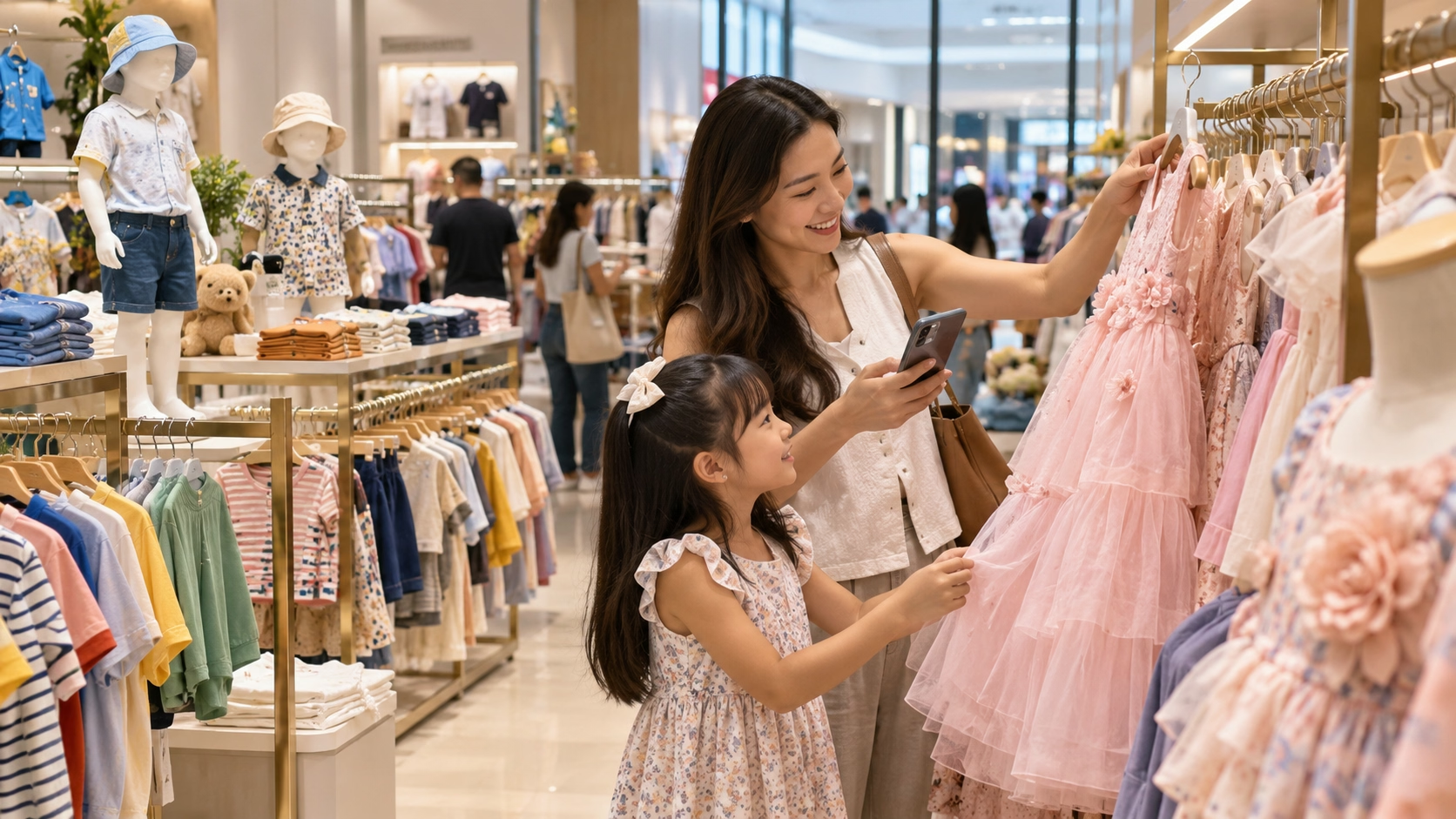
E-commerce has become a major sales driver for childrenswear, with mobile-first platforms and digital wallets making online shopping the default for time-pressed parents. The convenience factor is undeniable: a parent can order a week’s worth of school socks during a lunch break and have them delivered by dinner.
Yet offline retail remains dominant. Department stores and specialist boutiques continue to serve as key channels, particularly for occasion-wear and premium purchases where tactile experience matters. The future belongs to brands that can seamlessly bridge these worlds—offering the ease of digital browsing with the reassurance of physical try-ons.
For industry stakeholders, the message is clear: the Philippine childrenswear market rewards those who understand that parents are not a monolith. They are value-conscious yet aspirational, digitally savvy yet brand-loyal, and deeply invested in clothing their children in ways that reflect both love and pragmatism.
About the Author