From Local Ateliers to Regional Runways
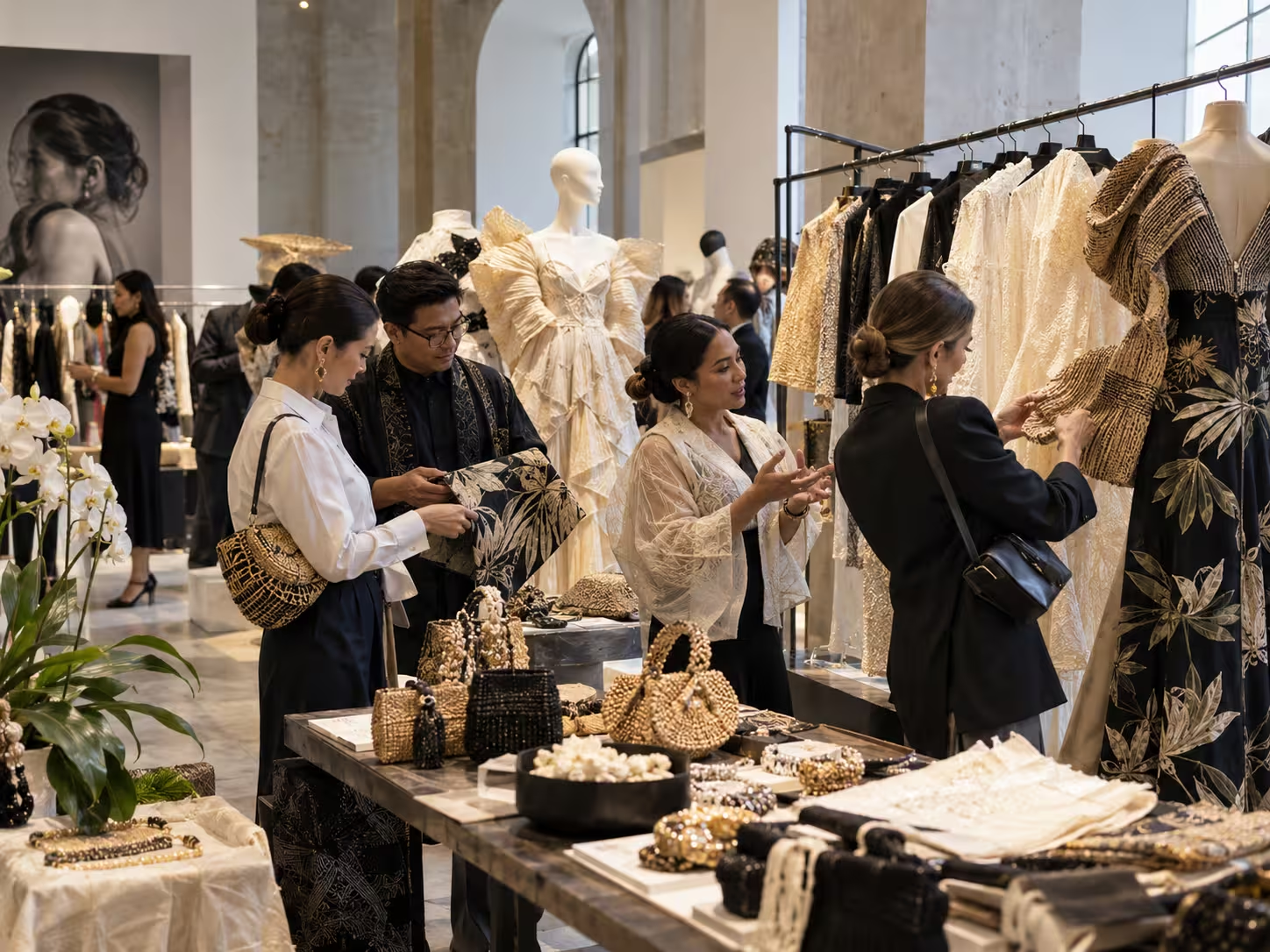
The year 2026 marks a decisive turning point for Philippine fashion. A cohort of young designers—unafraid to blend personal narrative with avant-garde technique—is not merely participating in the Asian fashion conversation; they are actively rewriting its terms. At the heart of this transformation is MNL Fashion Week, which in its sophomore edition in September 2026 evolved from a local showcase into a genuine incubator for regional talent. The event, held at SMX Aura, featured 11 Filipino labels, with a dedicated “NXTGEN” segment that spotlighted three designers whose work signals a generational shift: Yana Kalaw Studios, Kill Joy Studios, and Lilah Roché.
The NXTGEN Trio and the Rejection of Monolithic Identity
What distinguishes this new wave is a refusal to settle on a single definition of Filipino fashion. Yana Kalaw’s collection, “Girls, Girls, Girls,” explored queer femininity through exaggerated silhouettes and embroideries reclaiming terms like “Tibo” and “Lesbyana.” Kill Joy Studios drew from Manila memories, music, and queer identity, while Lilah Roché reimagined the Manila noir action film with a powerful female protagonist. This is not fashion as mere commerce; it is fashion as autobiography.
Vogue Philippines as a Catalyst and Amplifier
Vogue Philippines has played a pivotal role in this ascent. Its March 2026 issue spotlighted five Filipina designers balancing retail and bespoke, including Krizia Jimenez, Steph Verano, and Renee De Guzman, photographed by JV Rabano. The magazine’s August 2026 global feature on emerging designers included Manila-based Bagasáo, founded by Joseph Bagasao, noted for unexpected silhouettes and sustainable production using natural fibers. This editorial validation translates into commercial and creative confidence. As Prince Padilla of Novel—selected for Fashion Asia Hong Kong’s 10 Designers to Watch 2026—told Vogue Philippines, “Building an independent fashion label from Manila can feel geographically isolated… being recognized alongside designers from across Asia is incredibly encouraging.”
The Economic and Diplomatic Undercurrent
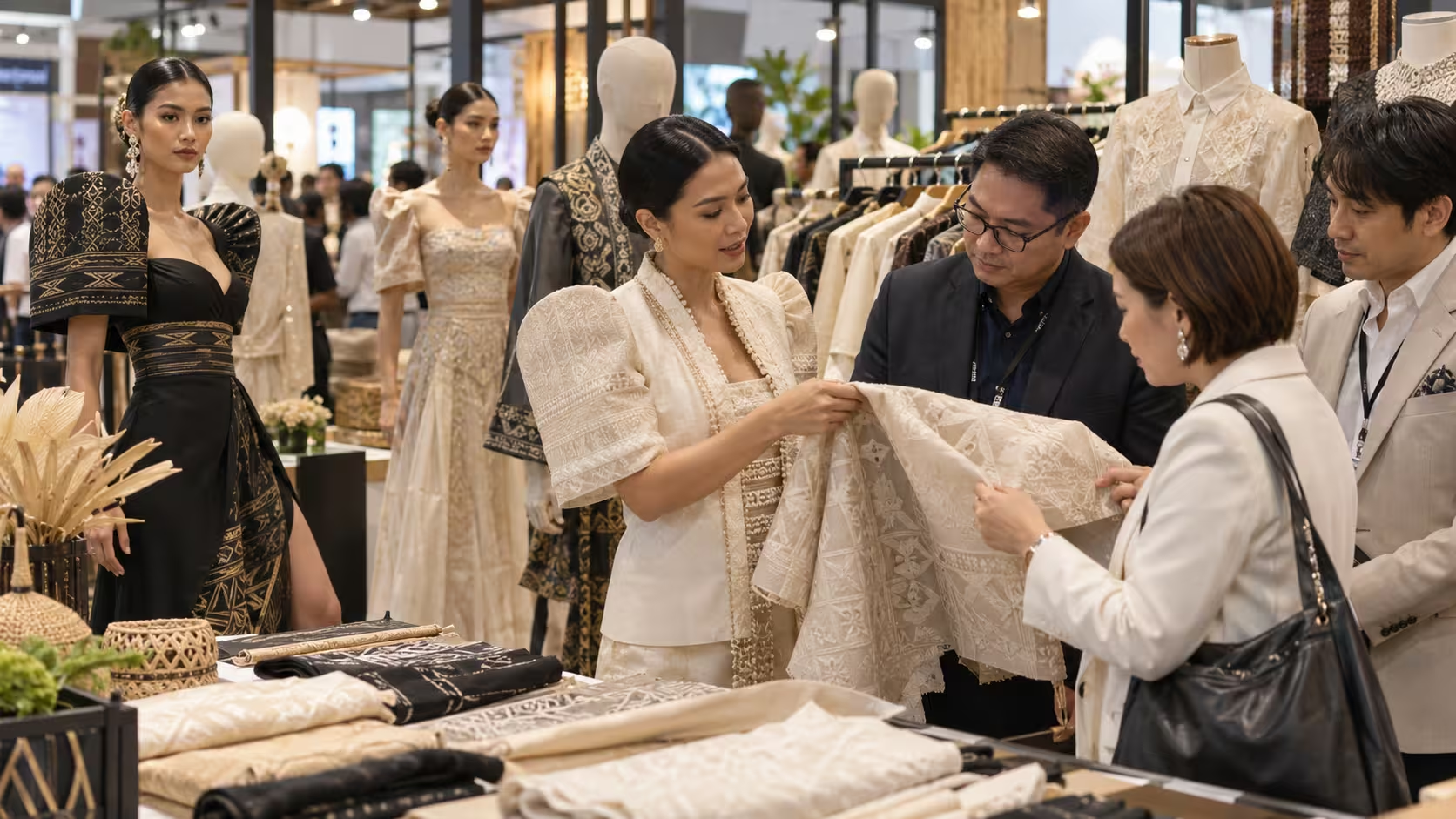
The creative momentum is supported by strategic state initiatives. The Department of Trade and Industry’s (DTI) Malikhaing Pinoy program launched internationally in Bangkok in February 2026, coinciding with the Philippines’ ASEAN Chairship, and positioned fashion as a pillar of economic growth. The DTI reported that the creative sector contributed PHP 1.94 trillion to GDP in 2024. At Hong Kong Fashion InStyle 2026, Philippine designers secured over US$ 322,000 in industry gains, proof that creativity translates into tangible export value.
A Region Watching, a World Taking Note
The recognition is not confined to editorial pages. Filipino designers are appearing at Milan Fashion Week, Tokyo Fashion Week, and Jakarta Fashion Festival—not as curiosities, but as participants in a shared Asian creative renaissance. The new generation from Manila is not waiting for permission to belong on the Asian stage. They are building their own entrance.
About the Author