Smoking remains one of the most persistent public health concerns in the Philippines, affecting not only people who smoke but also families, workplaces, and communities exposed to secondhand smoke. Although public awareness has grown over the years, cigarette use continues to place a heavy burden on the country’s healthcare system, household income, and long-term quality of life.
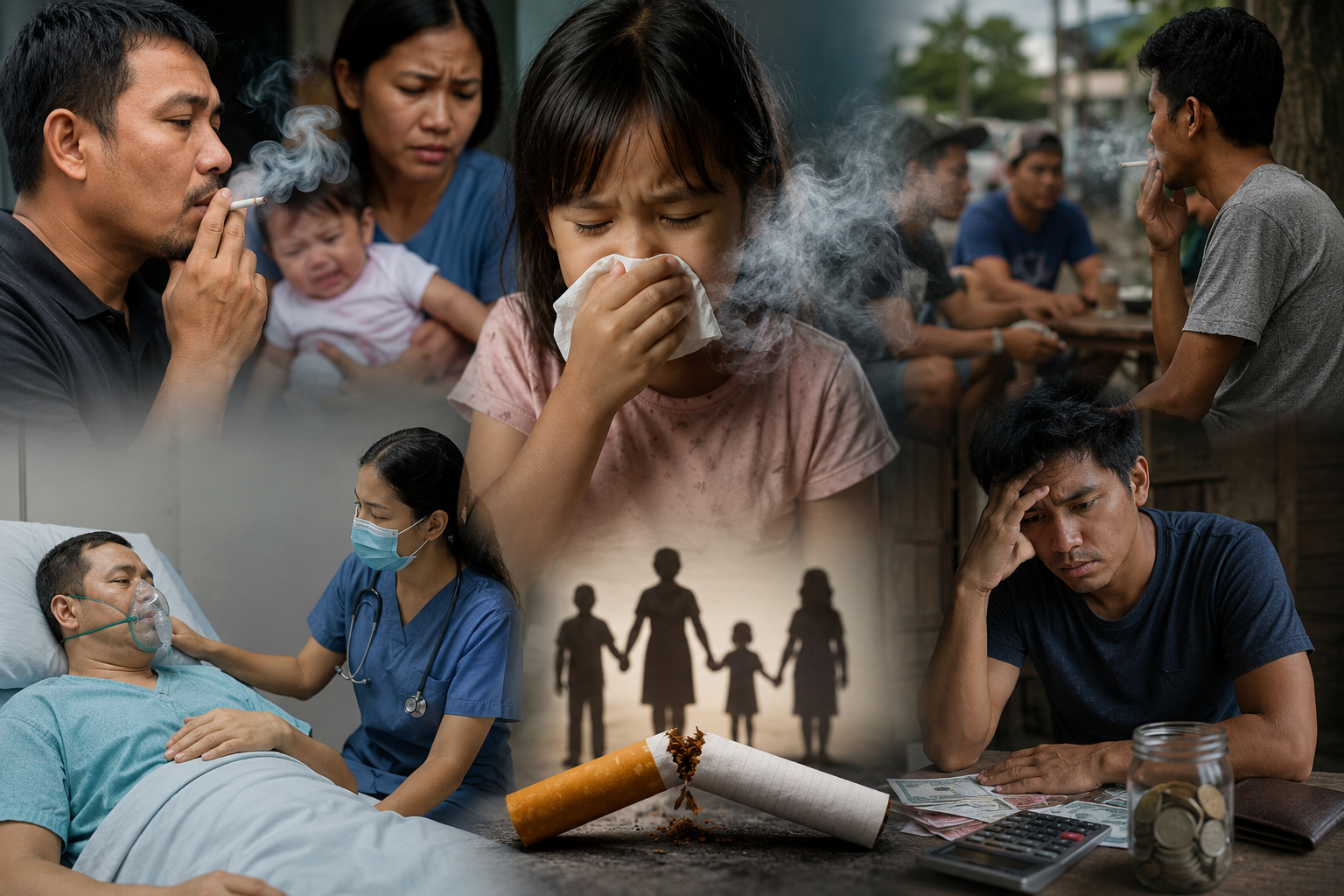
The health effects of smoking are wide-ranging. Tobacco smoke contains thousands of chemicals, many of which can damage the lungs, blood vessels, heart, and immune system. In the Philippines, where many families live in shared homes and densely populated neighborhoods, the impact often extends beyond the smoker. Children, elderly relatives, pregnant women, and people with asthma or heart disease may inhale secondhand smoke even when they have never smoked themselves.
One of the most serious consequences is respiratory illness. Regular smoking can irritate the airways, reduce lung function, and increase the risk of chronic obstructive pulmonary disease, bronchitis, and lung cancer. For workers who spend long hours commuting, working in crowded areas, or living in urban environments with air pollution, smoking can intensify breathing problems and make recovery from respiratory infections more difficult.
Smoking also has a strong connection to cardiovascular disease. Nicotine raises blood pressure and increases heart rate, while other chemicals in cigarette smoke damage blood vessels. Over time, this can raise the risk of heart attack, stroke, and poor circulation. In a country where many families already face financial barriers to healthcare, smoking-related illness can lead to expensive medical treatment, lost wages, and emotional stress.
The economic side of smoking is often overlooked. For low- and middle-income households, cigarette spending can quietly reduce money available for food, education, transportation, and medicine. A small daily purchase may seem manageable, but over months and years, the cost becomes significant. When a smoker becomes ill, the financial impact can multiply through hospital bills and reduced ability to work.
The Philippines has taken steps to reduce tobacco use through warning labels, higher tobacco taxes, public smoking restrictions, and health campaigns. Measures such as the Sin Tax Law and smoke-free policies have helped bring more attention to the risks of tobacco. Still, enforcement and behavior change remain difficult, especially in communities where smoking is socially accepted or seen as a normal part of adult life.
Another emerging issue is the use of e-cigarettes and heated tobacco products, especially among younger people. While some adults view these products as alternatives to traditional cigarettes, health experts continue to warn that nicotine addiction remains a major concern. Young users may become dependent early, increasing the chance of long-term tobacco or nicotine use.
Reducing smoking in the Philippines requires more than individual willpower. It needs family support, accessible cessation services, stronger community education, and consistent public policy. Schools, workplaces, healthcare providers, and local governments can all play a role in making smoke-free living easier and more socially accepted.
The health impact of smoking is not limited to one person’s lungs. It touches children’s health, family finances, national productivity, and the future of public health in the Philippines. The more clearly these risks are understood, the stronger the country’s chances of building healthier homes and communities.
About the Author