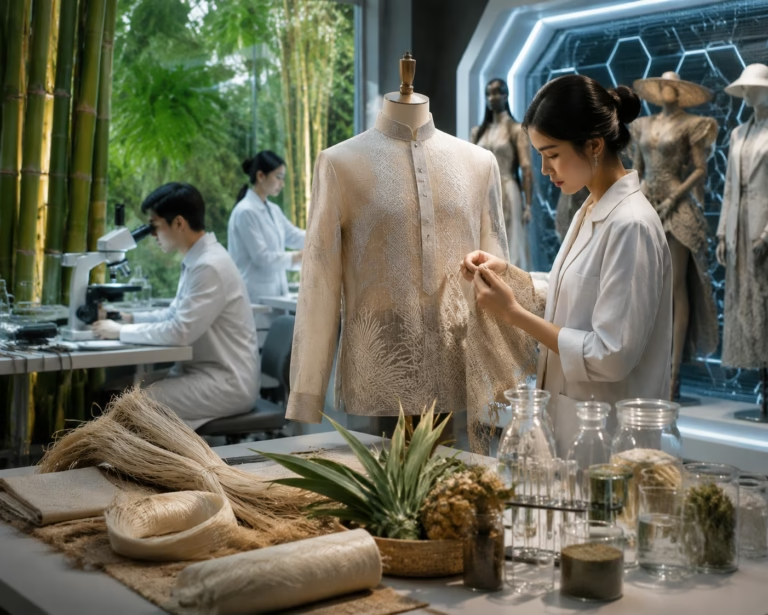

Filipino accessories are enjoying a well-deserved spotlight, blending heritage craftsmanship with a modern fashion sensibility. What makes the Philippines distinctive is not just the diversity of materials—pearls, capiz shells, abaca, rattan—but the centuries-old techniques that transform these elements into objects with soul. When you wear a pair of shell-inlaid earrings or carry a solihiya-woven handbag, you’re tapping into a creative ecosystem where artisanship is the beating heart.
Start with jewelry. South Sea pearls cultured off Palawan are renowned for their creamy luster and generous size, lending quiet drama to chokers and drop earrings. Designers often pair these pearls with gold filigree—known locally for its airy, lace-like wires shaped into sunbursts and floral whorls—to create pieces that feel both heirloom and current. Another favorite: pendants etched with baybayin, the precolonial script, which nod to identity while staying chic.
Shellwork shows up in fresh ways. Capiz, the translucent shell from Panay, once synonymous with windowpanes, now gleams in geometric earrings, cuff inlays, and compact clutches. Mother-of-pearl from central island ateliers is carved into sculptural studs or tessellated into mosaic surfaces, catching light with every move.
On the bag front, natural fibers rule. Abaca (also called Manila hemp) is prized for tensile strength; artisans twist, plait, and crochet it into totes that hold their shape. Rattan appears as structured baskets and half-moon purses, often in the classic solihiya cane pattern—a hexagonal open weave that balances airiness and durability. Piña, the diaphanous fiber from pineapple leaves typically seen in formal wear, adds a gauzy sheen to evening bags and detachable straps. From Samar to Cebu, coastal workshops refine these fibers, dyeing with plant-based pigments and finishing with leather trims for polish.
Textiles extend the narrative. Ilocos “inabel” weaving brings graphic stripes and pinstripes to laptop sleeves and weekenders. T’boli artisans from South Cotabato produce t’nalak—ikat abaca cloth said to arise from dream patterns—translating its bold motifs to bag panels and belts. The design language pulls in Maranao okir curves and stylized sampaguita blossoms, bridging regions into a single contemporary vocabulary.
Sustainability drives much of the appeal. Many makers upcycle offcuts, source fibers locally, and partner with co-ops that keep traditional skills financially viable. Pearls are often farmed with an eye toward marine health, and small-batch production reduces excess.
Styling is effortless: let pearl studs and a woven baguette bag elevate a white tee and denim; pair a capiz clutch with a linen jumpsuit; mix filigree hoops with a minimalist black dress to make the metalwork sing. Care is simple but specific—wipe pearls with a soft cloth after wear, keep capiz away from hard knocks, store rattan in dry spaces to avoid warping.
The Filipino accessory story is a rare case where trend and tradition align. Each piece is a conversation between hand and history, designed for real life yet carrying the intimacy of craft.
About the Author