The Philippines is known for its warm climate, high humidity, and frequent rainfall. Because of this, clothing choices are not only about style but also about comfort and practicality. Dressing well in a tropical country means understanding how fabric, fit, and function work together. In a place where sunny mornings can quickly turn into wet afternoons, the right wardrobe can make a significant difference in daily life.
One of the most important factors when choosing clothes for tropical weather is fabric. Lightweight and breathable materials such as cotton, linen, rayon, and certain moisture-wicking blends are ideal for the Philippine climate. These fabrics allow air to circulate around the body and help sweat evaporate more easily. Heavy materials like thick denim, wool, or synthetic fabrics that trap heat can feel uncomfortable and sticky, especially during long hours outdoors. Breathable clothing helps reduce irritation, overheating, and the feeling of dampness caused by constant perspiration.
Loose-fitting garments are also highly recommended. Tight clothing may look polished, but it often prevents airflow and increases discomfort in hot conditions. Relaxed silhouettes such as airy blouses, oversized shirts, wide-leg pants, midi skirts, and soft dresses are practical and stylish options. In the Philippines, where people often move between outdoor streets and air-conditioned malls or offices, layers can also be useful. A light cardigan or thin overshirt can provide comfort indoors without becoming too warm outside.
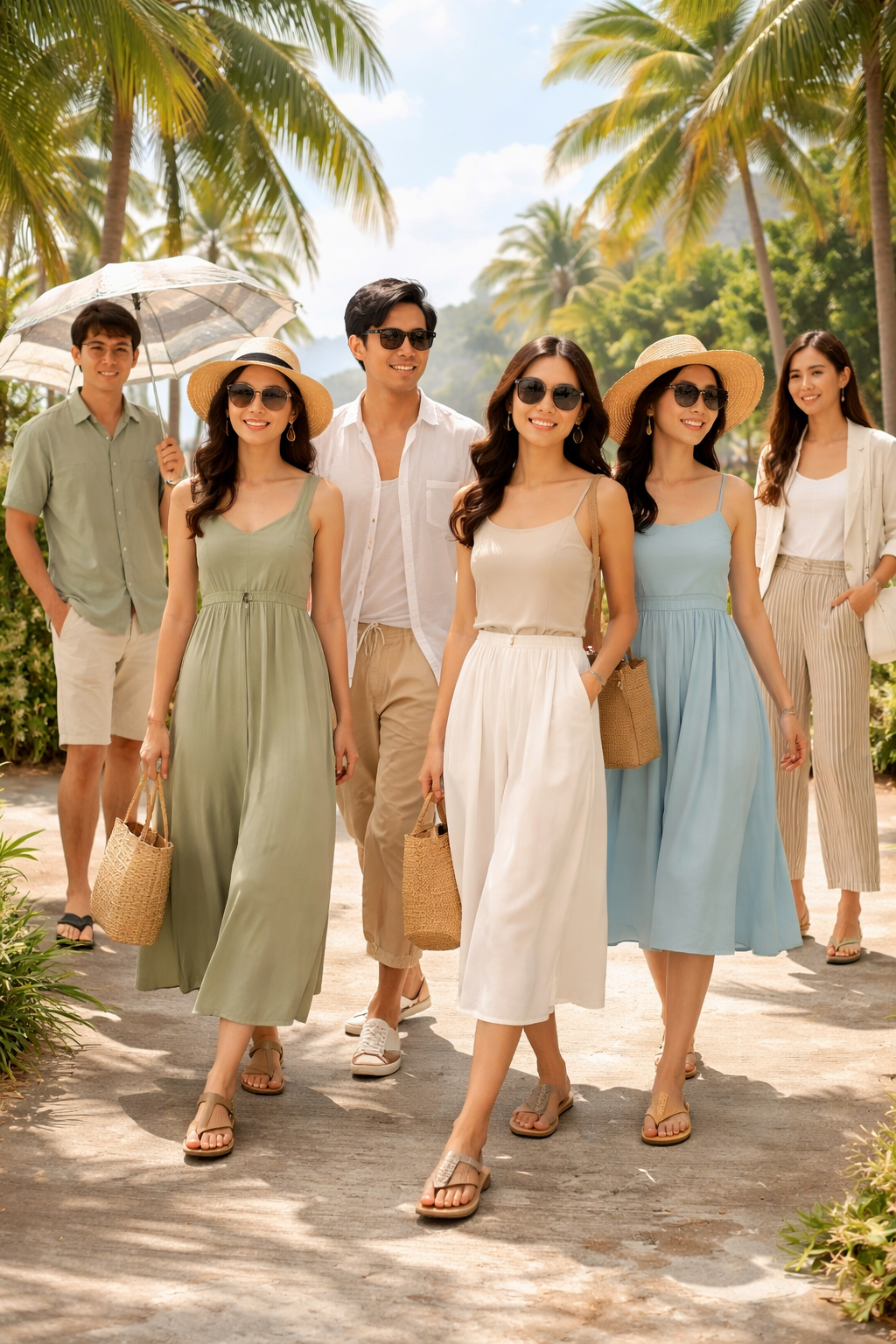
Color choice matters more than many people realize. Light shades such as white, beige, pastel blue, and pale yellow reflect sunlight better than dark colors, which tend to absorb heat. Wearing brighter or softer tones can help keep the body cooler during daytime activities. This is especially helpful for commuters, travelers, and anyone who spends time walking under the sun. Still, darker shades can be worn strategically in the evening or in indoor environments.
The rainy season is another major consideration in the Philippines. Fashion in tropical weather must adapt not only to heat but also to sudden downpours. Quick-drying clothing becomes especially useful during these months. Cropped pants, ankle-length trousers, and skirts that do not drag on wet streets are practical choices. Footwear should also be selected carefully. Waterproof sandals, rubber-soled flats, and slip-resistant shoes are often more suitable than suede sneakers or leather footwear that can be damaged by water. Carrying a foldable umbrella and a compact water-resistant bag is also a smart part of tropical dressing.
For everyday wear, Filipinos often prefer a balance of casual comfort and presentable style. Women may choose sleeveless tops paired with lightweight trousers or skirts, while men often wear short-sleeved button-down shirts, polo shirts, and chinos made from breathable materials. For more formal occasions, it is still possible to dress elegantly without sacrificing comfort. Linen blazers, light dresses, and tailored but breathable clothing can maintain a polished appearance while staying climate-appropriate.
Accessories should be both functional and minimal. Hats, sunglasses, and light scarves can offer protection from the sun, while simple jewelry is usually more comfortable than heavy accessories in hot weather. Bags made from canvas, nylon, or other light materials are often better suited to daily use in humid conditions.
Dressing for tropical weather in the Philippines means being thoughtful about climate, movement, and lifestyle. The best fashion choices are those that help people stay cool, dry, and comfortable while still expressing personal style. A wardrobe built around breathable fabrics, relaxed cuts, practical footwear, and weather-ready pieces offers both fashion and function in a country shaped by sun, humidity, and rain.
About the Author