
You can recreate the spirit of almusal in any kitchen by stocking a few staples and learning a handful of techniques. Start with rice: cook extra the night before so you can make sinangag—day-old grains stir-fried with oil, lots of minced garlic, and a pinch of salt. Add a fried or soft-scrambled itlog, and you’re halfway to the classic silog formula. For a quick protein, sauté corned beef with onions (and diced potatoes if you like) until lightly crisp at the edges.
To channel tapsilog, marinate thin beef slices in soy sauce, calamansi or lemon, smashed garlic, black pepper, and a touch of sugar for 30–60 minutes, then pan-sear over high heat. For tosilog, simmer tocino gently with a splash of water until the liquid evaporates and the meat caramelizes in its rendered fat. Longganisa cooks best low and slow at first (with a little water), then finishes in its own fat for a bronzed snap. Keep the egg yolk runny if you enjoy sauce-like richness on the rice.
Porridges are surprisingly simple. For lugaw, simmer 1 part rice with 7–8 parts water or stock, stirring occasionally until creamy; finish with fried garlic, scallions, and calamansi. For arroz caldo, bloom ginger and garlic in oil, stir in rice, add chicken and stock, and simmer to tenderness; season with patis and top with egg. Champorado needs only rice, water, tablea or cocoa, and sugar—serve with milk and, if you’re adventurous, a side of tuyo for that sweet-salty counterpoint.
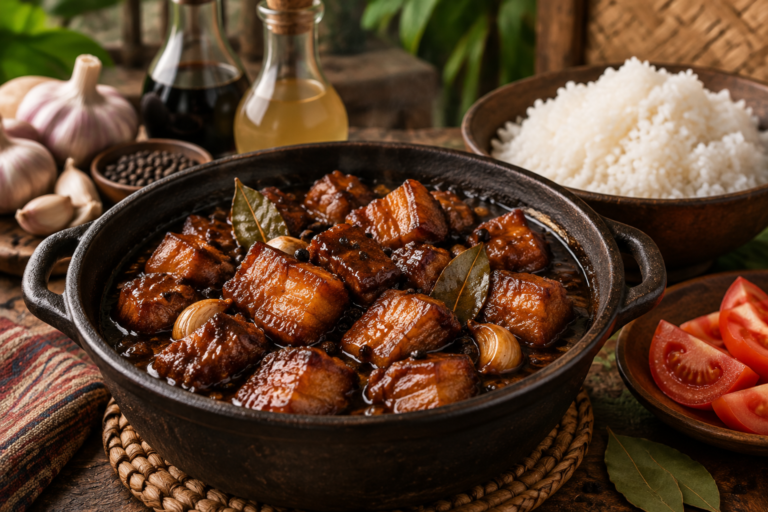
Round out the table with bread and sweets. Warm pandesal (store-bought is fine) turns into breakfast sandwiches with eggs, cheese, or leftover adobo. If you can find silken tofu, make a simple taho by heating arnibal (brown sugar syrup) and spooning it over tofu with sago pearls. Drinks set the mood: brew kapeng barako for boldness, or whisk tsokolate/sikwate by dissolving tablea in hot water or milk and frothing vigorously.
Don’t forget the finishers. Set out sukà (vinegar) with crushed garlic and chilies, toyo with calamansi, and atchara for crunch. Garnish with tomatoes and cucumbers to freshen rich bites. For a lighter or vegetarian plate, skip the meats and top sinangag with garlicky mushrooms, fried tofu, or tinapa-style smoked fish alternatives. However you assemble it, aim for contrast—crispy and tender, savory and tart, a hint of sweet—which is the true blueprint of Filipino breakfast.
About the Author