
The Philippines is a tapestry of living landscapes, where mountain ridges, coral kingdoms, and underground rivers coexist in a compact archipelago. For travelers seeking nature with depth, the country’s national parks and protected areas offer experiences that span trekking, caving, and world-class diving—each site governed by distinct seasons, permits, and conservation rules.
Begin with Puerto Princesa Subterranean River National Park in Palawan, famous for its navigable limestone cave system. Guided boat tours glide through cathedral-like chambers lined with stalactites, while above ground, the park shelters monitor lizards and macaques. Visitor quotas apply; booking through accredited operators is recommended, especially from December to April when seas are calmer.
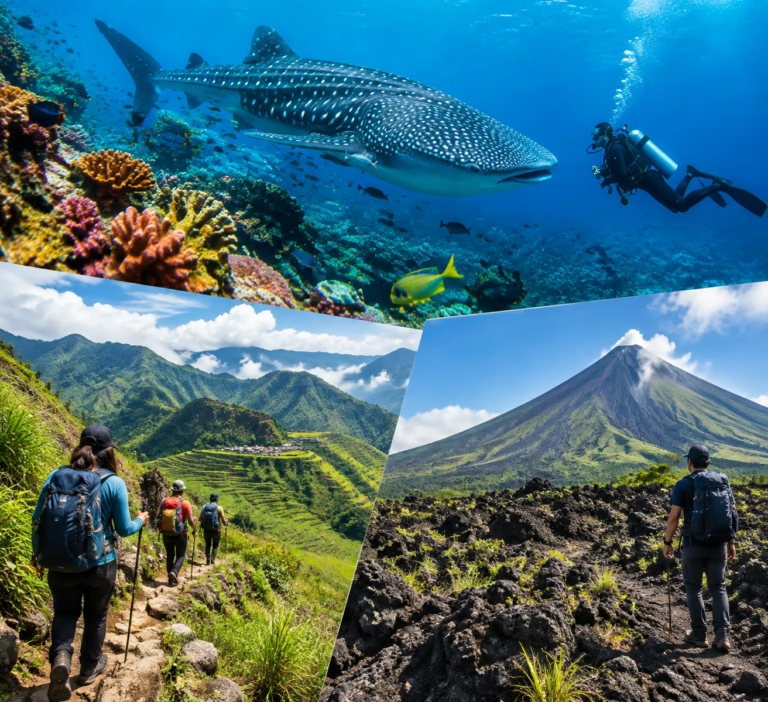
Marine enthusiasts gravitate to Tubbataha Reefs Natural Park, a UNESCO site in the Sulu Sea accessible only by liveaboard from roughly mid-March to mid-June. With pelagic sightings, sheer walls, and visibility that can exceed 30 meters, Tubbataha is the apex of Philippine diving. Strict “no-take” regulations protect biodiversity; proof of advanced certification and good buoyancy are more than formalities—they’re part of the park’s preservation pact.
On Luzon, Mount Pulag National Park rewards pre-dawn hikers with the famed “sea of clouds.” At 2,926 meters, it’s the country’s third-highest peak, home to dwarf bamboo grasslands and mossy forests. Permits, capacity limits, and mandatory briefings aim to reduce erosion and litter. Pack layers: temperatures can drop close to freezing during the Amihan (northeast monsoon).
In Bicol, Mayon Volcano Natural Park draws photographers with its near-perfect cone. While its beauty is magnetic, activity levels vary; check advisories and respect permanent danger zones. Trails and view decks around Legazpi City offer safer vantage points, and nearby lava front routes showcase striking volcanic landscapes shaped by recent eruptions.
Apo Reef Natural Park, off Occidental Mindoro, is the country’s largest coral reef system after the Great Barrier Reef. Expect turtles, schools of jacks, and reef sharks. Overnight camping on designated sand cays is possible with permits, but pack out all waste—fresh water is scarce, and Leave No Trace principles are enforced by rangers.
In Northern Luzon, the Cordillera’s rice terraces—though not a national park—complement nature travel with cultural depth. Trails around Banaue, Batad, and Sagada link limestone caves and pine forests, with community guides doubling as guardians of indigenous knowledge. Responsible trekking supports village economies while easing pressure on fragile landscapes.
When planning, note that the dry season (roughly November to May) suits most outdoor pursuits, though peak crowds arrive December to April. Typhoons can affect schedules from June to October; always watch local weather bulletins. Conservation fees vary by site, and some parks accept only cash. Lightweight rain gear, reef-safe sunscreen, water filters, and soft-soled trekking shoes are practical essentials.
What binds these destinations is a shared ethic: visitor experience improves as impact decreases. Choose accredited guides, respect buffer zones, and consider trips that include ranger talks or tree-planting activities. In the Philippines, nature travel isn’t just about collecting views—it’s about entering a long-running conversation between communities and the ecosystems they steward.
About the Author