
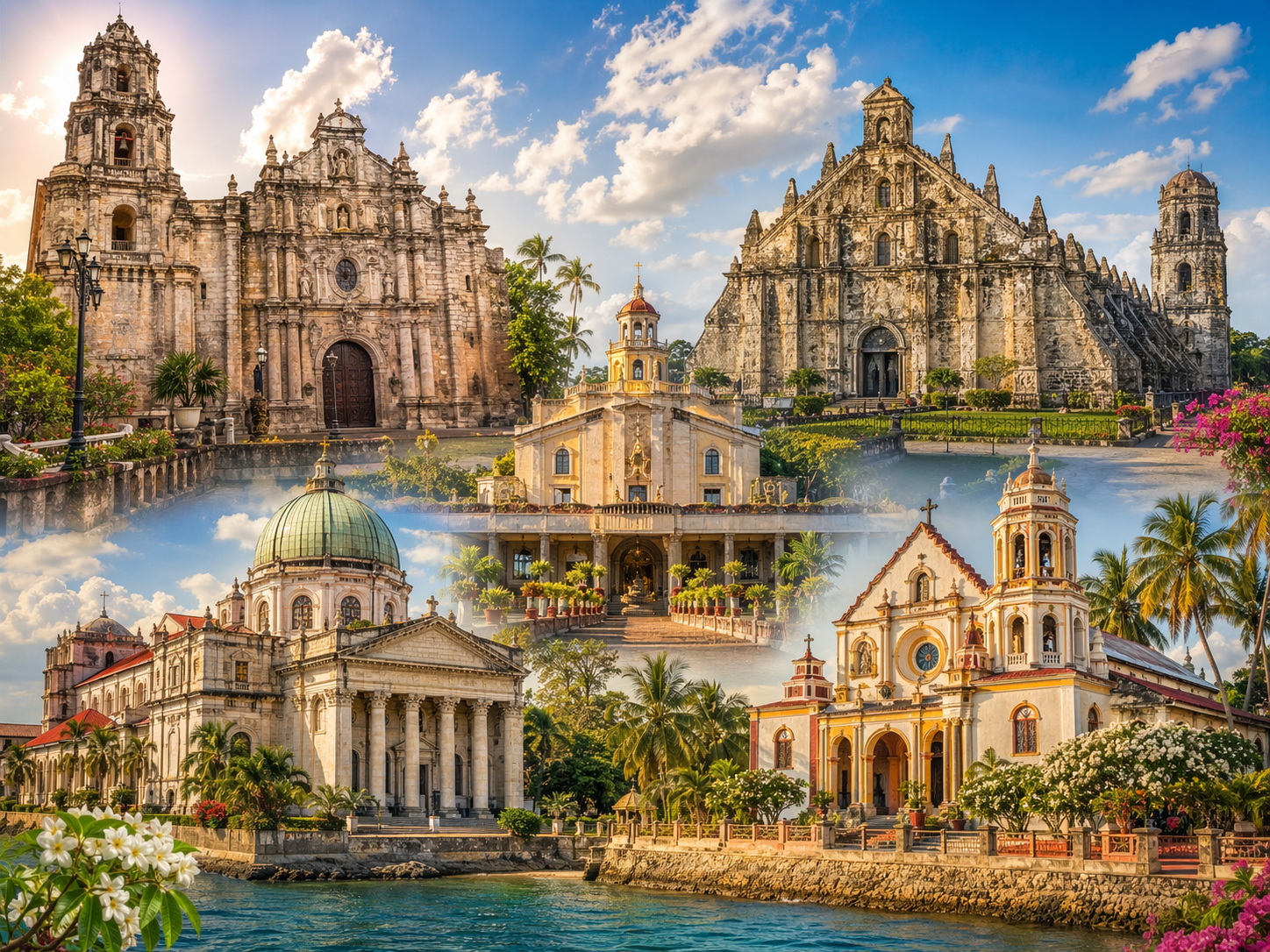
The Philippines is a predominantly Catholic country, and its rich religious heritage is evident in its many historical churches and places of worship. From centuries-old stone churches to sacred sites of religious significance, these places not only offer spiritual solace but also give visitors a glimpse into the nation’s colonial past. If you’re planning to explore the Philippines, here are some remarkable religious sites that showcase the deep connection between faith, culture, and history.
One of the most iconic religious landmarks in the Philippines is the San Agustin Church in Manila. This UNESCO World Heritage Site is the oldest stone church in the country, built in 1587 under the Spanish colonial rule. The church’s baroque architecture, intricate ceiling murals, and impressive altar make it a must-visit. It stands as a symbol of the enduring faith of Filipinos, as well as a testament to the craftsmanship of the era. Its historical significance goes beyond just being a place of worship—it has witnessed important events in Philippine history, including the declaration of Philippine independence from Spanish rule in 1898.
In the province of Ilocos Norte, Paoay Church is another stunning example of Spanish influence on religious architecture. Also known as the San Agustin Church of Paoay, this church is renowned for its unique baroque style, especially its massive coral stone walls and distinct earthquake baroque architecture. This design was developed to withstand earthquakes, a common occurrence in the region. The church is also a UNESCO World Heritage Site and is particularly famous for its grand façade, which features large, ornate buttresses.
Over in Cebu, Basilica del Santo Niño is another significant religious site. This church is the oldest in the Philippines, built in 1565 to house the Santo Niño (Holy Child) statue, which was brought to the country by Spanish explorer Ferdinand Magellan in 1521. The Basilica del Santo Niño is not just a historical landmark but also a place of pilgrimage, drawing thousands of visitors each year who come to pay homage to the revered statue of the Santo Niño, believed to be a miraculous representation of Jesus Christ as a child.
The Taal Basilica in Batangas is another awe-inspiring church. It is the largest church in the Philippines, built in 1856. Known for its neoclassical architecture and its stunning interior, the church’s grandeur and historical significance are undeniable. Taal’s location near the famous Taal Volcano makes it even more interesting, adding a layer of natural beauty to its historical and religious importance.
Aside from these well-known churches, there are also lesser-known but equally important religious sites around the country. The Church of Our Lady of the Pillar in Zamboanga is a good example. Its Spanish colonial-era design, coupled with its status as a national shrine, makes it a place of interest for both pilgrims and tourists alike. The church is dedicated to Our Lady of the Pillar, a significant figure in Catholicism.
Religious tourism in the Philippines not only offers a look into the country’s vibrant faith but also an opportunity to explore its colonial past and the incredible architecture that shaped the nation’s identity. Whether you are seeking spiritual enrichment or simply appreciate history and culture, these historical churches and places of worship are essential stops on any traveler’s itinerary.
About the Author