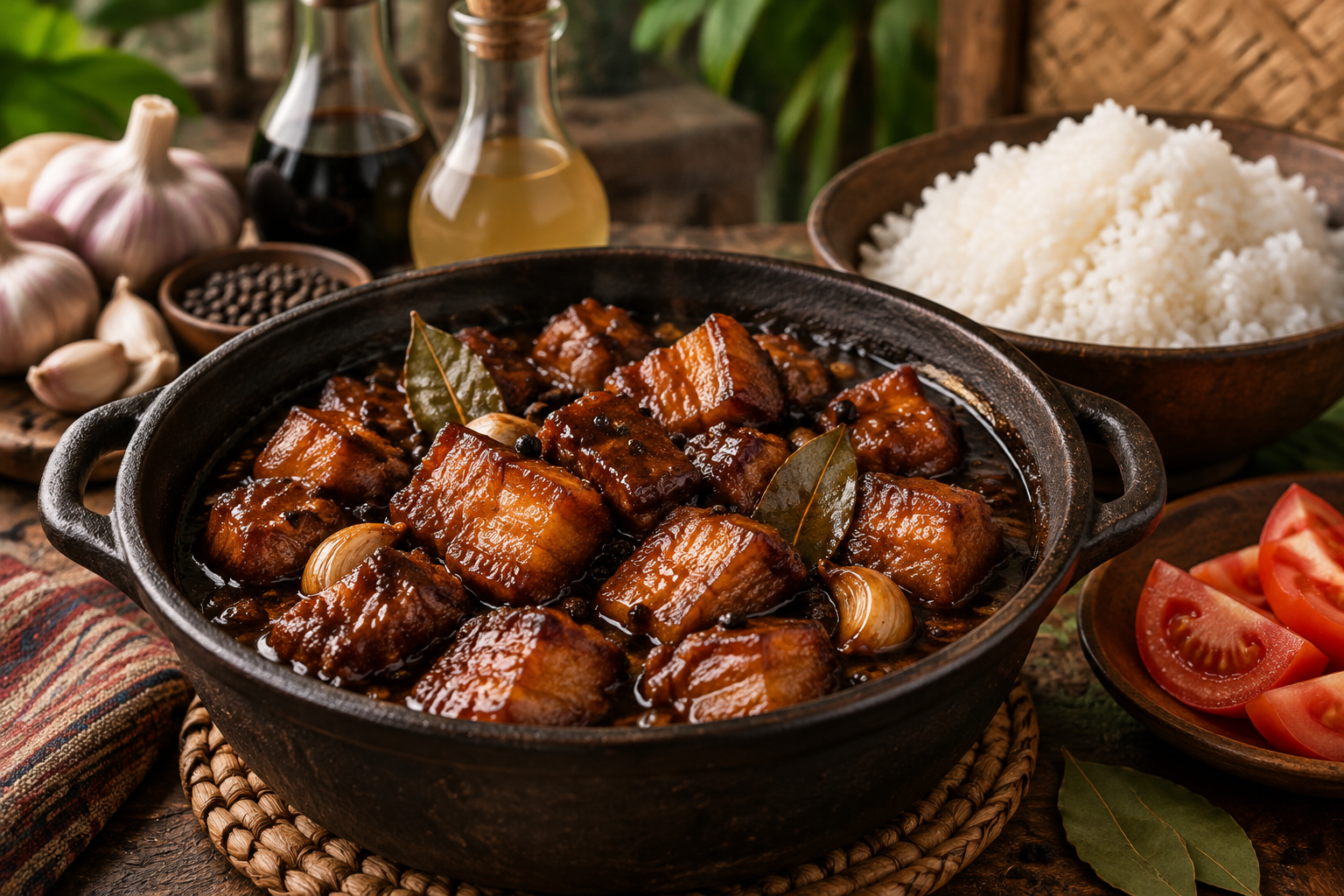
Filipino adobo is more than just a dish; it is a cultural emblem that has simmered its way into global kitchens. While countless variations exist, the classic pork adobo remains the gold standard—a perfect balance of vinegar, soy sauce, garlic, and peppercorns. In 2026, as interest in authentic home cooking continues to surge, learning this foundational recipe offers both comfort and culinary skill. This guide breaks down the essential techniques and ingredients to help you recreate the iconic taste of a Filipino family kitchen.
The Anatomy of Authentic Pork Adobo
At its core, adobo is a braise. Pork belly or shoulder is marinated and then slowly cooked in a mixture of vinegar (usually cane or coconut), soy sauce, crushed garlic, bay leaves, and whole black peppercorns. The magic lies in the balance: the vinegar tenderizes and brightens, the soy sauce adds umami depth, and the garlic infuses everything with pungent sweetness. Unlike many Western stews, no water is added—the meat cooks in its own juices and the marinade, concentrating flavor.
Choosing the Right Cut
For the most authentic result, use pork belly with skin on. The fat renders into the sauce, creating a silky texture, while the skin becomes gelatinous. Pork shoulder is a leaner alternative that still yields tender results if cooked longer. Avoid lean loin, which can dry out during the braise.
Step-by-Step Cooking Method
- Marinate: Combine 1 kg pork belly (cut into 2-inch cubes) with 1/2 cup soy sauce, 1/3 cup cane vinegar, 8–10 crushed garlic cloves, 1 tsp whole peppercorns, and 3 bay leaves. Marinate for at least 30 minutes, or overnight for deeper flavor.
- Sear: Heat 2 tbsp oil in a heavy pot. Remove pork from marinade (reserve liquid) and brown on all sides over medium-high heat. This step builds a rich fond.
- Braise: Pour in the reserved marinade and bring to a boil. Do not stir immediately—let the vinegar cook off its raw edge for 2–3 minutes. Then reduce heat to low, cover, and simmer for 45–60 minutes until pork is fork-tender.
- Reduce: Remove lid, increase heat to medium, and let the sauce reduce until slightly thickened and glossy, about 10 minutes. Season with salt or a pinch of sugar if needed.
- Serve: With steamed jasmine rice and a side of sliced tomatoes.
Why 2026 Is the Year of Home Adobo
Recent data from the Philippine Department of Tourism shows a 34% increase in culinary tourism searches related to adobo in early 2026, with home cooks seeking to replicate travel memories. According to a 2026 feature by the National Commission for Culture and the Arts, adobo remains the most requested recipe in Filipino cooking classes worldwide. Read the NCCA’s cultural profile of adobo here. This renewed interest reflects a broader shift toward slow food and heritage cooking.
Common Mistakes and Pro Tips
Avoid using distilled white vinegar, which is too harsh. Cane vinegar or coconut vinegar offers a mellower acidity. Never stir the adobo immediately after adding the vinegar—wait for the boil to settle, or the sauce may taste raw. For a deeper color, add 1 tbsp of dark soy sauce or a teaspoon of annatto powder. Finally, adobo tastes even better the next day; the flavors meld as it rests.
About the Author