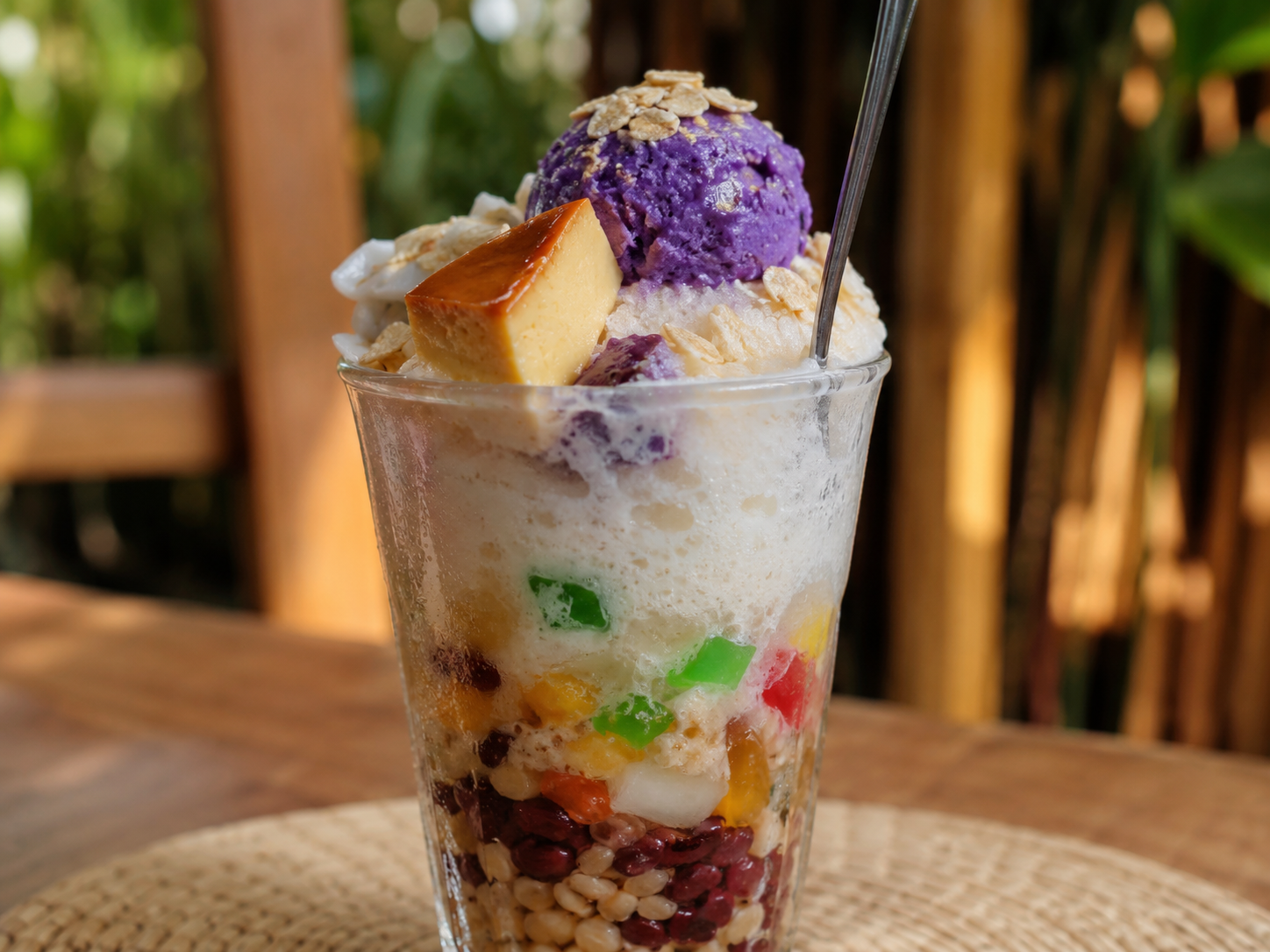
When the tropical heat becomes unbearable, Filipinos do not simply reach for a cold drink—they build a masterpiece. Halo-halo, which literally translates to “mix-mix,” is far more than a shaved ice dessert; it is a vibrant edible mosaic that encapsulates the country’s history, resourcefulness, and love for communal indulgence. More of a hybrid between a drink and a dessert, halo-halo invites you to plunge a long spoon into a tall glass and stir until every layer melds into a sweet, creamy chaos.
The Origins of a National Icon
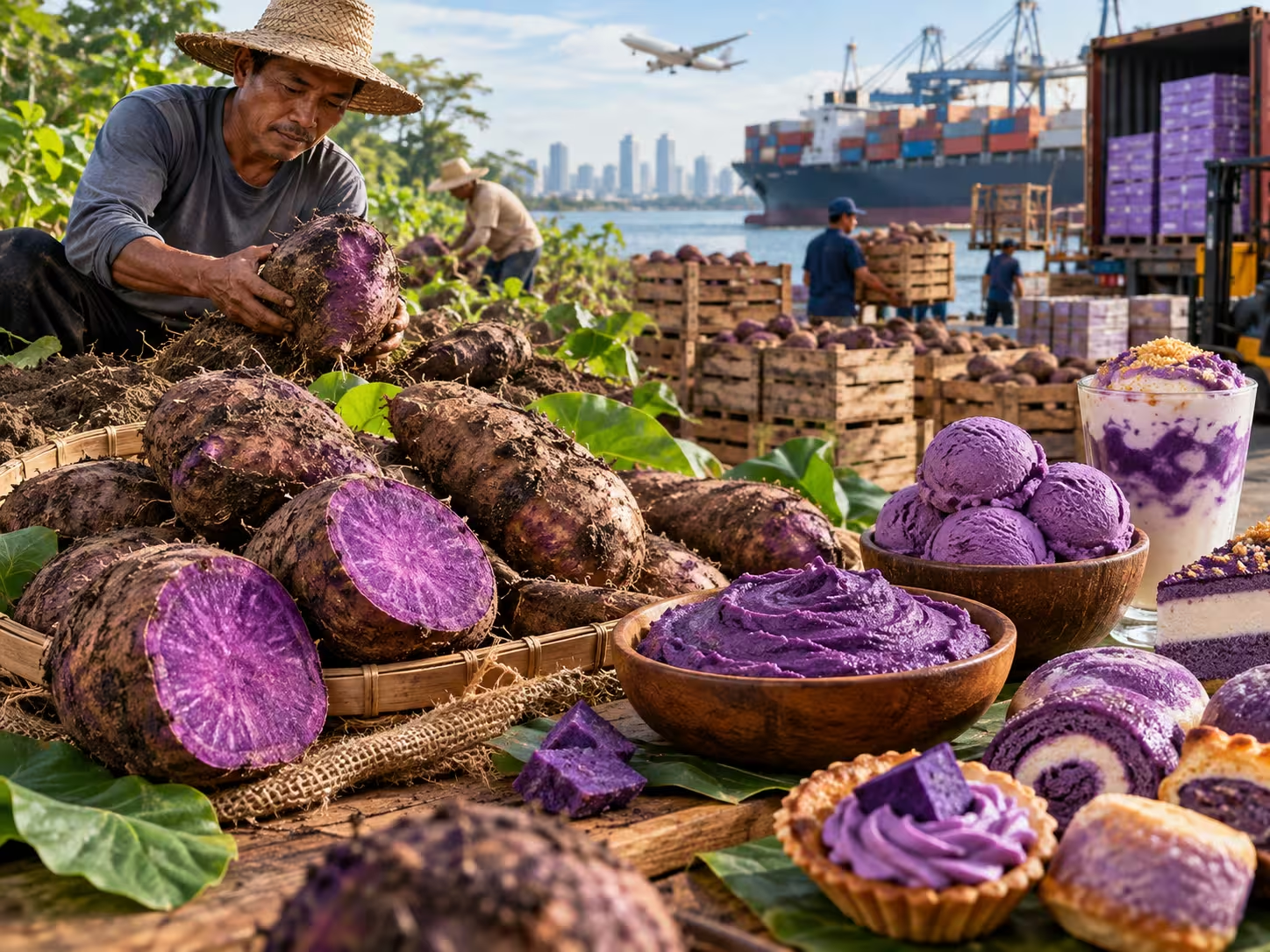
The roots of halo-halo are often traced to the Japanese kakigōri, introduced by migrants in the early 20th century who sold sweetened shaved ice. Filipinos quickly adapted the concept, incorporating local ingredients such as sweetened beans, tropical fruits, and purple yam. Over decades, what began as a simple ice treat evolved into a culinary symbol of the nation’s multicultural identity—influenced by Chinese bean desserts, Spanish milk-based sweets, and American refrigeration technology. Today, the dish is not merely a refreshment but a nostalgic emblem served from roadside sari-sari stands to upscale hotel buffets.
A Symphony of Textures and Flavors
What makes halo-halo so mesmerizing is the deliberate layering. At the bottom sit preserved red beans, chickpeas, strips of coconut sport (macapuno), sugar palm fruit (kaong), and cubes of grass jelly or gelatin. A mountain of finely shaved ice follows, soaked generously with evaporated milk. The crowning jewels—a scoop of creamy ube halaya, a golden slice of leche flan, and sometimes a sprinkle of pinipig (toasted young rice) or a drizzle of sweetened condensed milk—create a kaleidoscope of colors. Each spoonful delivers a contrast between chewy, soft, crunchy, and silky, with the ice melting into a sweet, lavender-tinted soup.
Modern Twists and Global Appeal
In recent years, halo-halo has transcended its street-food status to inspire global interest. Artisan cafes in Manila now deconstruct the dessert into halo-halo-inspired lattes, cheesecakes, and even cocktails. Overseas, Filipino restaurants in Los Angeles and London feature halo-halo as a centerpiece dessert, while health-conscious versions swap evaporated milk for coconut cream and use natural sweeteners. The dish’s international cachet soared when TasteAtlas, the experiential food guide, ranked it among the world’s top desserts in 2025. As detailed by the Philippine Tourism Promotions Board’s gastronomy portal (https://www.tpb.gov.ph, accessed January 2026), halo-halo stands as a culinary icon that draws both locals and tourists, an edible lesson in how a nation’s history can be tasted in a single chilled glass.
About the Author