The Philippines is facing a growing need to make healthcare more accessible to older adults. According to Philippine Statistics Authority data from the 2020 Census of Population and Housing, the country had about 9.22 million people aged 60 and above, representing roughly 8.5 percent of the household population.
This demographic shift makes senior healthcare more than a family concern. It is increasingly a public health, financing, and local government issue.
For readers examining senior health programs in the Philippines, the most important point is that support does not come from one single program. It is built through a combination of national health insurance, legal discounts, local health centers, hospital services, and assistance from senior citizen offices.
The Legal Foundation of Healthcare for Filipino Seniors
One of the main pillars is the Expanded Senior Citizens Act of 2010, or Republic Act No. 9994. The law gives qualified Filipinos aged 60 and above access to benefits that can reduce the cost of healthcare.
Among its most significant provisions are a 20 percent discount and value-added tax exemption on certain medicines, medical supplies, professional fees, laboratory services, and other qualified healthcare expenses.
The law can be reviewed through the official Lawphil legal database: https://lawphil.net/statutes/repacts/ra2010/ra_9994_2010.html.
These benefits matter because older adults often live with several conditions at the same time. Hypertension, diabetes, heart disease, arthritis, and declining vision may require repeated consultations and long-term medication rather than one-time treatment.
How PhilHealth Supports Older Adults
Another major part of the system is PhilHealth coverage. Republic Act No. 10645 expanded mandatory national health insurance coverage to all senior citizens.
In practical terms, an older adult seeking care may use PhilHealth benefits at accredited facilities, subject to program rules and the type of service required. Hospital treatment is only one part of the picture. Primary care, screening, medicine management, and follow-up visits are equally important for preventing expensive complications.
The Local Healthcare Pathway
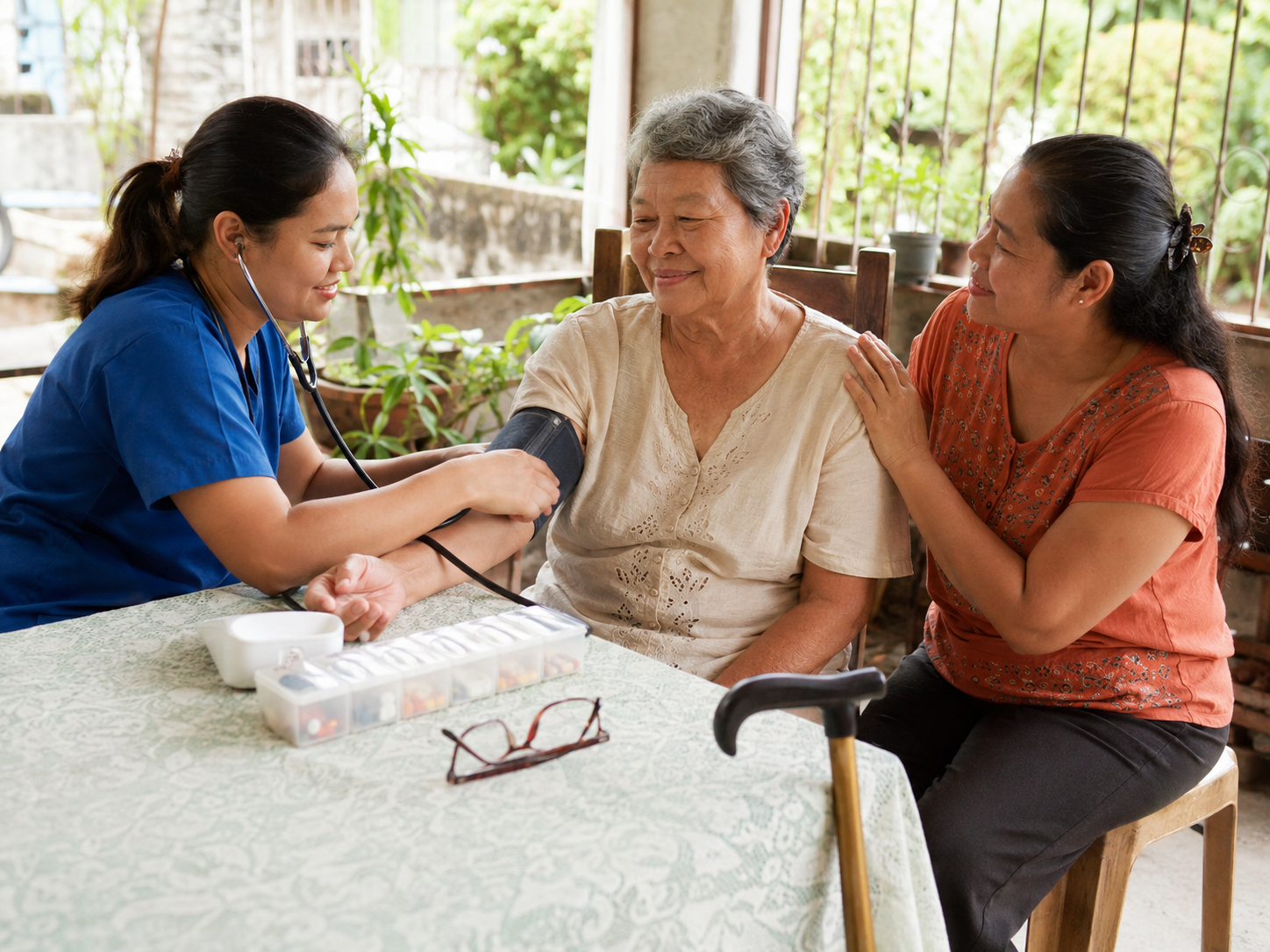
A common real-world situation shows why coordination is essential. An older person in a provincial or island community may first visit a barangay health station for blood pressure monitoring. The patient may then be referred to a rural health unit, a specialist, or an accredited hospital.
At the same time, the family may need to coordinate with the Office for Senior Citizens Affairs, commonly known as OSCA, to manage identification and benefit access.
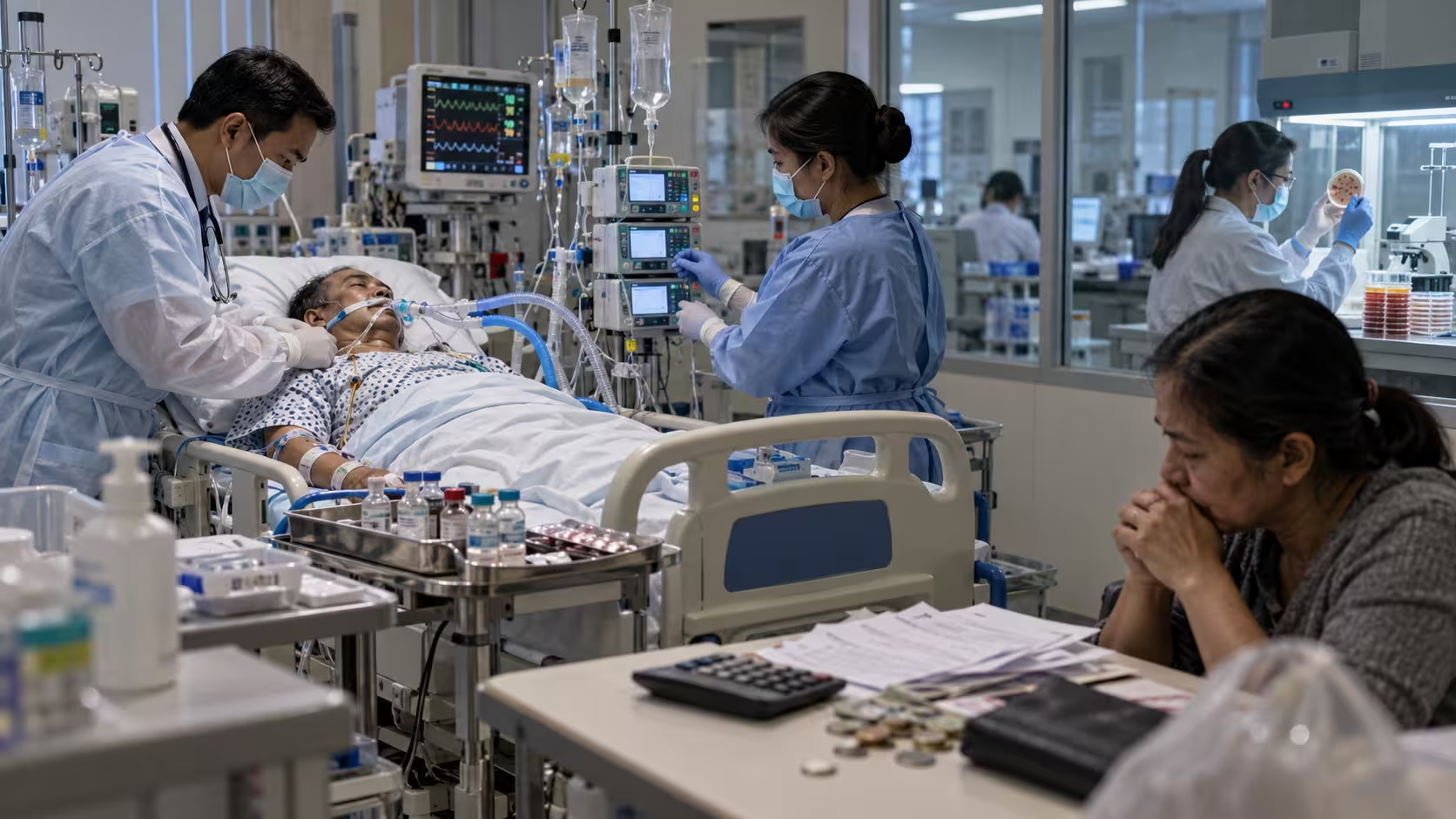
The system can work, but the experience is not always simple. Travel distance, limited specialist availability, fragmented medical records, medicine shortages, and out-of-pocket costs can still affect continuity of care.
Prevention Is Becoming as Important as Hospital Treatment
The strongest senior health system is not one that waits for a medical emergency. Regular monitoring for blood pressure, blood sugar, nutrition, mobility, eyesight, hearing, and mental health can identify risks earlier.
Families also play an important role. Keeping an updated medicine list, organizing medical documents, checking PhilHealth status, and maintaining contact with the nearest health center can make healthcare easier to navigate.
For the Philippines, the central challenge is not simply creating benefits on paper. The real test is whether an older person can move from the barangay level to appropriate treatment without unnecessary delays, confusing paperwork, or catastrophic expenses.
When insurance, legal benefits, preventive services, and local support work together, senior healthcare becomes more than emergency assistance. It becomes a system designed to protect independence, dignity, and quality of life.
About the Author