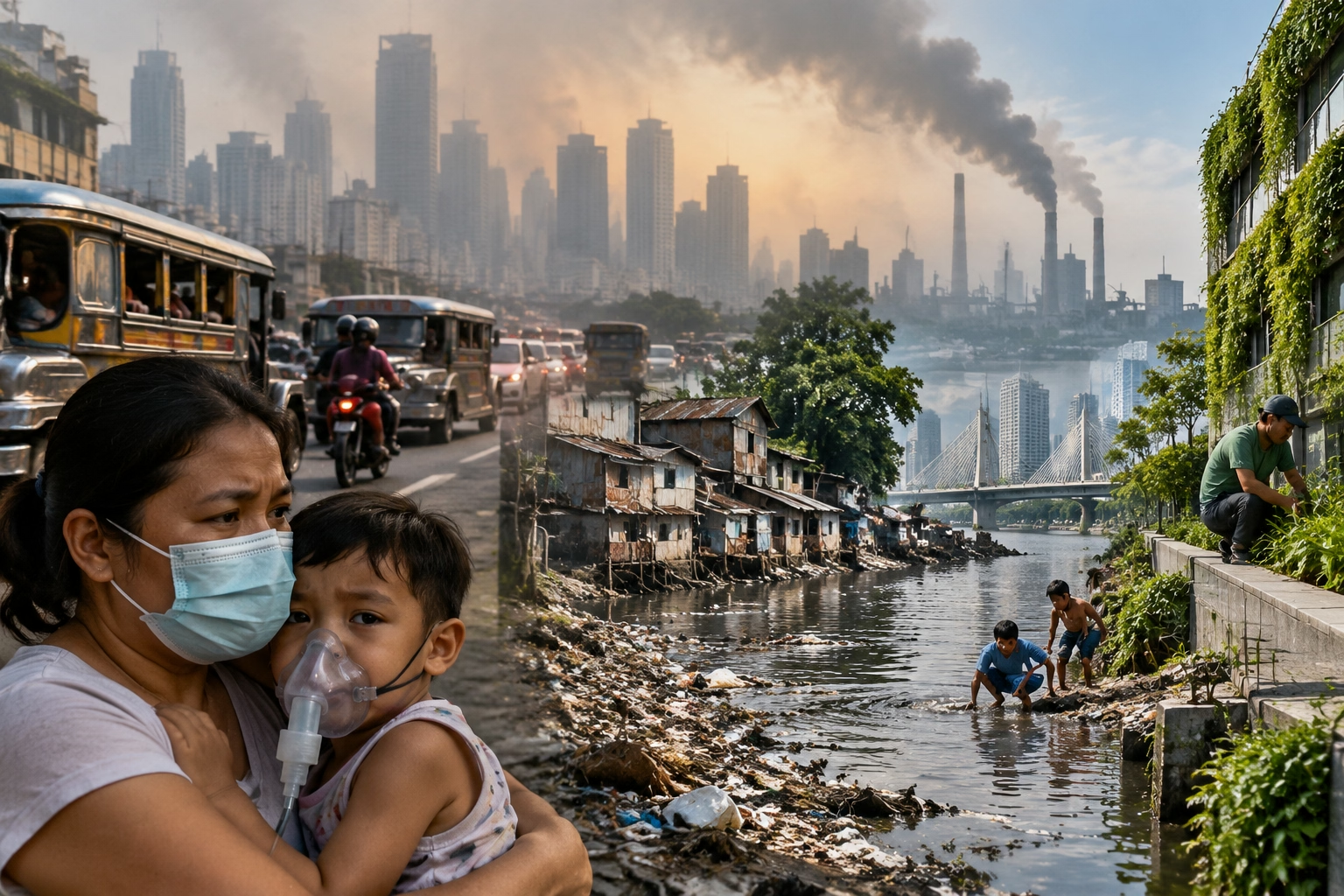

Public health problems affect not only individuals but also communities, economic productivity, education, and national stability. Because these issues are broad and complex, the government has a central responsibility in preventing, controlling, and solving health challenges in society. Public health is not limited to hospitals and medicine. It also includes clean water, sanitation, nutrition, vaccination, disease surveillance, health education, environmental protection, and equal access to healthcare services.
One of the most important roles of the government is creating health policies and regulations. Through laws and public health standards, the government can control factors that may harm people’s health. For example, regulations on tobacco use, food safety, waste management, clean water, and air pollution can reduce the risk of disease. Without strong policies, companies, communities, or individuals may ignore practices that endanger public health. Good regulation helps create a safer environment for everyone.
The government also plays a major role in providing healthcare facilities and services. Public hospitals, community health centers, vaccination programs, maternal health services, and emergency medical care are examples of services that need government support. In many areas, especially rural or low-income communities, people may not be able to afford private healthcare. Government-funded services help reduce inequality and ensure that health is not only available to wealthy groups.
Another essential responsibility is disease prevention. Prevention is often more effective and less expensive than treatment. Governments can organize immunization campaigns, health screenings, nutrition programs, and public education campaigns. These efforts help people understand how to prevent diseases such as tuberculosis, dengue fever, diabetes, hypertension, and respiratory infections. By promoting healthy lifestyles, the government can reduce the number of people who become seriously ill.
Public health emergencies also require strong government leadership. During outbreaks, natural disasters, or environmental crises, the government must coordinate hospitals, laboratories, emergency teams, and communication systems. Accurate information is very important during emergencies because misinformation can cause panic or dangerous behavior. The government must provide clear guidance, monitor disease spread, and ensure that medical supplies, vaccines, and trained health workers are available.
In addition, the government must address social factors that influence health. Poverty, poor housing, unemployment, limited education, and lack of sanitation can increase health risks. Therefore, solving public health problems requires cooperation between different sectors, including education, transportation, housing, agriculture, and social welfare. Health programs will be more successful when people have access to nutritious food, safe workplaces, clean neighborhoods, and reliable public services.
The government also needs to invest in health data and research. Accurate data helps identify which diseases are increasing, which areas need more facilities, and which groups are most vulnerable. With proper research, government programs can be planned based on evidence rather than assumptions. Monitoring and evaluation are also necessary to make sure that public health policies truly benefit the population.
Overall, the government has a vital role in protecting public health through regulation, prevention, healthcare access, emergency response, education, and social support. A healthy society cannot be achieved by individuals alone. It requires organized leadership, fair policies, adequate funding, and cooperation between the government and the community.
About the Author