Chinese influence on Filipino cuisine is not limited to a collection of borrowed recipes. It reflects centuries of migration, trade, intermarriage, entrepreneurship, and cultural adaptation. From neighborhood noodle shops to family celebrations, dishes with Chinese roots have become so deeply integrated into Philippine life that many Filipinos no longer regard them as foreign.
The strongest influence came from migrants from Fujian, particularly Hokkien-speaking communities who established commercial networks in Manila and other port cities. Their cooking traditions introduced noodles, filled buns, spring rolls, soy-based seasonings, stir-frying, and new approaches to preparing meat and vegetables. Filipino cooks did not simply reproduce these dishes. They adjusted them to local ingredients, regional tastes, and social customs.
Binondo as a Culinary Gateway
Founded during the Spanish colonial period, Binondo became the center of Chinese commercial and cultural life in Manila. Its restaurants, bakeries, markets, and family-run food businesses helped transmit Chinese culinary practices to a wider Filipino population.
Food in Binondo developed through constant interaction. Chinese merchants served dishes familiar to migrant communities, while Filipino customers encouraged restaurants to modify flavors and portions. Recipes gradually became sweeter, saltier, more heavily sauced, or more accommodating to local ingredients such as calamansi, native vinegar, coconut products, and regional vegetables.
This process produced a cuisine that was neither entirely Chinese nor exclusively Filipino. It became Filipino-Chinese, often described within the community as Chinoy cuisine.
The Hokkien Legacy in Everyday Food
Several familiar Filipino food names reveal their Hokkien origins. “Pancit,” the general Filipino term for noodles, is commonly linked to the Hokkien expression pian i sit, often interpreted as food that is conveniently cooked or eaten. “Lumpia” derives from Hokkien terminology for spring rolls, while “siopao” refers to steamed buns and “siomai” to dumpling-style snacks.
The dishes themselves changed after entering Filipino kitchens. Philippine lumpia developed multiple identities, including fresh lumpiang sariwa, fried lumpiang Shanghai, and vegetable-centered regional versions. Siopao fillings became sweeter and heavier, while Filipino-style siomai was increasingly served with calamansi, soy sauce, and chili-garlic oil.
Adaptation Rather Than Simple Imitation
The Chinese impact on Filipino cuisine is best understood as indigenization. Filipinos absorbed an outside culinary idea and transformed it until it suited local habits.
Pancit illustrates this process clearly. Chinese noodles became part of birthdays because long strands were associated with long life. Yet the Philippines created an extraordinary range of local versions. Pancit Malabon uses thick rice noodles and seafood, Pancit Batil Patung reflects the food culture of Tuguegarao, and Pancit Habhab is traditionally eaten without utensils in Quezon Province.
These dishes preserve the Chinese concept of noodles while expressing distinct Filipino regional identities.
Encyclopaedia Britannica’s overview of Philippine cultural life notes that the country’s culture reflects layers of Asian and Western influence. This broader historical background helps explain why Chinese cooking could be absorbed so extensively into Filipino food traditions: Britannica – Philippines: Cultural Life.
Why the Influence Remains Visible Today
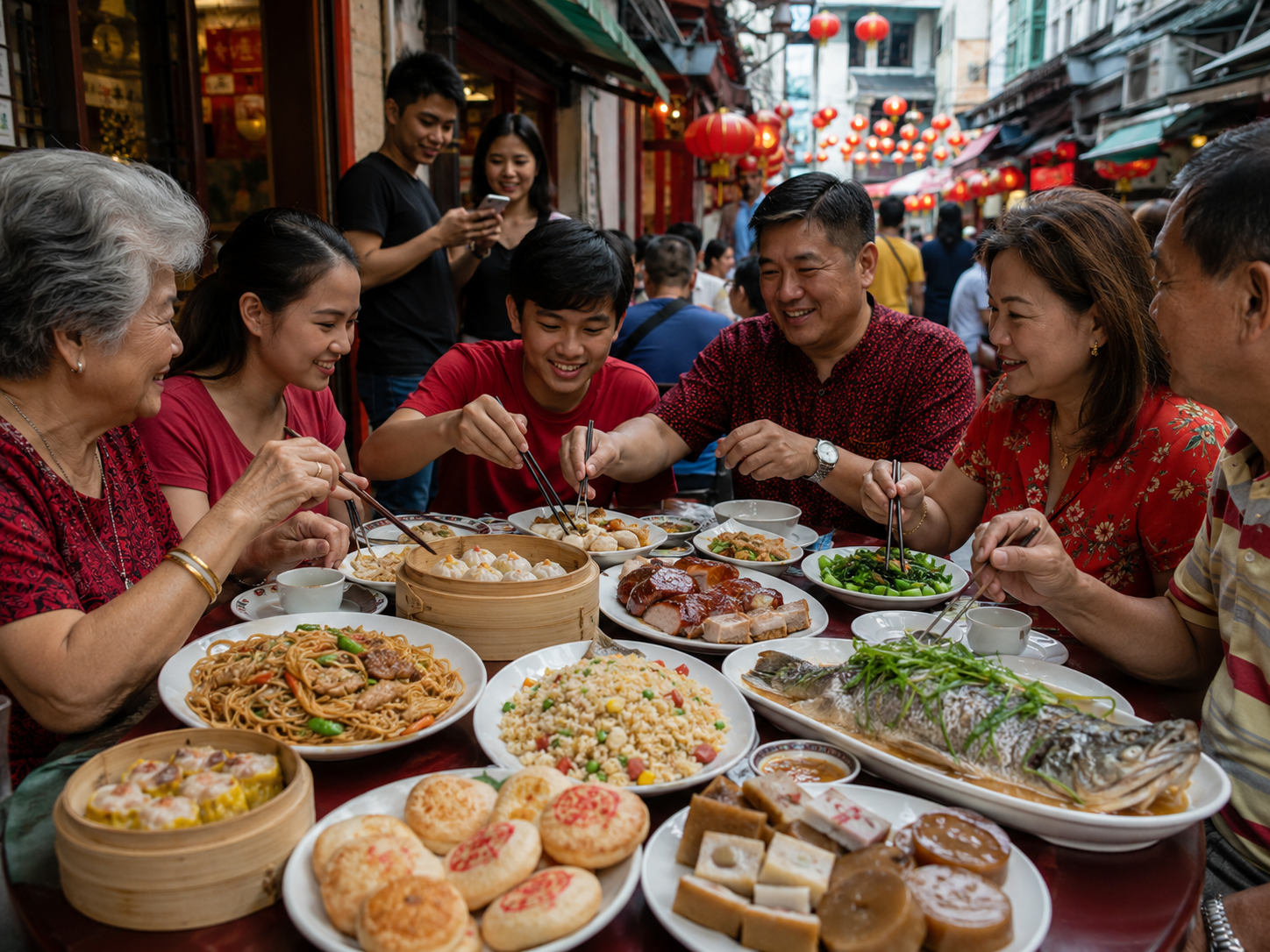
In the mid-2020s, the legacy remains highly visible in Binondo food tours, Lunar New Year markets, family restaurants, delivery-app menus, and social-media food content. Younger diners may discover hopia, fresh lumpia, mami, or traditional dumplings through digital recommendations, but they are participating in a culinary exchange that began centuries ago.
Chinese influence succeeded because it became practical, accessible, and emotionally meaningful. Noodles signify celebration, tikoy represents prosperity, and lumpia appears at both ordinary meals and major gatherings. What began through migration and trade ultimately became part of the Philippines’ national culinary vocabulary.
About the Author