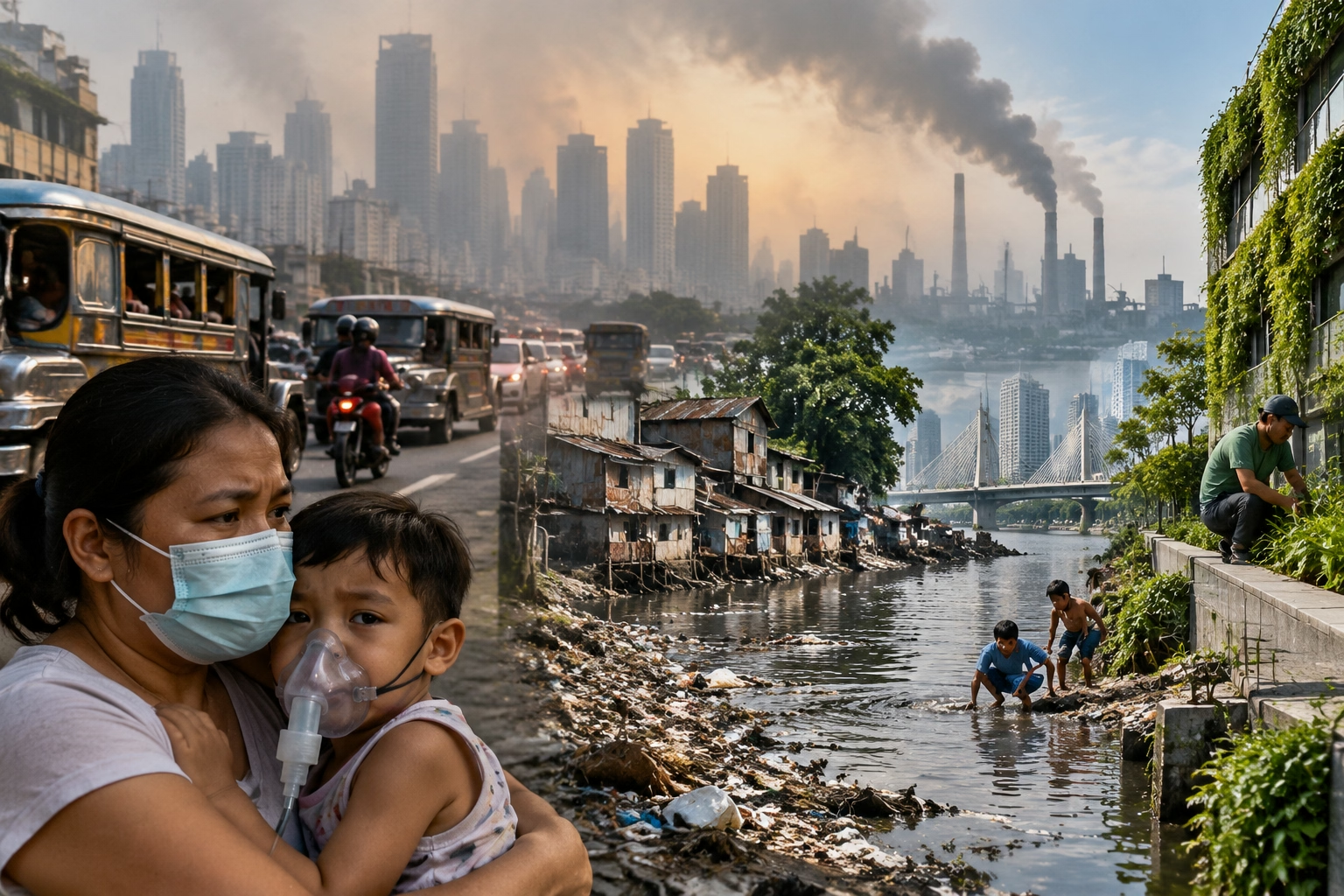

Healthcare in the Philippines, a country with a population of over 113 million, is a complex and multifaceted issue. Access to medical services varies significantly depending on geographical location, socioeconomic status, and even education levels. While urban areas, especially Metro Manila, boast modern healthcare facilities, rural regions often face severe limitations in both the availability and quality of healthcare services.
One of the major challenges is the disparity between urban and rural healthcare access. Metropolitan regions are home to well-equipped hospitals and clinics staffed with highly trained professionals, while provinces and remote areas struggle with underfunded healthcare infrastructure. Rural health units (RHUs) often lack essential medical equipment, and local healthcare providers may not have access to the latest treatments or specialized care. In these areas, patients often rely on community health workers who may not be equipped to handle complex medical issues.
The Philippines’ healthcare system is a combination of public and private entities, but public healthcare services, which are intended to cater to low-income groups, often suffer from budget constraints. Government hospitals frequently face overcrowding, understaffing, and shortages of essential medicines. As a result, many Filipinos, particularly in poorer areas, face long waiting times and inadequate care.
Moreover, economic factors play a crucial role in determining healthcare access. While private healthcare is often seen as a more reliable and efficient option, it is out of reach for the majority of Filipinos due to high costs. This creates a situation where wealthier individuals can access top-tier healthcare, while the rest struggle with basic needs.
The Philippine government has recognized the importance of improving healthcare access and addressing inequalities. Initiatives such as the Universal Health Care (UHC) Law, which aims to provide all Filipinos with access to quality and affordable health services, have been introduced. The UHC Law seeks to integrate both public and private health services, ensuring that even the poorest individuals can receive the care they need. However, the implementation of this law is still a work in progress, and challenges such as funding, infrastructure development, and workforce training must be overcome.
Furthermore, healthcare access is not only a matter of physical infrastructure but also cultural factors. In many rural areas, traditional medicine still holds sway, and many Filipinos prefer consulting local healers or “babaylans” instead of seeking medical treatment in formal healthcare settings. This can lead to delays in diagnosis and treatment, complicating the management of diseases that could otherwise be prevented or treated effectively.
In sum, the healthcare system in the Philippines is marked by a duality where wealth and location greatly influence the quality of care one can access. The government’s efforts to bridge these gaps through reforms such as the UHC Law are commendable, but significant challenges remain, particularly in the equitable distribution of resources.
About the Author