A Fabric That Speaks Softly
In a global luxury landscape still recovering from logo fatigue, the Philippines is offering an alternative vocabulary—one woven from pineapple leaf fiber and measured in decades, not seasons. At the center of this shift is Lulu Tan-Gan, a designer whose nearly five-decade career has moved from hand-loomed knitwear to what she calls “artisanal fashion that embodies understated luxury” .
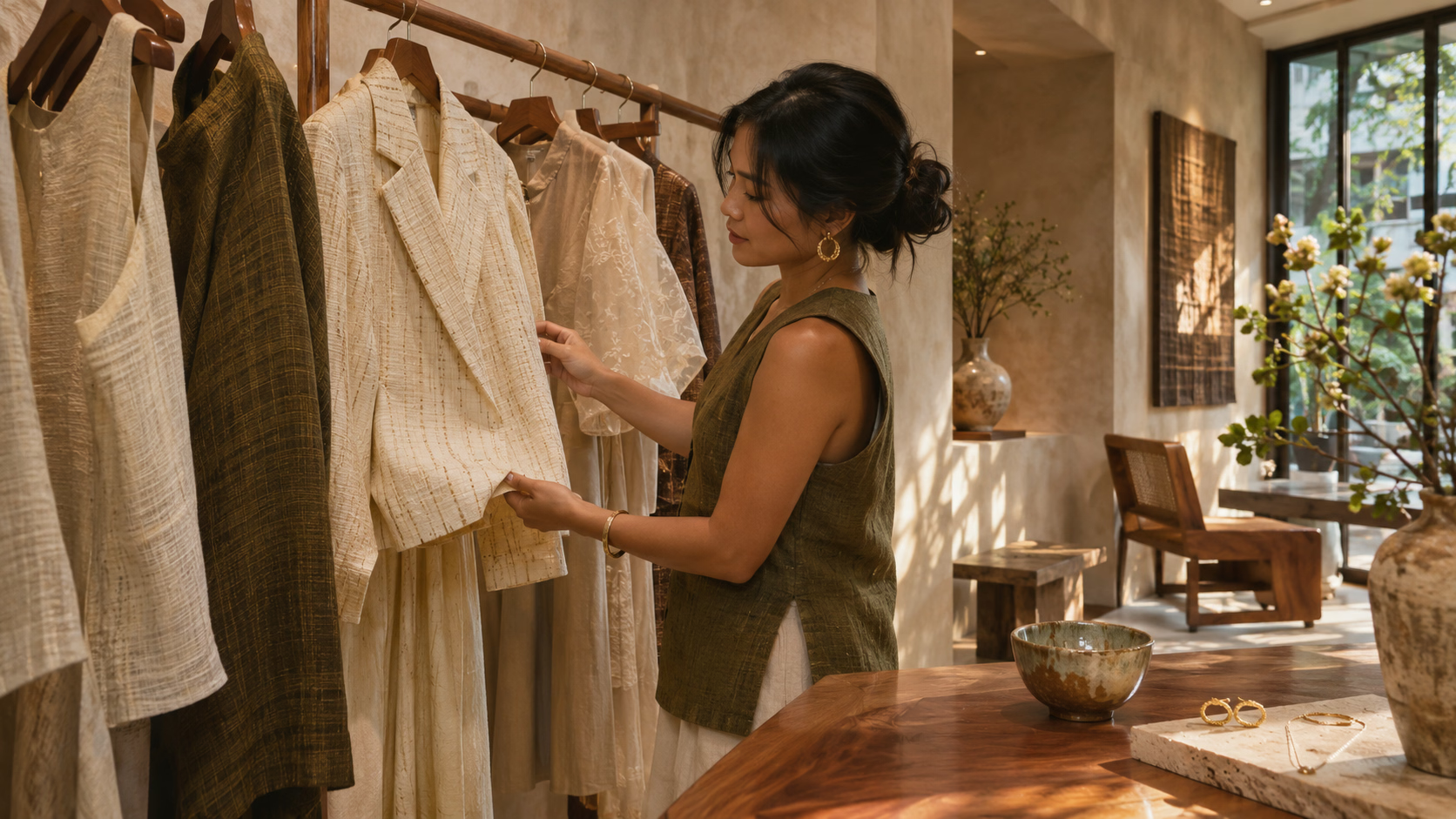
Tan-Gan’s November 2026 collection, Tailored Traditions, launched at Powerplant Mall, repositions piña—a translucent, stiff fabric historically confined to formal barongs—as a material for travel-friendly shirts, vests, and oversized silhouettes. Her approach is surgical: she cuts piña by sound, listening for the crispness that signals quality, and engineers the weave to drape rather than stand . The result is a garment that whispers rather than announces.
The Economics of Restraint
This is not nostalgia dressed as commerce. Euromonitor International’s October 2025 report on personal luxury in the Philippines confirms that “quiet luxury” continued to shape demand through 2025, with minimalist and understated designs holding appeal among affluent Filipino consumers . The data suggests a market maturation: buyers are moving away from visible branding toward pieces whose value is legible only to those who understand the material.
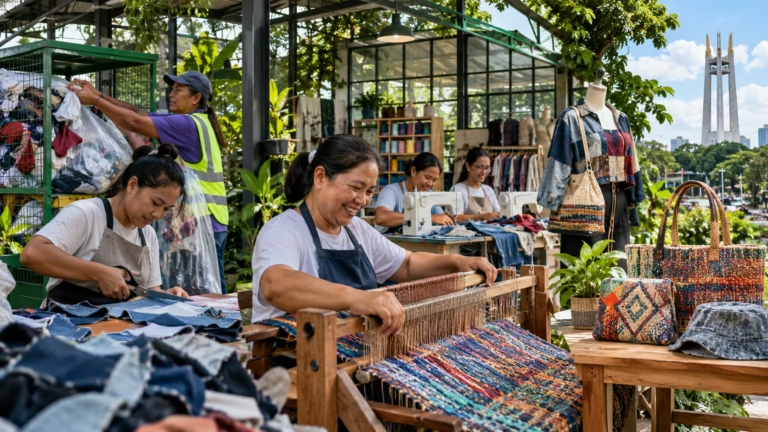
Tan-Gan’s “farm-to-fashion” framework directly addresses this. By sourcing piña from weaving communities in the provinces and treating the fabric’s limitations—its stiffness, its need for dry cleaning—as design problems rather than inconveniences, she creates a supply chain that is both traceable and narratively rich . The unlined construction of her pieces is deliberate: the fabric’s quality is the ornament.
Craftsmanship as Competitive Advantage
The broader ecosystem supports this trajectory. At the 49th ASEAN Summit’s Spousal Program in November 2026, Filipino designers including Francis Libiran and Lulu Tan-Gan presented collections built on piña callado, inabel, and t’nalak, demonstrating that indigenous textiles can hold their own on an international stage without resorting to spectacle . Libiran’s piña callado baro’t saya with art deco embroidery was not a costume—it was a thesis statement about what Philippine luxury looks like when it stops apologizing for its materials.
About the Author