The landscape of Filipino music is currently experiencing a paradoxical yet beautiful revolution. While artificial intelligence and digital audio workstations dominate the global charts, the ancient, organic sounds of the Philippines’ indigenous tribes are finding a massive new audience online. In 2026, the preservation of Filipino heritage is no longer confined to cultural shows or academic archives; it is happening virally on social media platforms and high-fidelity streaming services.
The Algorithmic Revival of the Kulintang
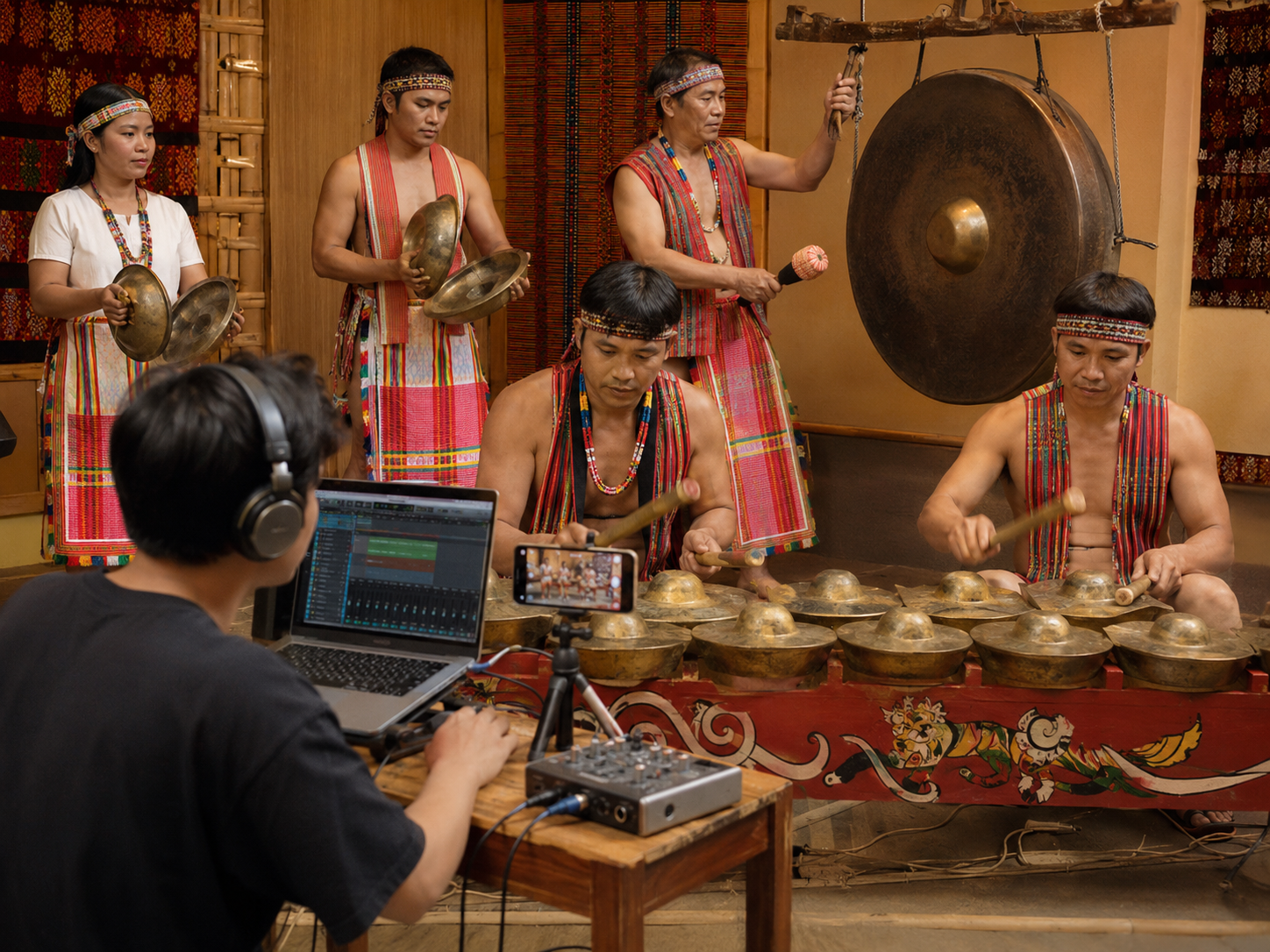
For decades, traditional instruments like the Kulintang (a set of gongs from Mindanao) and the Gangsa (flat gongs from the Cordillera region) were at risk of fading into obscurity, perceived by the youth as “old music.” However, 2026 data indicates a sharp pivot in consumption patterns. Young content creators are sampling these polyphonic rhythms and layering them over modern hip-hop and electronic beats. This fusion, often termed “Neo-Tribal,” has bridged the gap between the ancestral and the contemporary.
The visual component of these instruments is equally vital to their resurgence. The intricate, geometric carvings on the wooden stands of the Kulintang and the synchronized, dance-like movements required to play the Gangsa are highly engaging for short-form video content. This has turned local master craftsmen and musicians into unlikely internet celebrities, ensuring that the physical craft of instrument-making continues to thrive alongside the music itself.
Empowering Indigenous Communities Through Streaming Royalties
The economic shift is significant. Previously, indigenous musicians relied solely on local tourism or government stipends. Today, platforms have refined their metadata systems to better attribute royalties to indigenous compositions. According to the National Commission for Culture and the Arts (NCCA) , there has been a surge in grants for digitizing oral traditions. You can review their current initiatives regarding indigenous cultural preservation on their official site here: https://ncca.gov.ph/. This digital cataloging ensures that when a viral sample is used commercially, the originating community receives proper credit and compensation.
A Counter-Culture Movement
Interestingly, this trend is a direct response to the saturation of highly polished, formulaic pop music. Urban dwellers in Manila and Cebu are seeking authenticity. The raw, meditative, and trance-inducing qualities of the Kulintang and the Agung offer a sonic escape from the hyper-commercialized sounds of the city. In 2026, listening to tribal music is viewed not just as an act of nationalism, but as a wellness practice, often featured in mindfulness apps and art gallery installations.
The role of traditional music in 2026 is, therefore, dualistic. It serves as a grounding historical anchor while simultaneously evolving into a futuristic soundscape. By embracing technology rather than rejecting it, the custodians of Filipino culture have ensured that these sounds will not just survive the modern era, but will define a unique corner of it.
About the Author