On a humid Tuesday morning at the Bankerohan Public Market, fishmongers shout prices over glistening piles of tuna so fresh their eyes are still clear. This is Davao City, the undisputed Tuna Capital of the Philippines, a title backed not just by local pride but by hard numbers. The city’s fishing fleets and canneries supply a significant slice of the country’s USD 1.2‑billion tuna industry, yet the true magic happens when that bounty lands directly on your plate.
The Tuna Capital’s Wet Market Adventure
Any serious seafood crawl in Davao begins at Bankerohan. Vendors carve sashimi-grade yellowfin on the spot, serving it with nothing more than soy sauce, calamansi, and a dab of wasabi for less than PHP 150 a plate. The experience is raw, unfiltered, and deeply local. Beyond tuna, look for tanigue (Spanish mackerel), malasugui (blue marlin), and red snapper, all caught within hours by artisanal fishers operating from Toril to Sta. Ana Wharf. Early mornings yield the best selection, and haggling is part of the ritual.
Dampa-Style Dining by the Davao Gulf
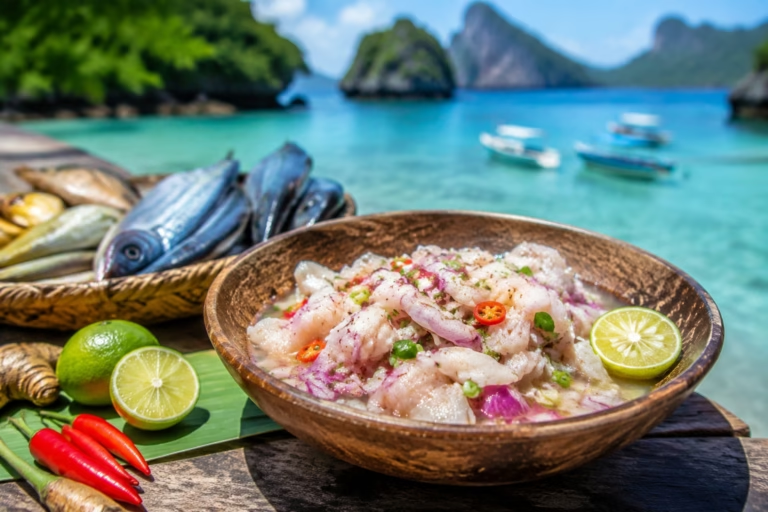
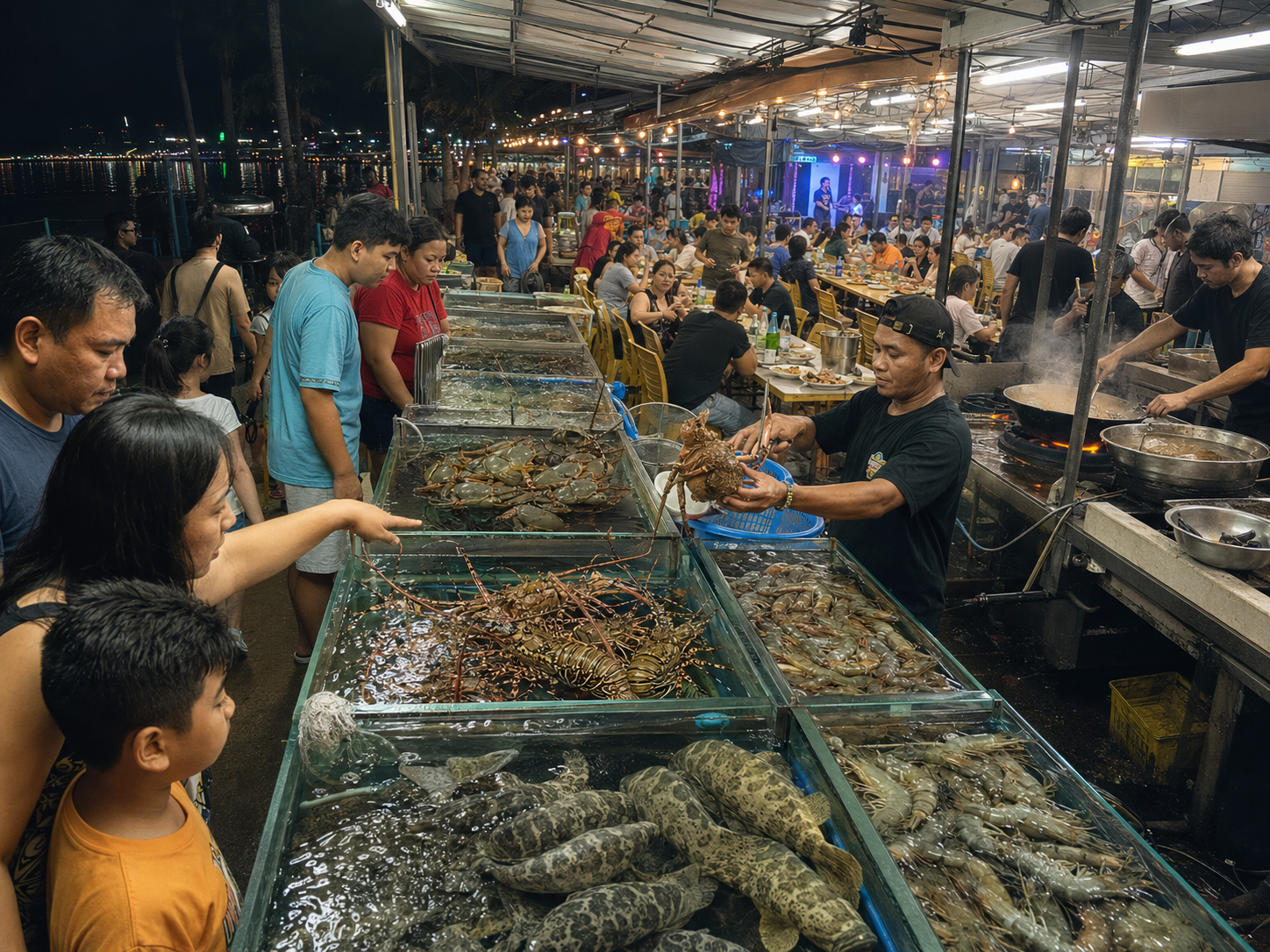
Davao’s version of dampa — a Tagalog term for a makeshift hut, now synonymous with pick-your-seafood-and-have-it-cooked restaurants — clusters along the Davao Gulf in areas like Times Beach and Matina Aplaya. Establishments such as Luz Kinilaw Place and Blue Post Boiling Crabs & Shrimps let guests select live crabs, lobsters, and groupers from aerated tanks. You choose the cooking method: kinilaw (Filipino ceviche), grilled over charcoal, or boiled in coconut milk with turmeric. The gulf breeze and views of Samal Island add a sensory layer no indoor restaurant can replicate.
A Sustainable Blue Economy in Motion
The seafood feast here is not merely a culinary pleasure — it is tied to a broader push for sustainability. Davao Gulf has been a closed fishing area for commercial purse seine vessels since 2014, a regulation that the Bureau of Fisheries and Aquatic Resources (BFAR) credits with a 17% increase in small-scale fishers’ catch by 2025. In early 2026, BFAR’s Fisheries Profile report noted that tuna landings in the Davao region remained stable, crediting both the gulf closure and the expansion of community-managed marine protected areas. Data from the BFAR Fisheries Profile 2026 underscores how these interventions keep high-value species on menus without depleting stocks. Visitors eating grilled tuna belly at a roadside joint in Toril are, knowingly or not, tasting the fruit of a rare policy success.
Kadayawan and the Grilled Seafood Trails
Timing a visit with the Kadayawan Festival each August unlocks another layer. Pop-up seafood grills line the streets, offering inihaw na panga (grilled tuna jaw) and squid stuffed with tomatoes and onions. The festival, originally a thanksgiving for harvest, now doubles as a showcase of Davao’s marine wealth. Even outside festival season, the Roxas Avenue night market transforms into a row of smoking grills where a full seafood dinner for two — complete with uni rice — rarely exceeds PHP 600.
What ties all these experiences together is the palpable connection between the water and the fork. Davao’s seafood culture refuses to be boxed into fine dining conventions; it thrives in markets, on plastic chairs by the sea, and in the hands of manongs who have been shucking sea urchins for decades. For anyone chasing the scent of the ocean, this city remains an unmatched destination where the Gulf’s generosity meets the grit and warmth of Mindanaoan hospitality.
About the Author