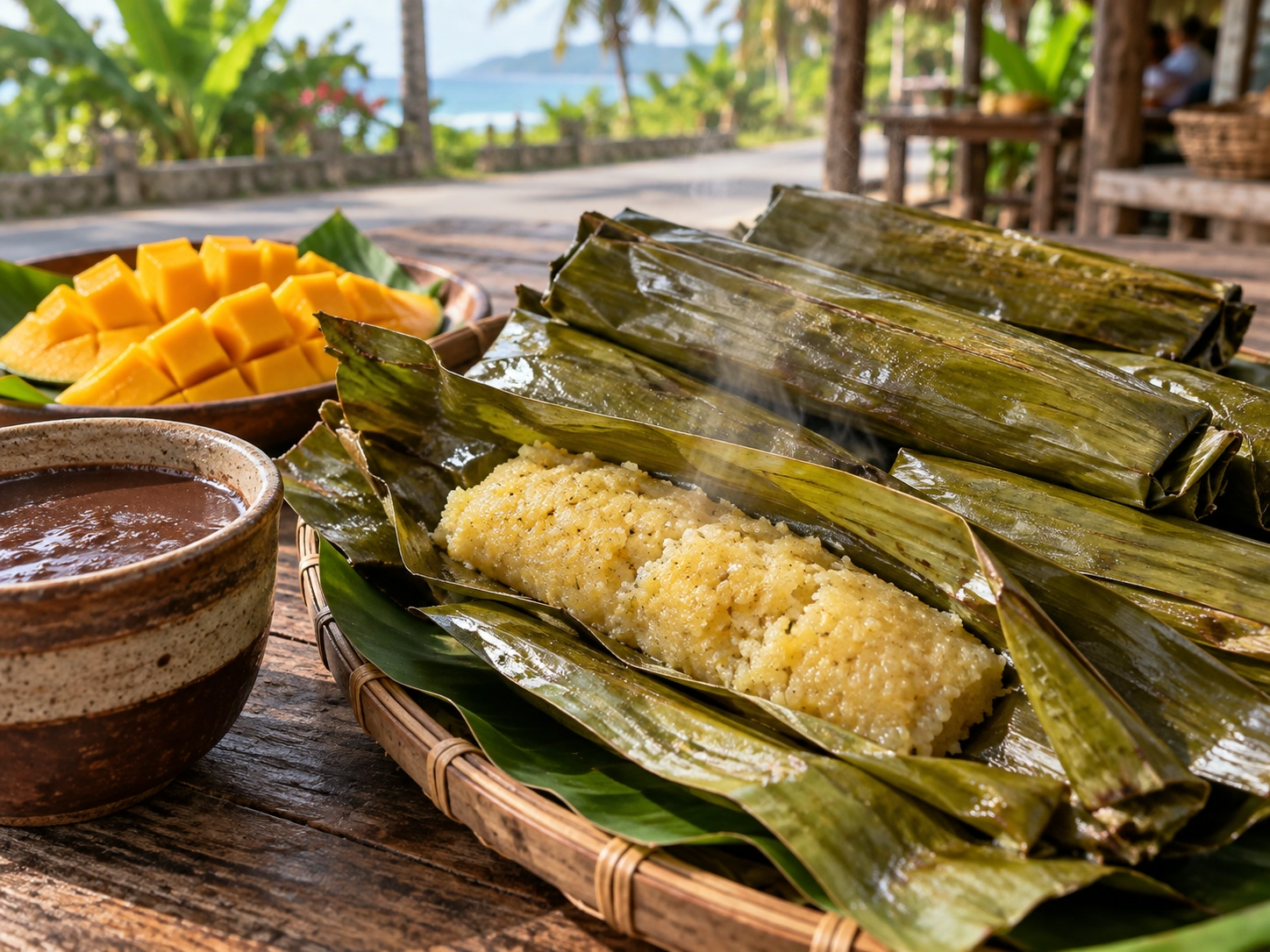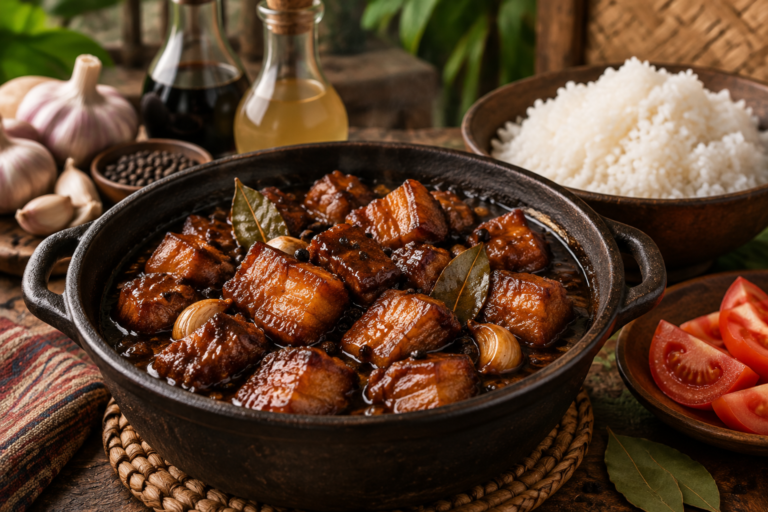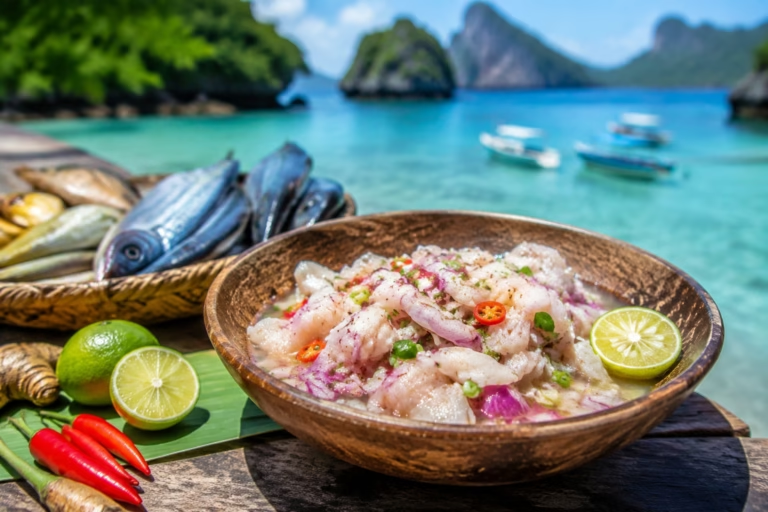
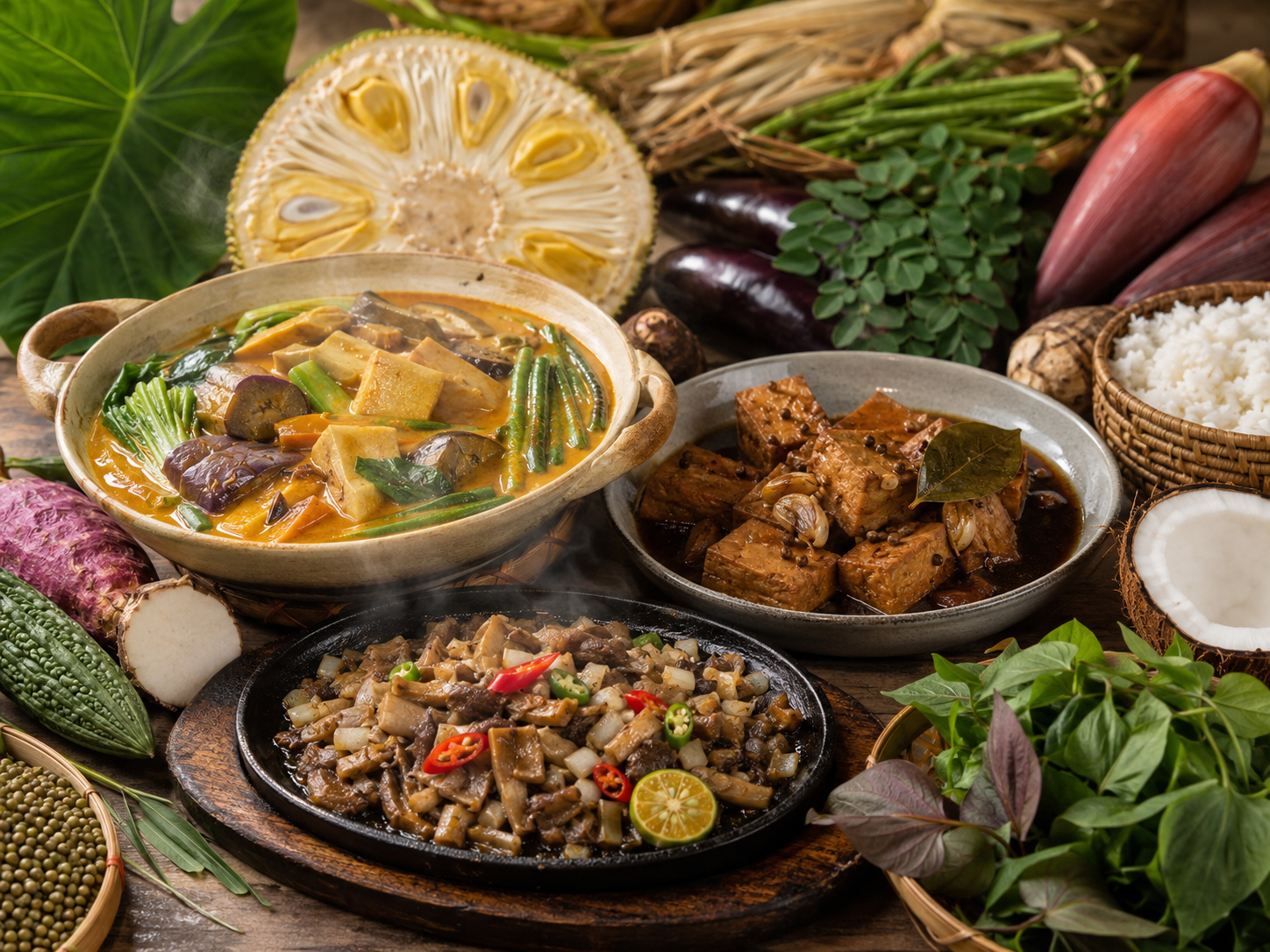
Filipino cuisine is often associated with pork adobo, crispy lechon, and meat-heavy celebrations. Yet this image tells only part of the story. Across the Philippines, vegetables, coconut milk, legumes, tropical fruit, and leafy greens have long formed the foundation of everyday home cooking.
For vegetarians and vegetable lovers, the country offers far more than plain rice and side salads. The challenge is understanding how traditional dishes are prepared. A meal may appear meat-free while still containing shrimp paste, fish sauce, pork broth, or small pieces of dried seafood.
Why Filipino Cuisine Works for Vegetable Lovers
The Philippines has a wide range of regional produce, including eggplant, squash, bitter melon, string beans, water spinach, taro leaves, green papaya, jackfruit, and mung beans. These ingredients are commonly cooked with garlic, onions, tomatoes, vinegar, coconut milk, and calamansi.
Rice also makes vegetable dishes feel substantial. Instead of treating vegetables as a small accompaniment, many Filipino meals combine rice with one or two strongly seasoned vegetable preparations.
This creates an accessible base for vegetarian cooking without requiring highly processed meat substitutes.
Traditional Dishes Worth Trying
Pinakbet
Pinakbet is an Ilocano vegetable stew usually made with squash, eggplant, bitter melon, okra, and string beans. Its combination of soft squash and slightly bitter vegetables produces a complex flavor profile.
Traditional versions frequently contain bagoong, a fermented fish or shrimp condiment. Vegetarians should ask for a version seasoned with salt, soy sauce, or fermented soybean paste instead.
Laing
Originating from the Bicol Region, laing is prepared with dried taro leaves slowly cooked in coconut milk and chili. The dish is creamy, earthy, and often surprisingly spicy.
Some cooks add shrimp paste, dried fish, or pork. A plant-based version can use mushrooms, tofu, or additional aromatics to provide depth.
Ginisang Monggo
Ginisang monggo is a comforting mung bean stew cooked with garlic, tomatoes, onions, and leafy vegetables such as malunggay or spinach. It is naturally rich in plant protein and fiber.
However, traditional recipes may include pork, chicharon, fish, or meat stock. Diners should specifically request a vegetable-based preparation.
Lumpiang Sariwa
Fresh Filipino spring rolls contain sautéed vegetables wrapped in a soft crepe and covered with a sweet garlic-peanut sauce. They are lighter than fried lumpia and can serve as a complete lunch.
Vegetarians should confirm whether the filling contains shrimp and whether the wrapper is made with egg. Vegans may need a specially prepared wrapper.
Hidden Ingredients That Require Attention
The most important words to recognize are bagoong, patis, and sabaw ng karne. Bagoong refers to fermented seafood paste, patis means fish sauce, and sabaw ng karne refers to meat broth.
A practical restaurant request is: “No meat, fish, shrimp, fish sauce, or shrimp paste, please.” Simply saying “vegetarian” may not always communicate every restriction, especially in smaller local eateries.
Nutrition and a Plant-Forward Plate
The World Health Organization recommends consuming at least 400 grams of fruits and vegetables daily as part of a healthy diet. Filipino meals can support this target when diners combine vegetable stews, legumes, fresh fruit, and moderate portions of rice. The recommendation is available through the WHO Healthy Diet Fact Sheet.
In today’s urban dining scene, restaurants in Manila, Cebu, and major tourism areas are increasingly familiar with tofu, mushrooms, coconut-based sauces, and vegan ingredient substitutions. Traditional eateries may require clearer communication, but the cuisine itself offers a strong foundation for satisfying vegetable-centered meals.
About the Author