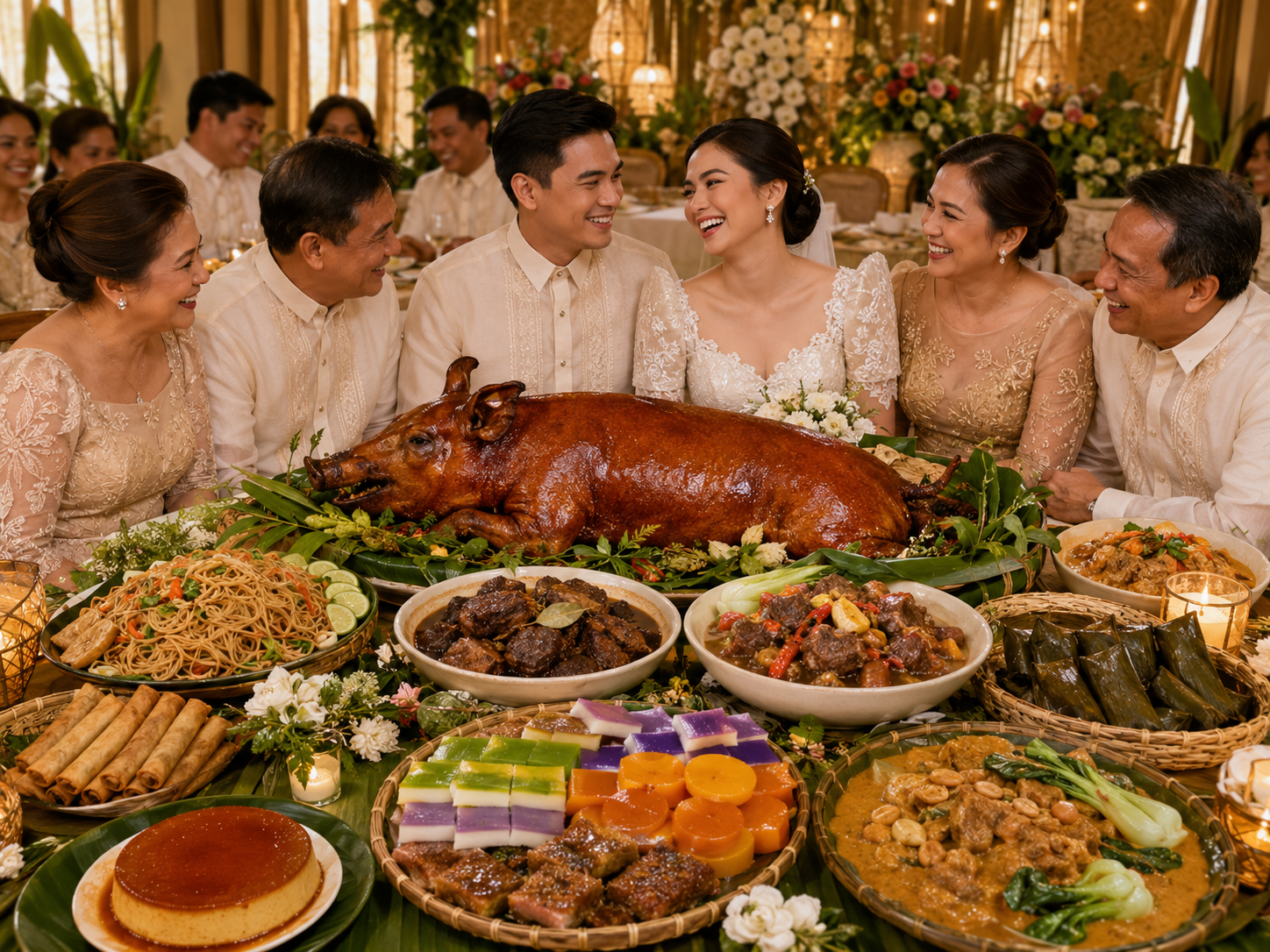
Filipino weddings are known for their warmth, hospitality, and generous feasts. Food is not simply served to satisfy guests; it represents family unity, prosperity, faith, and the hope for a joyful married life. In the Philippines, a wedding celebration is often viewed as a gathering of two families, not just two individuals. Because of this, the wedding banquet becomes one of the most meaningful parts of the event.
One of the most iconic dishes served at Filipino weddings is lechon, or whole roasted pig. Lechon is often placed at the center of the buffet table because it symbolizes abundance and celebration. Its crispy skin and tender meat make it a favorite during major occasions. In many provinces, serving lechon shows that the family has prepared something special for the guests. It is also a sign of generosity, since the dish is large enough to be shared by many people.
Another important wedding dish is pancit, a noodle dish that is associated with long life and good fortune. Filipino families often serve pancit during birthdays, but it is also common at weddings because the long noodles symbolize a lasting marriage. There are many versions of pancit, such as Pancit Canton, Pancit Bihon, and Pancit Malabon. Each version reflects different regional tastes, but the meaning remains closely connected to longevity and happiness.
Adobo is also a popular choice for wedding meals. Made with meat simmered in vinegar, soy sauce, garlic, bay leaves, and peppercorns, adobo is considered one of the most recognizable Filipino dishes. Its strong flavor and long shelf life make it practical for large celebrations. Serving adobo at a wedding can represent the couple’s connection to everyday Filipino home cooking, reminding guests that marriage is built not only on grand moments but also on daily care and comfort.
Filipino wedding menus often include dishes such as kare-kare, lumpia, embutido, morcon, caldereta, and chicken pastel. These foods add variety to the feast and allow families to present a rich spread of flavors. Lumpia, or Filipino spring rolls, is especially loved because it is easy to serve and eat. Meat dishes such as morcon and caldereta are often associated with festive gatherings and are usually prepared with special attention.
Desserts also hold cultural meaning. Kakanin, or rice-based delicacies, such as biko, sapin-sapin, puto, and kutsinta are often included in traditional celebrations. Sticky rice desserts are sometimes linked to closeness and unity, making them suitable for weddings. Leche flan, with its smooth texture and sweet taste, is another favorite dessert that adds elegance to the meal.
Wedding food in the Philippines is closely connected to tradition. Before the wedding, families may take part in pamamanhikan, a formal meeting where the groom’s family visits the bride’s family to discuss wedding plans. Food is usually shared during this meeting, reinforcing respect and family connection. During the reception, the meal becomes a way to honor guests and celebrate the joining of families. Through every dish, Filipino wedding cuisine expresses love, gratitude, and the wish for a prosperous future together.
About the Author