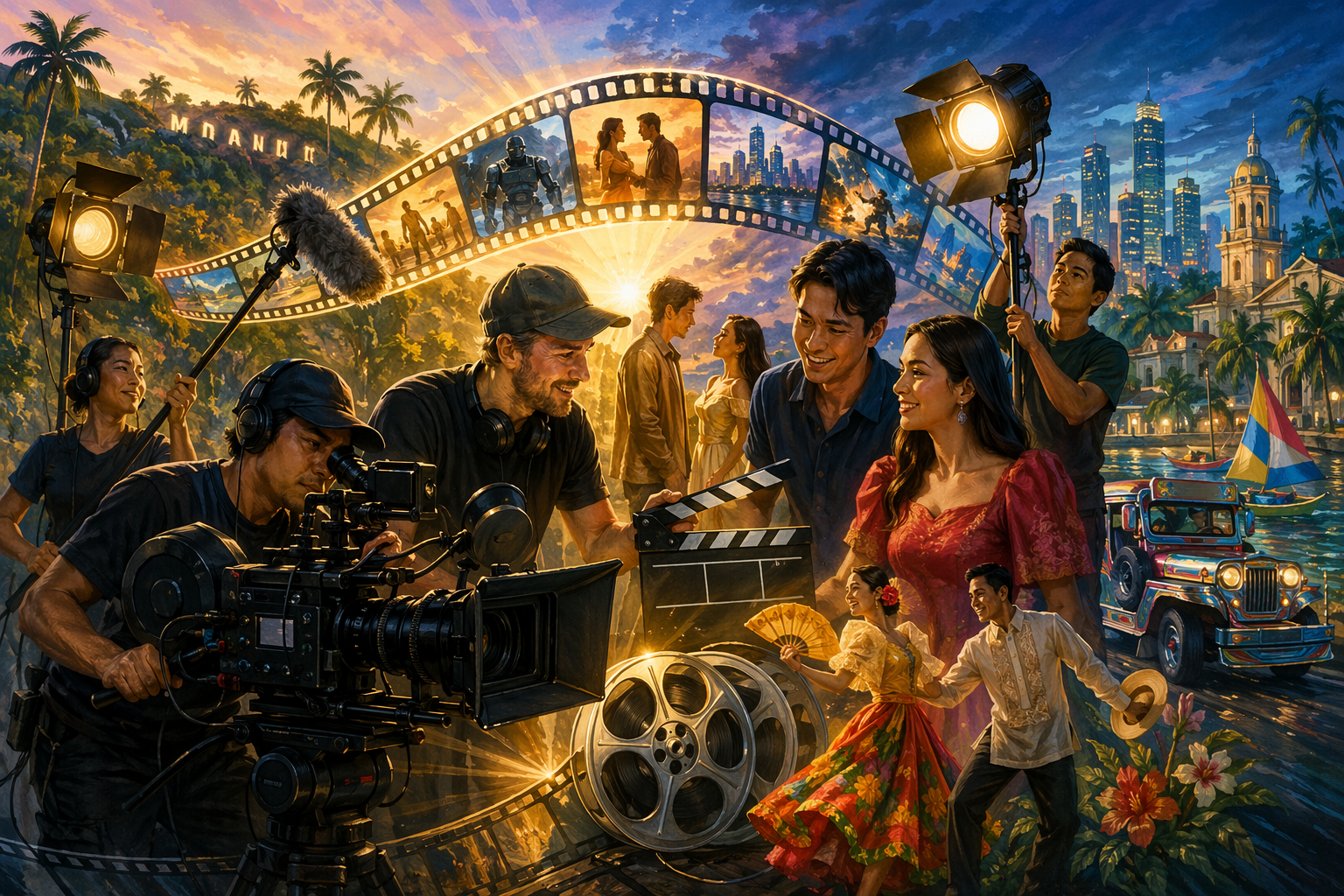
Hollywood has long been a powerful influence on global entertainment, and the Philippines is no exception. With a vibrant entertainment industry, the Philippines has seen a significant impact from Hollywood in terms of both collaboration and adaptation. This influence is evident in various facets of the Philippine film and television landscape, ranging from the production of films to the shaping of local media culture.
One of the most visible effects of Hollywood’s dominance is its role in shaping the aesthetic and narrative style of Filipino films. Hollywood has been a trendsetter in film production techniques, and this influence is reflected in how Filipino filmmakers approach storytelling, cinematography, and special effects. The Filipino film industry has adopted many of the cinematic techniques popularized by Hollywood, such as the use of advanced CGI, dramatic lighting, and fast-paced editing. This collaboration between Filipino and American filmmakers, particularly in the realm of visual effects and technology, has contributed to the modernization and global appeal of Filipino films.
Moreover, Hollywood’s influence extends beyond the technical aspects. The themes and genres that have gained international popularity in Hollywood, such as superhero films, action-packed thrillers, and romantic comedies, have been mirrored in the Philippine entertainment industry. Local studios frequently adapt these genres, producing films that cater to Filipino audiences while maintaining global appeal. The commercial success of Hollywood blockbusters has encouraged Filipino filmmakers to follow similar formats, incorporating familiar themes of heroism, romance, and adventure, while also infusing these elements with Filipino cultural nuances.
In addition to stylistic influences, collaboration between Filipino and Hollywood film professionals has become increasingly common. International co-productions have allowed Filipino filmmakers to work alongside Hollywood talents, providing them with opportunities to share resources, ideas, and distribution networks. This collaboration has led to greater exposure for Filipino films on the international stage. A notable example is the 2015 film Chronic, co-produced by Filipino filmmaker Ian Gabriel and featuring Hollywood actor Tim Robbins. Such collaborations not only provide Filipino filmmakers with valuable experience but also open doors for Filipino talent in the global entertainment market.
However, adaptation is another important aspect of Hollywood’s influence on Filipino entertainment. While Hollywood’s global reach has provided local creators with opportunities, it has also presented challenges. Filipino filmmakers often find themselves in a delicate balance, trying to stay true to their own cultural identity while adopting global trends. There is a continuous struggle between maintaining authenticity in storytelling and meeting the expectations of a global audience. As Hollywood films often dominate local cinemas, there is pressure on Filipino filmmakers to adapt their content to cater to the tastes of both local and international viewers.
Despite the challenges, Hollywood’s impact has undeniably contributed to the global recognition of Philippine cinema. The local industry has evolved, becoming more sophisticated, with an increasing number of Filipino films being showcased at international film festivals. Additionally, the influence of Hollywood has spurred the growth of the Filipino entertainment industry, encouraging both creative innovation and international collaboration.
The future of the Philippine entertainment industry appears promising as it continues to navigate the complexities of Hollywood’s influence. While local filmmakers may continue to adapt and collaborate with Hollywood, they are also finding unique ways to preserve and celebrate Filipino culture through their work. By striking a balance between global trends and local traditions, the Philippines can continue to thrive in the global entertainment landscape.
About the Author