The Philippine government is accelerating its push to transform local creative works into globally competitive intellectual property assets, backed by new data showing the creative sector contributes approximately 8% to national GDP and accounts for roughly 18% of total employment . The figures, released through the Philippine Creative Economy Satellite Account, position the country as a significant creative economy player in Southeast Asia—yet the journey from local character creation to international franchise remains uneven.
A Data-Driven Baseline for IP Policy
On June 9, 2026, the Department of Trade and Industry, the Intellectual Property Office of the Philippines, and the World Intellectual Property Organization jointly launched the Philippine Creative Ecosystem National Diagnostic Report. The initiative made the Philippines the first country globally to pilot WIPO’s Creative Economy Data Model, establishing an empirical baseline for measuring the sector’s contribution to national growth .
Trade and Industry Secretary Ma. Cristina A. Roque framed the report as a strategic pivot: the DTI will focus on strengthening digital intellectual property protection and shifting the country from low-cost outsourcing toward high-value, original creations . For entertainment IP specifically, this signals a policy intent to move beyond service work—animation, game art, and post-production for foreign clients—into owning and licensing original Filipino properties.
The Animation Sector’s Dual Identity
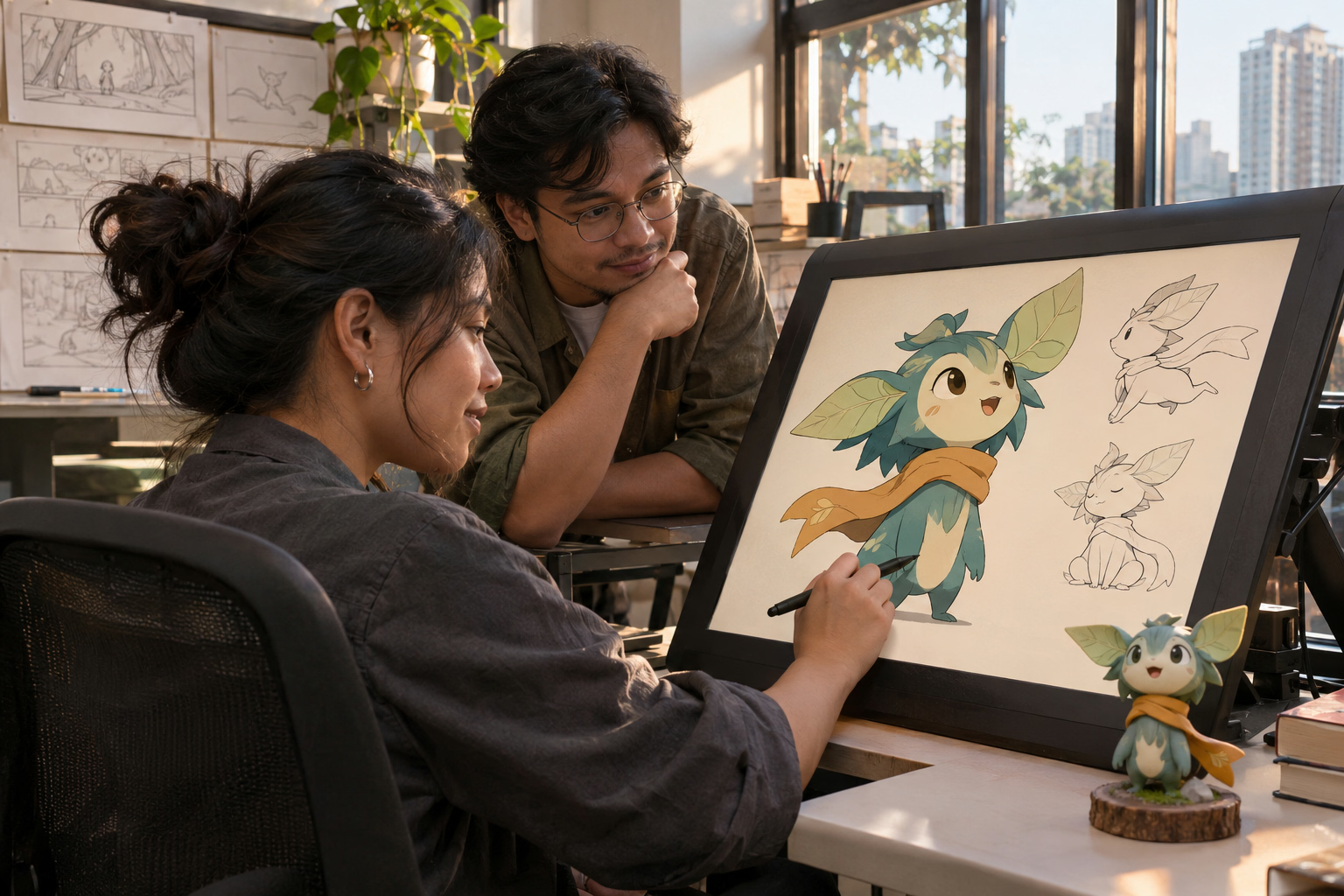
The Philippine animation industry embodies this tension. With over four decades of development, it has evolved from a trusted production partner for international projects into a growing source of original content and creative intellectual property, according to Trade Commissioner Alma F. Argayoso of the Philippine Trade and Investment Center in New York . Filipino studios have long executed work for global clients; the question is whether they can build their own franchises.
A 2026 report from the Korea Creative Content Agency’s Philippine business center noted that the country’s animation sector is expanding from overseas production services into original IP development and international co-production, supported by government policies including the international co-production fund, which raised its maximum support for Filipino-led projects from 10 million to 13 million pesos . The same report, however, observed that individual IP recognition and actual consumer demand must be distinguished—a caution against assuming that production capability translates directly into franchise success.
The Unresolved Gap
What remains unclear is how many Filipino original entertainment properties have actually crossed into franchise territory—licensing, merchandising, or international format adaptation. The diagnostic report and policy frameworks provide infrastructure, but the creative-to-commercial pipeline is still nascent. IPOPHL’s ongoing work on copyright registration rules, including revised regulations that took effect in March 2026 emphasizing human authorship and electronic filing, adds another layer of formalization for creators seeking to protect franchise-ready properties .
For now, the Philippine entertainment IP story is one of potential quantified, infrastructure built, and the commercial test still ahead.
About the Author