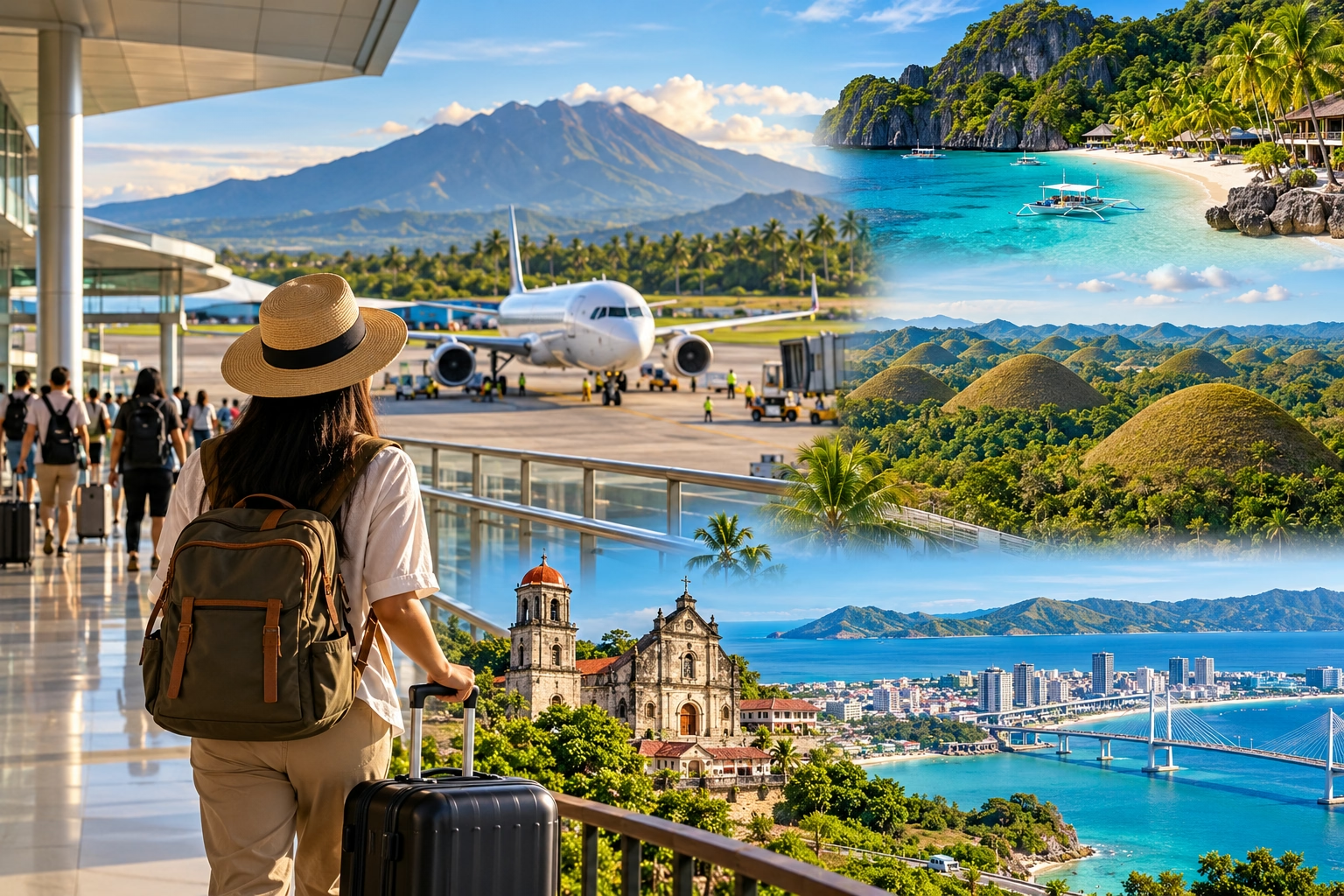
The Philippines has long been sold as an archipelago to conquer—seven stops in ten days, a new beach every sunrise. In 2026, the numbers tell a quieter story. Arrivals are growing, but the growth is cooling, and the travellers who do come are increasingly choosing depth over distance.
A Market That Is Learning to Stay
The Philippines welcomed roughly 4.11 million international visitors in the first eight months of 2026, about 3.7 percent more than the same period a year earlier. That headline figure hides a more meaningful shift. Growth started the year in double digits and then flattened, a pattern that suggests the era of pent-up post-pandemic bursts is giving way to something more deliberate. The Department of Tourism has been working toward a full-year target in the region of 6.7 million, with public statements setting the ambition between 6.4 and 7 million. The eight-month run rate points to the lower end—and that is not necessarily bad news for the islands.
The Slow Travel Signal in the Booking Data
The slow-travel preference is no longer anecdotal. Market research on the Philippines online travel sector notes that Filipino travellers are “increasingly choosing slow travel, opting for longer stays that foster deeper engagement with destinations,” with a growing preference for trips lasting ten days or more, especially among culture-seeking travellers. Booking platforms have responded with extended-stay packages, dedicated filters and multi-day wellness and culinary itineraries. The infrastructure of the industry itself is being rebuilt around the idea that one island, properly experienced, can outperform five islands skimmed.
Connectivity Turns an Island into a Base
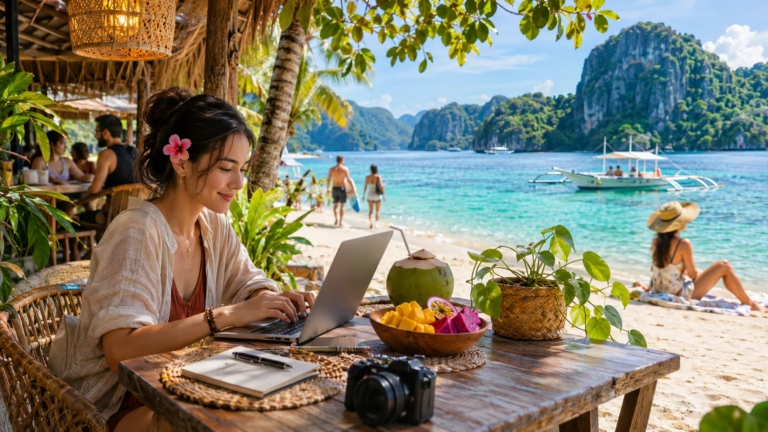
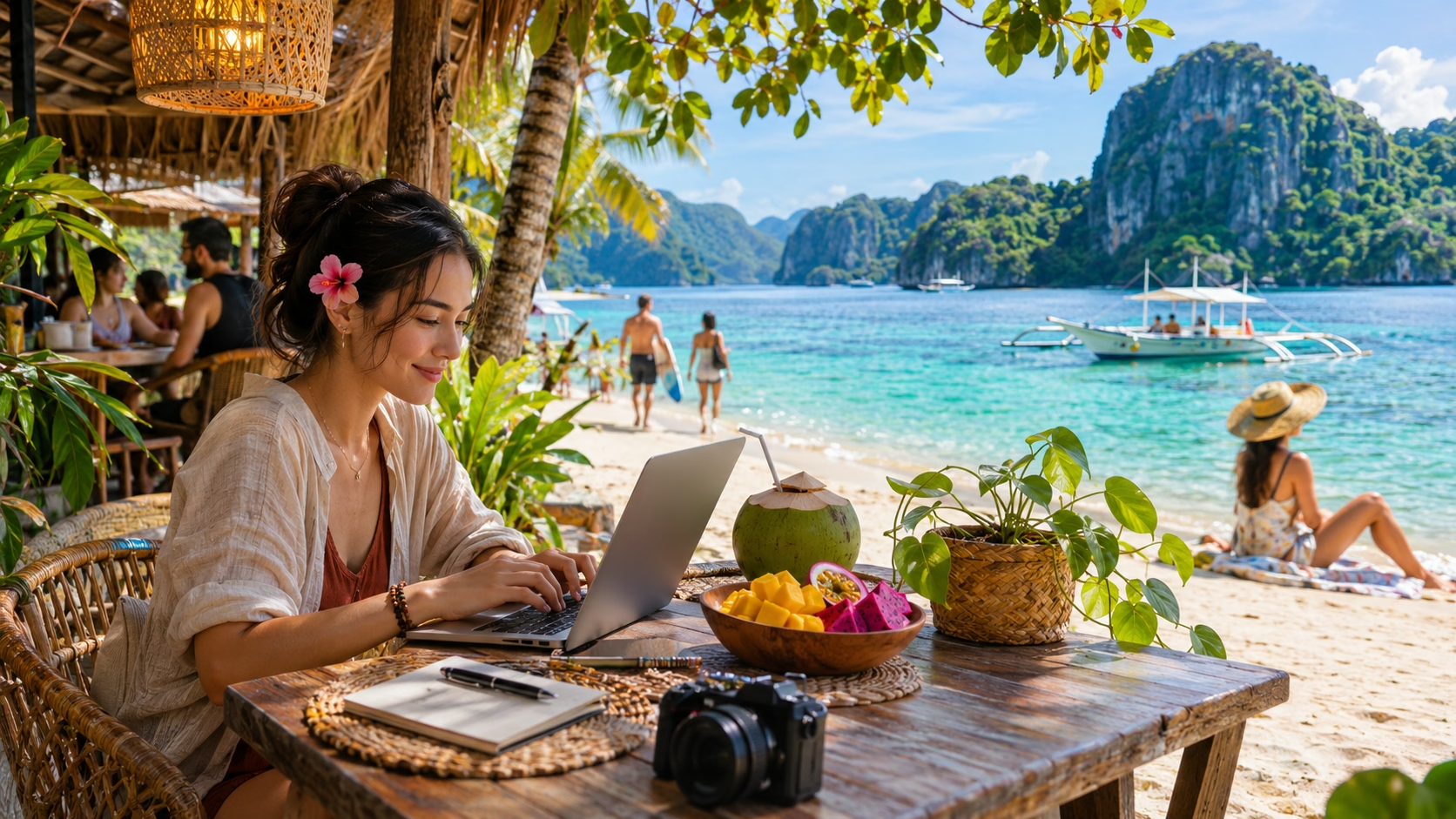
The slow-travel trend is not only a consumer preference; it is an infrastructure story. The Philippines had 98 million internet users at the end of 2025, representing 83.8 percent penetration, and 137 million mobile connections—117 percent of the population. National median mobile download speeds reached 96.84 Mbps by June 2026, with fixed broadband at 188.00 Mbps. Those are national figures, and island-level performance varies with congestion, weather and local capacity. But the direction is clear: islands such as Cebu, Bohol, Siargao and Palawan increasingly have the ingredients for stays of weeks rather than days.
The Economic Logic of the Long Stay
A remote professional who remains on one island for several weeks spends across accommodation, food, transport, wellness, recreation and local services—a pattern that differs sharply from conventional island hopping, where travellers may spend only a few nights in each location. For destination managers, that distinction matters: the goal is no longer simply more arrivals, but more value per arrival, distributed beyond Manila and the headline resort strips.
The Philippines still sits well below its 2019 peak of roughly 8.3 million international visitors, one of the slower recoveries in Southeast Asia. But the slow-travel turn offers a different kind of recovery—one measured not in crowded arrival halls, but in longer bookings, repeat visits and spending that reaches the villages behind the beach.
About the Author