
A $130-Million Stage
The Philippine live music market is no longer a niche sidelineshow. Fresh projections place ticket revenue at US$130.03 million in 2026**, with a compound annual growth rate of **7.11%** through 2030, when the market is expected to reach **US$171.13 million. That figure is not merely a spending statistic. It is the clearest signal yet that concerts have become an economic engine in their own right, pulling hospitality, transport, retail and digital payments into a single, high-velocity ecosystem.
The scale is striking for a market where live music penetration remains just 3.3% of the population in 2026. The growth is being driven less by mass adoption than by intensity: sold-out arenas, premium ticket tiers, and fans who treat a concert as a weekend destination rather than a single evening out. SM Prime Holdings, which operates the SM Mall of Asia Arena and the newly opened SM Seaside Cebu Arena, reported more than one million visitors across its live entertainment venues in the first eight months of 2026 alone—a 52% year-on-year jump—with the MOA Arena hosting over 110 shows in that period.
Beyond the Turnstile: The Ripple Economy
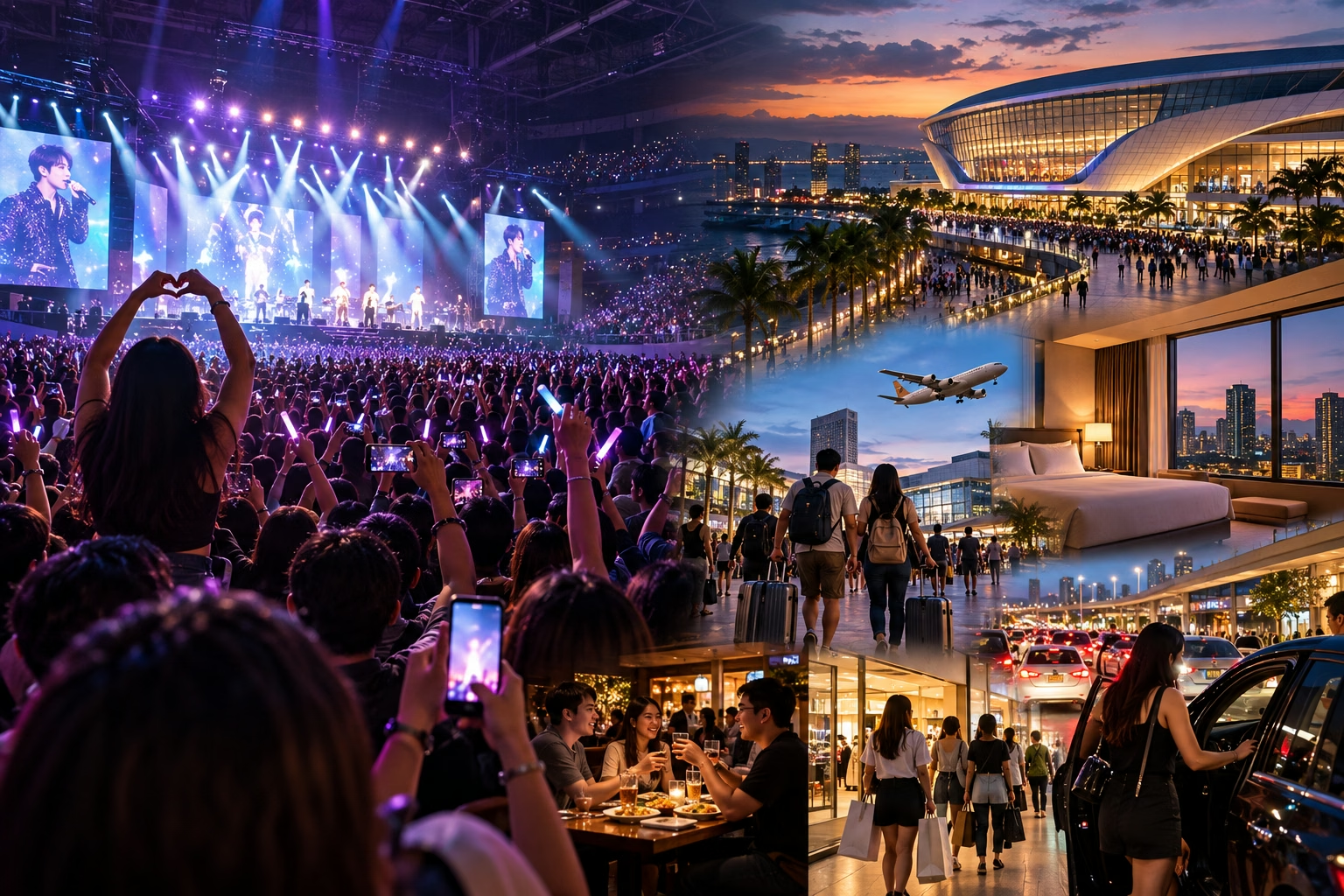
The ticket is only the first transaction. A concert night in Metro Manila now routinely generates hotel bookings, restaurant reservations, ride-hailing surges, shopping trips and even domestic flights. SM Prime President Jeffrey Lim has framed the company’s arena investments explicitly as economic infrastructure, noting that venues “support tourism, hospitality, transport, retail and the local services that benefit from stronger visitor inflow”. The sold-out arena has become a traffic driver for integrated estates, and developers are building entire commercial ecosystems around the promise of recurring event demand.
Live Nation Philippines managing director Rhiza Pascua has been even more direct. She has claimed that 18% of the gross domestic product of the entertainment industry comes from LNPH shows, and she points to P-pop act SB19’s “Wakas at Simula” finale as proof that concerts are becoming an inbound tourism product: roughly a third of attendees flew in for the show, including fans from Brazil and the Middle East. The promoter has deepened its partnership with the Tourism Promotions Board, and hotel-and-concert packages, according to Pascua, consistently sell.
From Pasay to the Provinces
The next phase of growth is geographic. For years, the concert economy was effectively a Metro Manila economy, with fans from the Visayas and Mindanao flying to the capital for major international acts. The opening of the 25,000-seat SM Seaside Cebu Arena in mid-2026 begins to shift that equation, giving promoters a second world-class stop and allowing regional audiences to spend on access rather than airfare. SM Prime has lined up more than 20 major events at the Cebu venue in 2026 and is already building its 2027 calendar around tours that would previously have bypassed the region entirely.
The Philippine concert economy is maturing from a series of sold-out nights into a durable demand system. The question is no longer whether Filipino audiences will show up. It is whether the surrounding infrastructure—venues, transport, accommodation, ticketing and, crucially, tax policy—can keep pace with a market that is growing faster than the stages built to hold it.
About the Author