From Creative Showcase to Commercial Contender
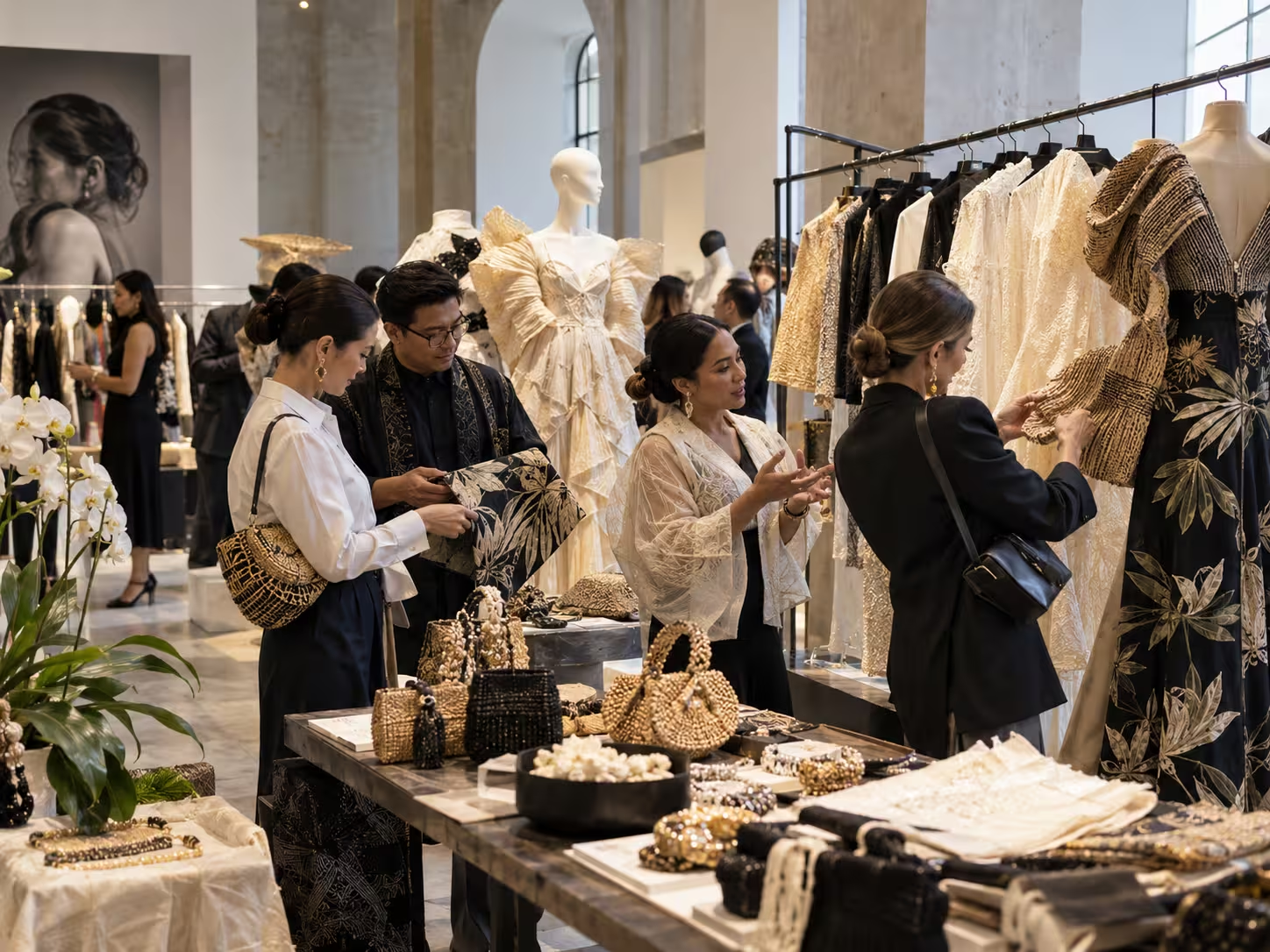
The narrative around Filipino fashion has long celebrated its craftsmanship and creativity. However, the second edition of FASHIONPhilippines Milan, running from September 22 to 24, 2026, at Fondazione Sozzani, marks a decisive pivot from mere cultural showcase to hard-nosed business strategy. This isn’t just about beautiful clothes on a European stage; it’s a calculated, government-backed initiative designed to turn creative recognition into sustainable revenue and long-term market access.
A Curriculum Built for Global Wholesale
The program’s 2026 iteration directly addresses a critical gap identified after its inaugural run: the need for operational and commercial readiness. As CITEM Executive Director Leah Pulido Ocampo stated, the experience “affirmed the global potential of Filipino fashion while also showing the importance of strengthening brands’ readiness to compete internationally”.
To address this, the updated program includes specialized sessions on pricing architecture, line sheet development, and wholesale strategies. This is a direct response to the reality that international success requires a different mindset. As Tetta Ortiz-Matera of LIT Fashion Consultancy explains, “Local brands must understand that doing business internationally requires a different mindset—from wholesale pricing and delivery timelines to collection structure and buyer engagement”. The focus is on equipping designers with the tools to navigate the complex European wholesale and retail ecosystem, moving beyond one-off sales to build scalable businesses.
The Strategic Goal: A Decade of Global Competitiveness
This business-focused approach is part of a broader, decade-long vision. The initiative aims to position Filipino fashion as a globally competitive industry by 2035. The collaboration between CITEM, DOST-PTRI, and the Philippine Fashion Coalition underscores a whole-of-industry effort. As Philippine Fashion Coalition President Jackie C. Aquino emphasized, “The business dimension of fashion is paramount”. The selection of the 12 participating brands—Adam Pereyra Jewelry, Bagasáo, Calli, Ched Studio, Idyllic Summers, Iñigo, Jun Escario, Orias, Palengke, Renz Reyes, Viña Romero, and Ziv Rei Alexi—was based not just on design identity, but on their “capacity to scale”.
A Proven Path to Market
The strategy is already yielding tangible results. Following the 2025 edition, at least one participating Filipino label secured representation with a Paris-based showroom, a significant milestone that validates the program’s commercial approach. For the 2026 edition, the organizers are strengthening the showroom and buyer component even further, with the explicit goal of helping brands develop relationships that extend well past the exhibition. This is not just about a moment in Milan; it’s about building the infrastructure for a permanent presence in the global fashion market.
About the Author