The Commute Factor
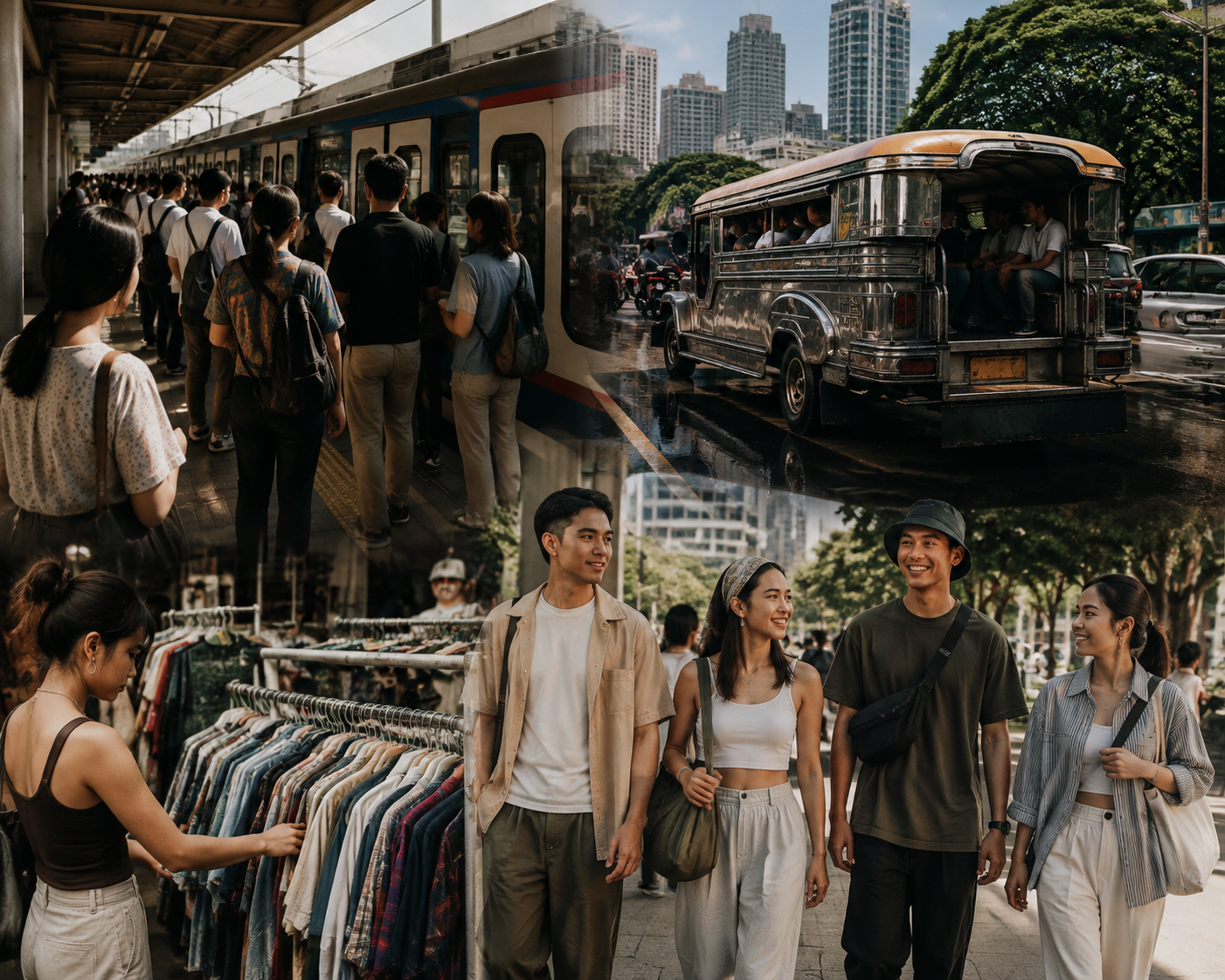
Metro Manila’s daily reality of jeepney rides, LRT queues, and sticky tropical heat dictates wardrobe choices in ways high fashion glosses over. For millions, an outfit must survive sweat, sudden downpours, and hours of standing. That practical pressure is quietly fueling a fashion shift: breathable, eco-conscious streetwear is no longer a niche statement but a daily survival strategy. Young professionals and students are ditching synthetic fast fashion that wilts by noon in favor of loose weaves, natural fibers, and pieces that go from bike lane to coffee shop without losing shape or conscience.
Ukay-Ukay Goes Mainstream
The humble thrift store, locally called ukay-ukay, has undergone a massive rebrand. What was once whispered about as a last resort is now the centerpiece of curated, slow-fashion style. In Cubao, Anonas, and Makati Cinema Square, racks of vintage denim, oversized button-downs, and sportswear are hunted by Generation Z armed with TikTok checklists. The hashtag #UkayFindsPH exploded into a movement, with creators showing how a ₱150 blazer can rival luxury cuts. A 2026 iPrice Group sustainable fashion survey underscores this shift: 68% of Metro Manila shoppers now consider a garment’s environmental impact before purchasing, up sharply from 41% two years earlier (iPrice Sustainable Fashion Survey 2026). Thrifting has turned into a badge of both style savvy and environmental accountability.
Local Brands Leading the Charge
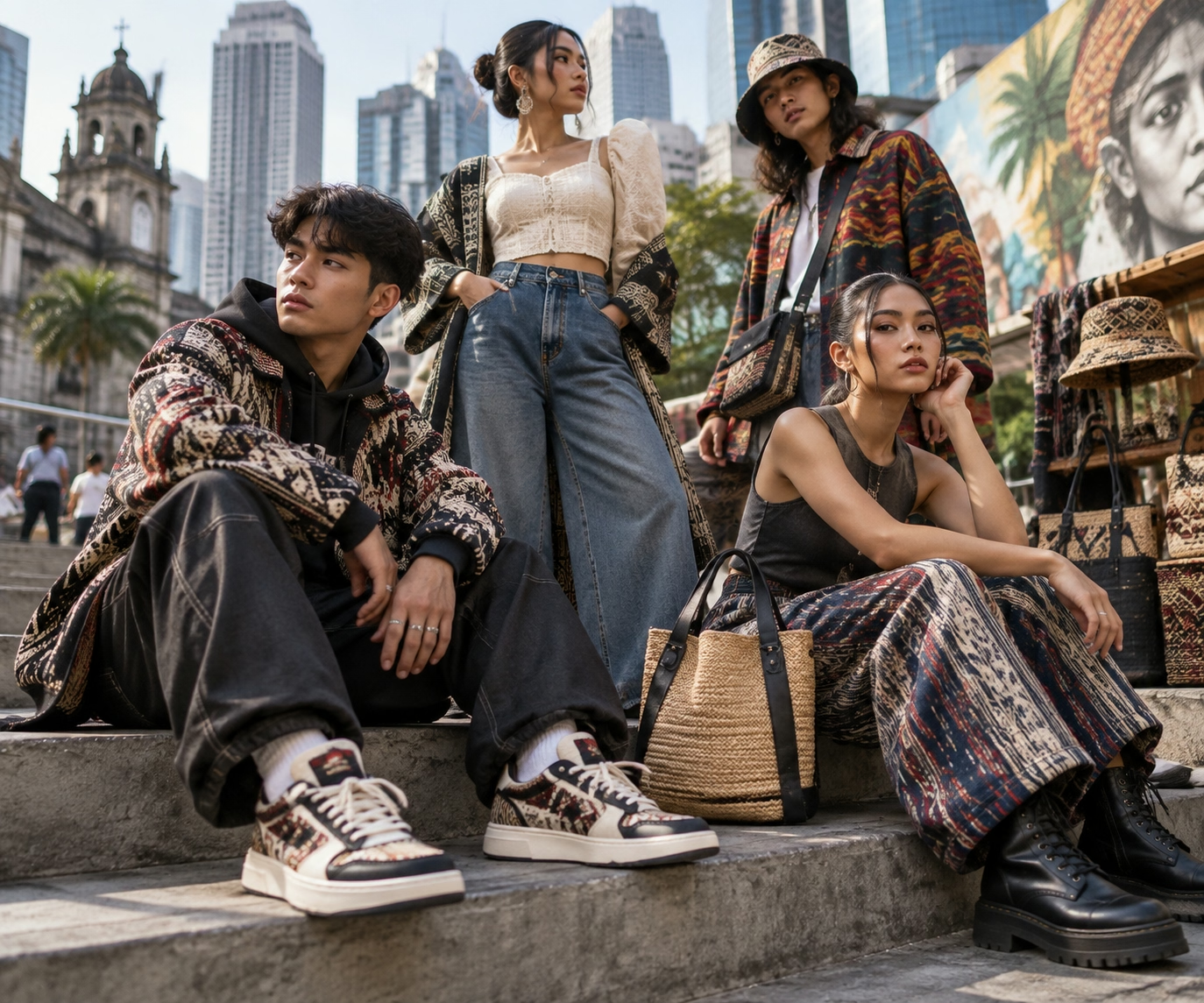
Social enterprises are stepping into the space between tradition and street credibility. Labels like Rags2Riches and Anthill Fabric Gallery integrate handwoven indigenous textiles into hoodies, bomber jackets, and tote-ready sets that appeal to a mobile, post-pandemic generation. Their design language speaks “elevated casual”—pieces that can attend a co-working session in Poblacion then a gallery opening in Escolta. This isn’t performance activism; it’s a practical aesthetic that honors artisan communities while solving the commuter’s need for multi-use clothing.
Social Media’s Role in the Eco-Shift
Instagram carousels and “outfit of the day” reels now regularly feature garment origins, material breakdowns, and thrift store coordinates. Influencers partner with small sewing collectives rather than fast-fashion giants, further blurring the line between content and advocacy. This digital momentum has turned local fashion into a storytelling medium, where the daily struggle of city movement meets a quiet, stylish rebellion against throwaway culture. As Metro Manila’s streets stay congested and the climate stays unforgiving, the clothes we see on LRT-1 are increasingly telling a story of considered, resilient dressing.
About the Author