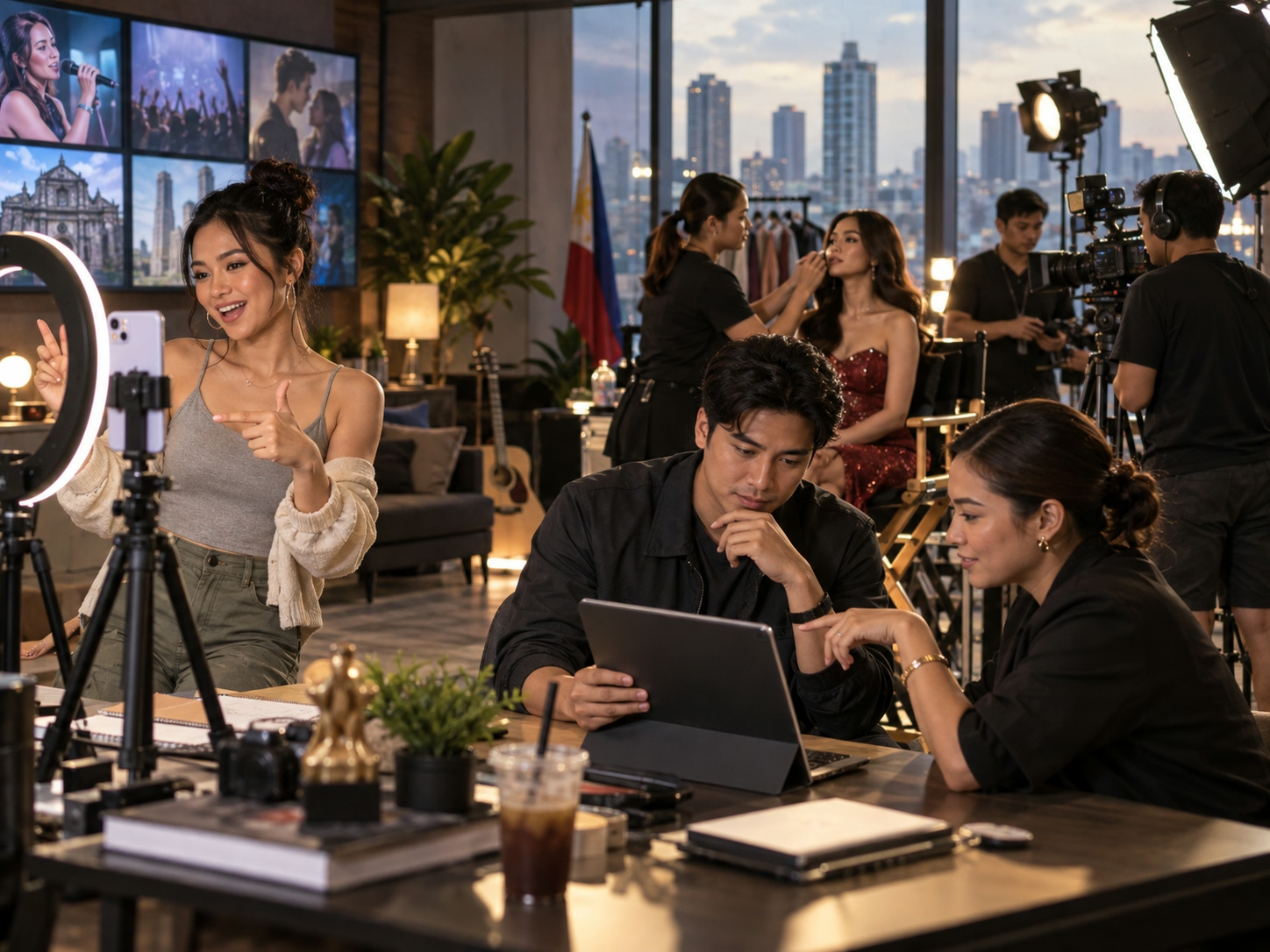
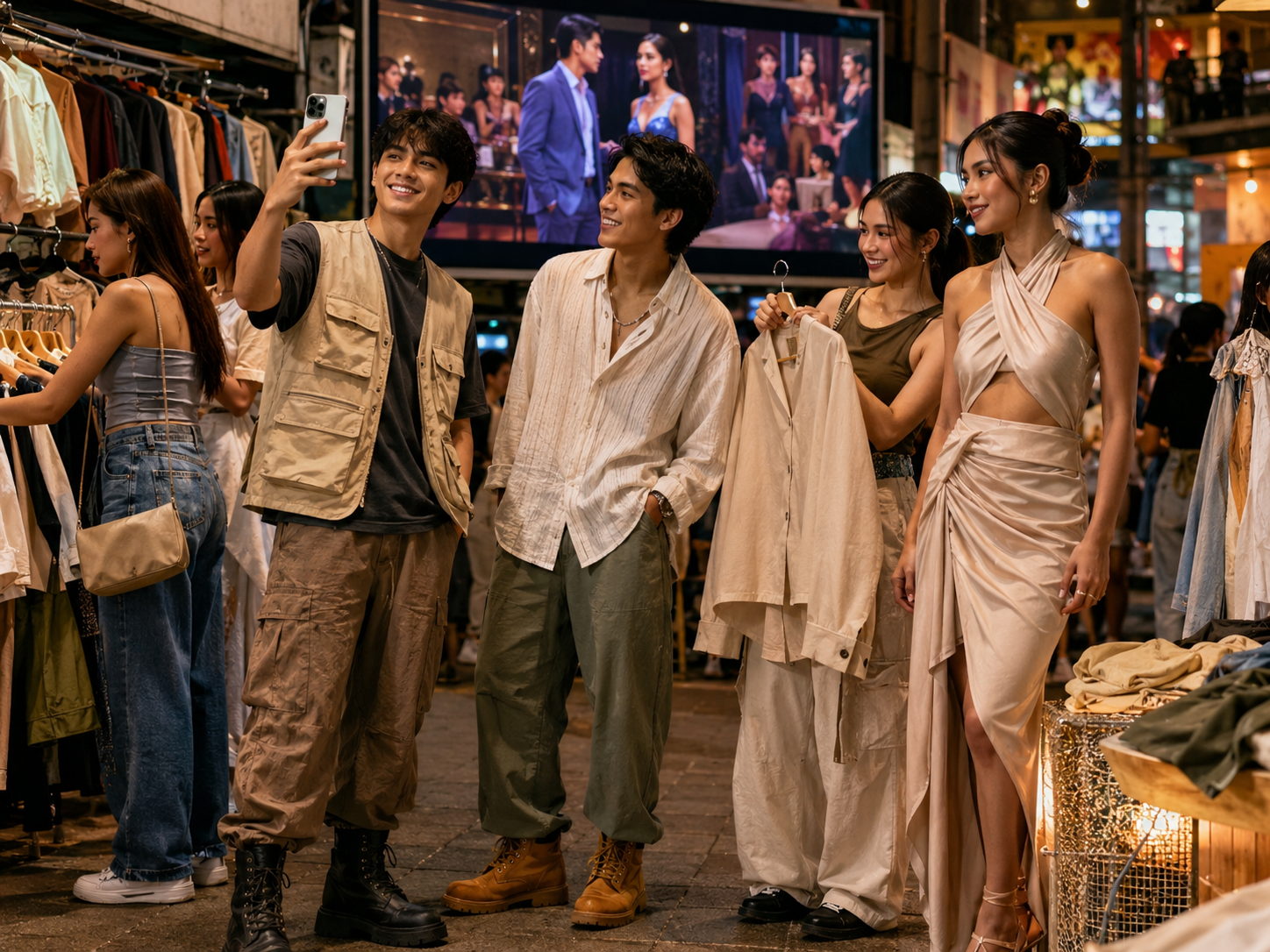
The Philippines’ entertainment universe has long been a mirror reflecting the nation’s shifting tastes, but in 2026 the link between primetime drama and what ordinary Filipinos wear has never been tighter. Teleseryes are no longer just evening escape; they have become dynamic lookbooks that translate fictional wardrobes into real-life mall hauls. The country’s leading networks deliberately collaborate with designers and retail chains to make on-screen outfits immediately shoppable, feeding a culture where fans want to dress like their favorite bida or kontrabida the morning after an episode airs.
Teleserye Costume Design as a Retail Engine
Costume departments in ABS-CBN and GMA productions now operate almost like fast-fashion ateliers. For the ongoing action-drama Batang Quiapo, lead actor Coco Martin’s utilitarian vests, loose linen shirts, and rugged boots sparked such demand that local market stalls in Divisoria and online platforms like Shopee and Lazada listed identical “Batang Quiapo-inspired” pieces within 48 hours of broadcast. A 2026 report by Preview.ph noted that search volume for “Coco Martin suot ngayon” surged 140 percent year-on-year, proving that a single prime-time slot can recalibrate the inventory of small-scale garment traders. Designers working on these shows now intentionally use accessible fabrics and silhouettes so that the looks can be replicated without breaking the bank, widening the fashion ripple effect beyond the upper class.
The Celebrity Endorsement Ecosystem
Beyond scripted drama, the celebrity-fashion machinery leans heavily on social media. Kapamilya and Kapuso stars routinely post “Get the Look” breakdowns on Instagram and TikTok, tagging homegrown labels like Bench, Penshoppe, and up-and-coming streetwear brands such as DON’T BLAME THE KIDS and Team Manila. This content does double duty: it humanizes the artist while functioning as a soft-sell catalogue that outperforms traditional advertising. Data from a 2026 iPrice Group study on Philippine e-commerce revealed that clothing items endorsed by a primetime celebrity sold out 2.5 times faster than non-celebrity sponsored pieces, solidifying the idea that the face on the screen is the most potent fashion currency.
High Fashion Meets Primetime
The migration of luxury fashion into local showbiz is also accelerating. At the 2026 FAMAS Awards, actress Kathryn Bernardo wore a custom Mark Bumgarner gown that fused modern ternos with deconstructed tulle, a design that was instantly pinned thousands of times on Pinterest. These red-carpet moments are planned as part of a broader digital rollout: behind-the-seams videos, stylist interviews, and “steal her style” blog posts ensure that a single gown becomes a multi-platform content experience. High-end designers like Michael Leyva, Francis Libiran, and Rajo Laurel now treat teleserye appearances and awards nights as their primary launchpads, knowing that the viral velocity of a celebrity photograph can eclipse the impact of a standalone fashion show.
Street-Level Translation
What makes the Philippine model distinct is the speed at which high-concept and mid-range styles trickle down. Divisoria entrepreneurs and live sellers on Facebook are adept at decoding intricate beading or avant-garde cuts into budget versions, sometimes shipping nationwide within a week. According to the Philippine Statistics Authority’s 2026 Creative Economy Satellite Account, the “reproduction of cultural and entertainment apparel” segment expanded by 9.3 percent, citing television-inspired merchandise as a key growth driver. This ecosystem means that a Barong Tagalog reimagined by a designer for a historical fantasy series like Sang’gre can end up as a rentable prom outfit in provincial cities, closing the gap between fiction and everyday Filipino identity.
The cycle is self-reinforcing: audiences watch, desire, purchase, post themselves in the outfit, and get featured by fan pages, which in turn gives the teleserye free promotion. In 2026, Filipino fashion cannot be fully understood without first switching on the television.
About the Author