Western fashion has had a long and powerful influence on the development of Filipino clothing. The Philippines has always had its own rich clothing traditions, shaped by climate, local materials, social customs, and indigenous craftsmanship. Before strong Western influence arrived, many communities wore garments made from woven natural fibers, decorated with patterns that reflected identity, status, and region. However, centuries of contact with Spain, the United States, and later global Western media gradually changed the way Filipinos dressed in both daily life and formal occasions.
One of the earliest major Western influences came during the Spanish colonial period. Spanish rule introduced European ideas of modesty, formality, and social class into Filipino dress. Clothing became more layered and structured, especially among the elite and urban populations. Women’s traditional garments evolved into the baro’t saya, a combination of blouse and skirt that reflected both native and Spanish elements. Over time, this developed further into the traje de mestiza and eventually the terno, known for its elegant butterfly sleeves. Although these garments are now considered symbols of Filipino identity, their forms were strongly shaped by European fashion standards.
Men’s fashion was also affected by Western styles. The barong Tagalog, though rooted in local textile traditions, was influenced by colonial expectations of formal dress. Western-style trousers, jackets, and suits became common among educated and professional men. During the Spanish period, clothing often reflected social position. Those who could afford European-inspired garments were seen as refined, educated, and connected to colonial power structures.
The American colonial period brought another major shift. American influence made fashion more practical, casual, and accessible. Western suits, dresses, school uniforms, leather shoes, and hats became common in cities. The growth of public education also helped spread American dress codes, especially among students and government workers. Women began wearing shorter skirts, tailored dresses, and later Western-inspired blouses and casual outfits. Men adopted shirts, neckties, coats, and eventually denim and T-shirts.
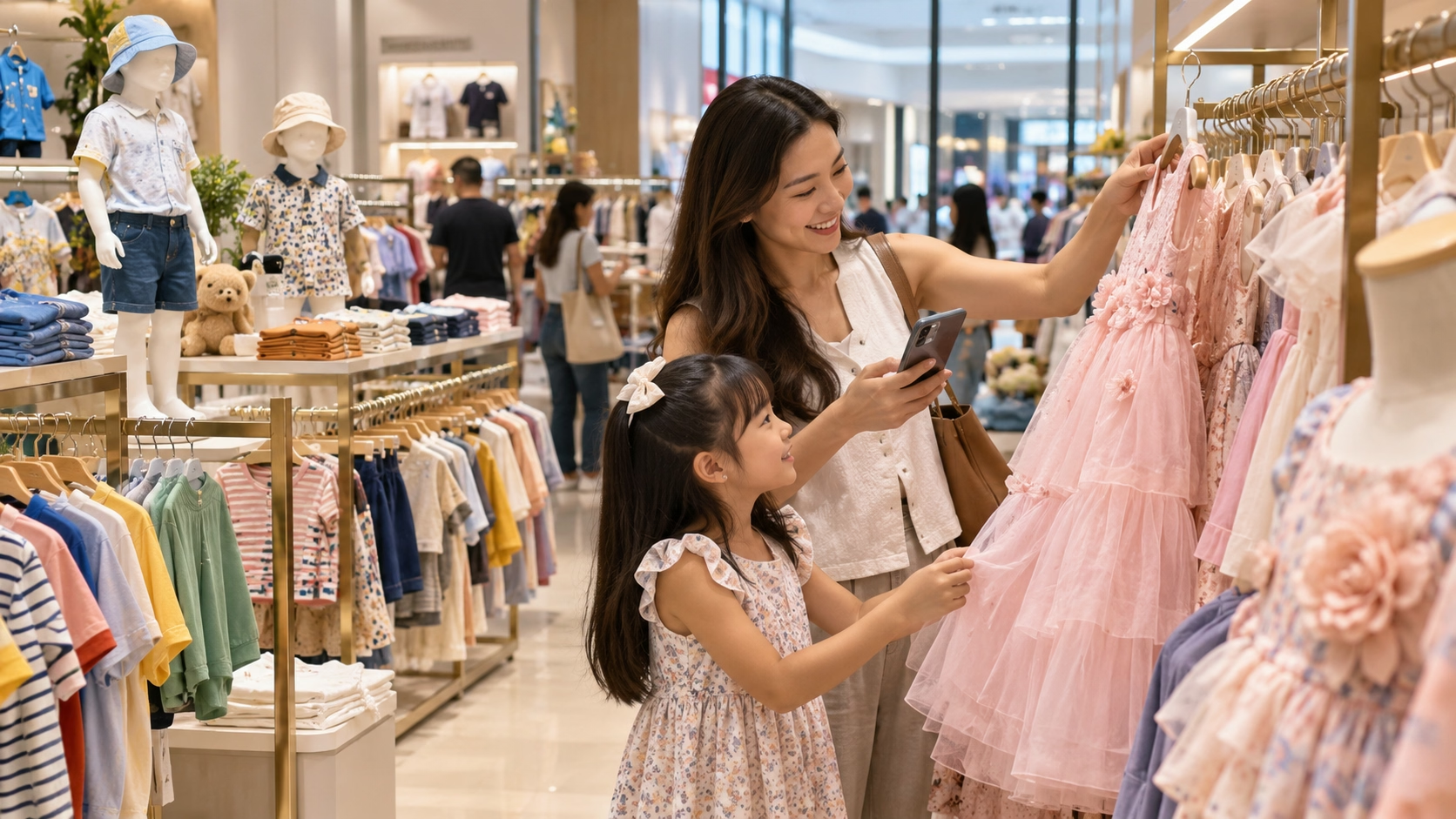
Hollywood and Western popular culture further strengthened this influence. Filipino audiences saw American movie stars wearing glamorous gowns, elegant suits, casual sportswear, and modern hairstyles. These images became models of beauty, sophistication, and modern living. After World War II, Western fashion became even more visible through magazines, department stores, imported clothing, and eventually television.
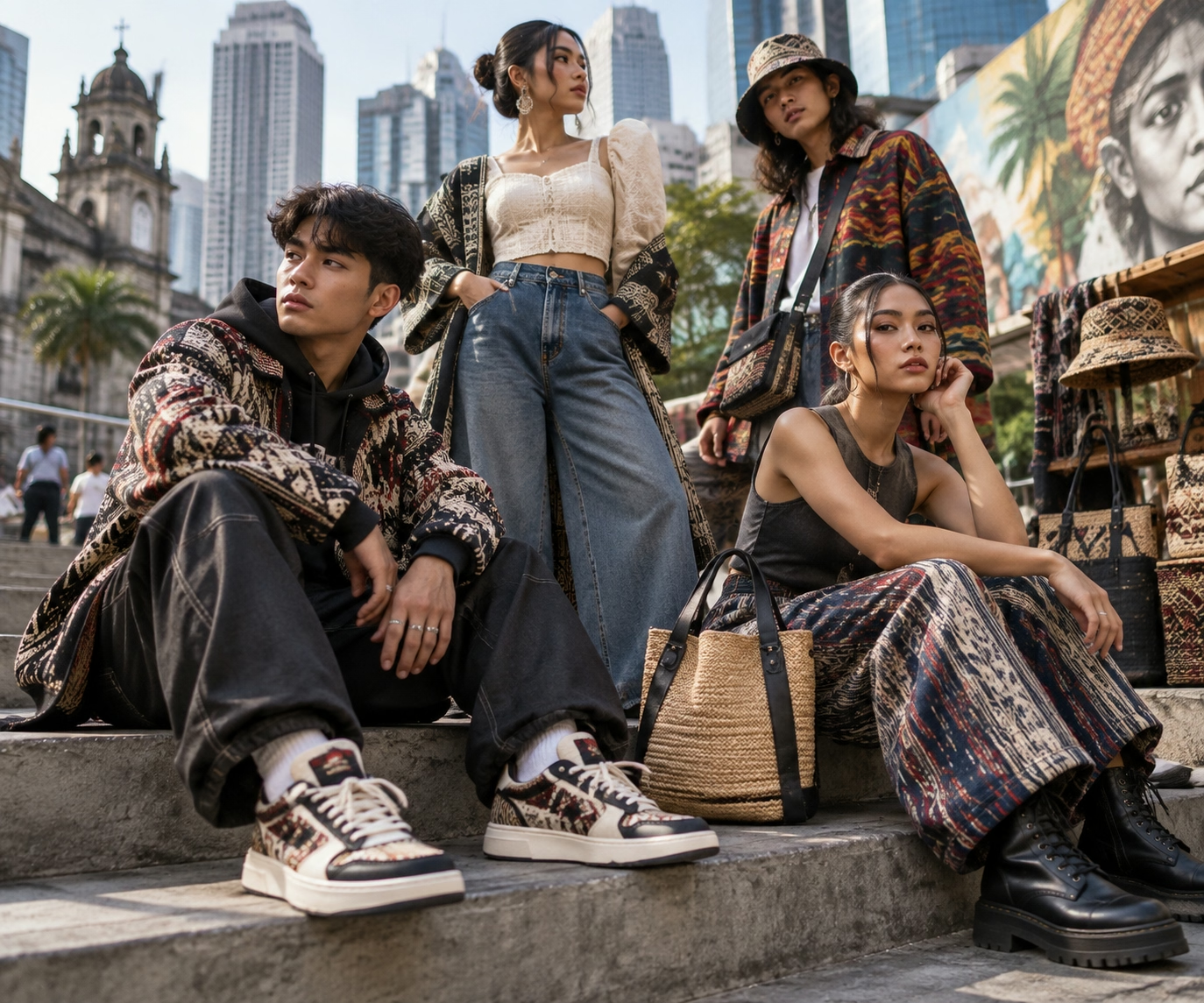
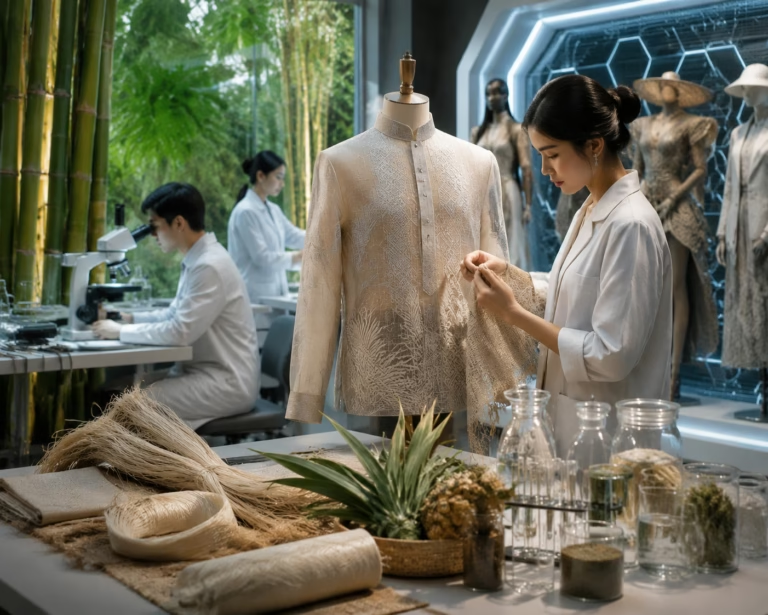
Despite this strong influence, Filipino fashion did not simply copy Western clothing. Instead, it adapted Western styles to local needs. The tropical climate encouraged lighter fabrics, looser silhouettes, and breathable materials. Formal Western garments were often modified to suit heat and humidity. Filipino designers also blended Western cuts with local textiles such as piña, jusi, abaca, and handwoven fabrics from different regions.
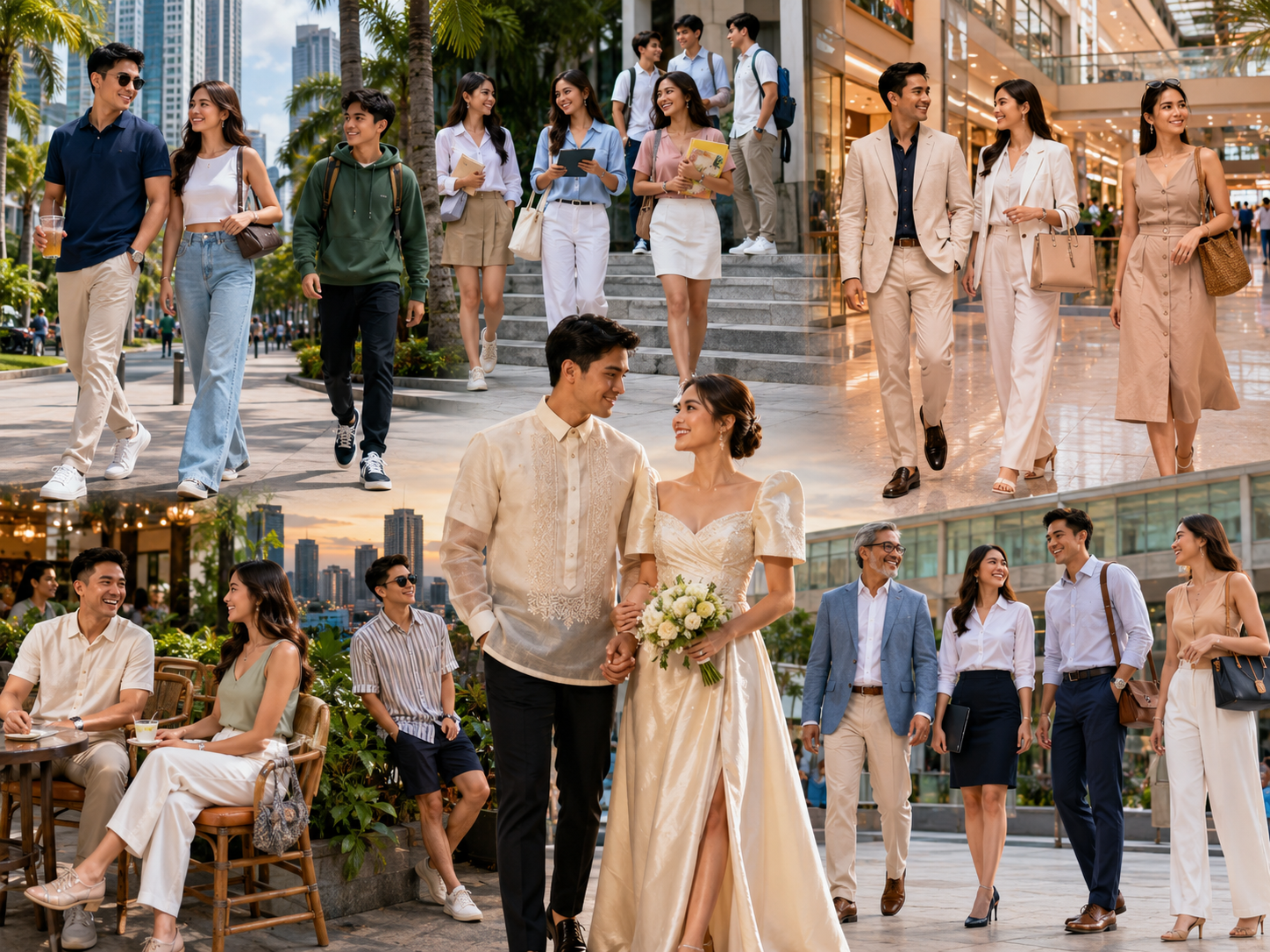
Today, Western fashion remains highly visible in the Philippines. Jeans, sneakers, suits, gowns, streetwear, and business attire all show Western influence. At the same time, many Filipinos continue to value traditional clothing for national events, weddings, cultural performances, and formal ceremonies. The result is a fashion culture that is both global and local. Western fashion helped shape Philippine fashion, but Filipino creativity transformed it into something unique, expressive, and deeply connected to national identity.
About the Author