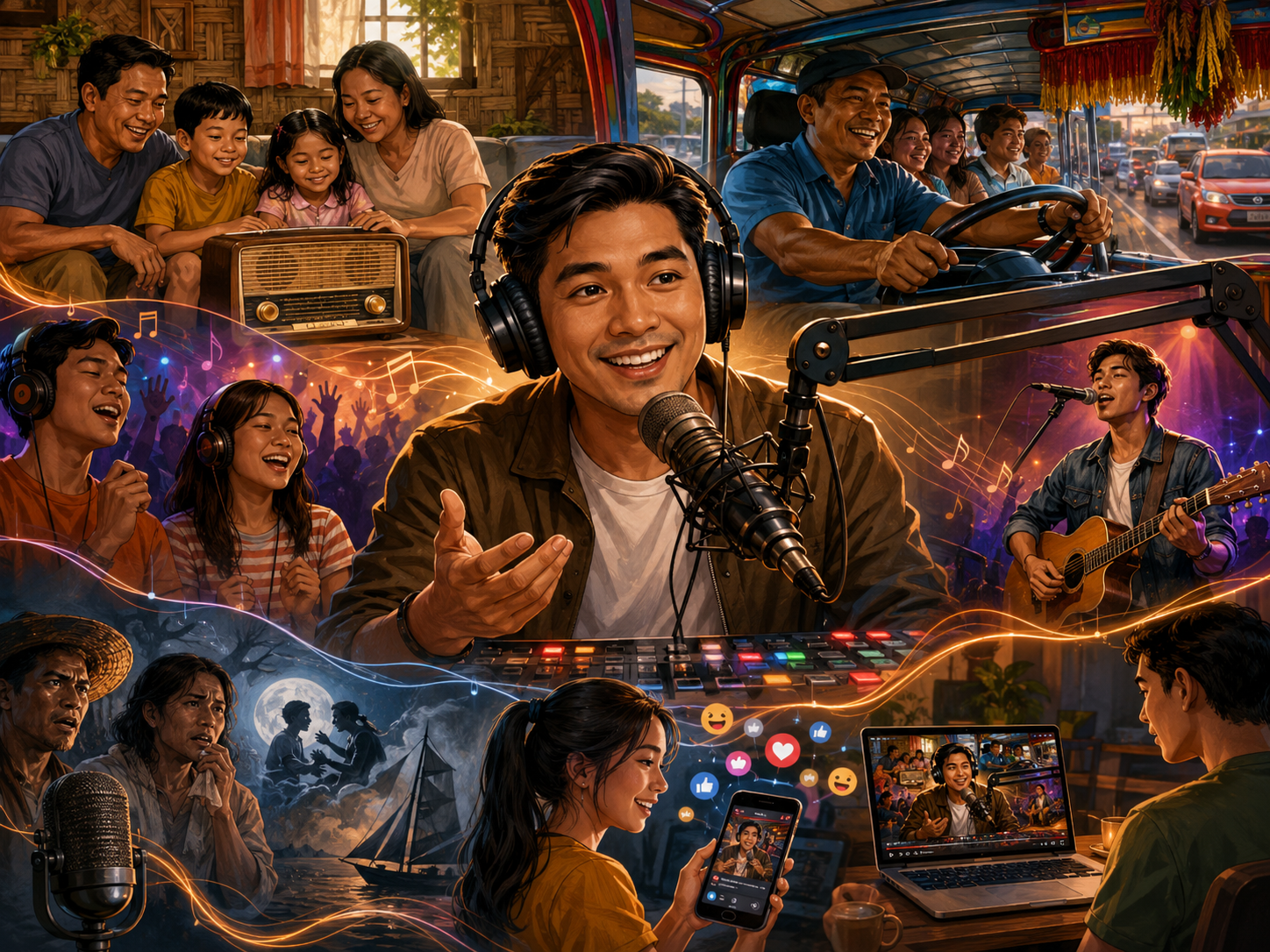
Radio has played a powerful role in shaping entertainment in the Philippines. Long before television, streaming platforms, and social media became part of daily life, radio was already a trusted companion in Filipino homes, workplaces, farms, public vehicles, and community spaces. Its influence goes beyond music because it has also carried drama, comedy, news, celebrity interviews, public service programs, contests, and cultural discussions to millions of listeners across the country.
One of the most important contributions of radio to Philippine entertainment is music promotion. Filipino radio stations have helped introduce Original Pilipino Music, often called OPM, to wider audiences. Through regular airplay, listeners discover new singers, bands, and songwriters. Many artists gain popularity because their songs are repeatedly played on FM stations, countdown shows, and request programs. Radio also supports international music trends, allowing Filipinos to enjoy pop, rock, hip-hop, R&B, dance music, and other global genres while still keeping local music visible.
Radio drama is another major part of Philippine entertainment history. Before television dramas became dominant, many Filipinos followed serialized radio plays filled with romance, suspense, family conflict, action, and moral lessons. These programs relied on voice acting, sound effects, music, and strong storytelling to create vivid scenes in the listener’s imagination. Even without visuals, radio dramas became emotionally powerful because audiences could imagine the characters and settings in their own way. This tradition helped develop Filipino storytelling styles that later influenced television and film.
Comedy and personality-driven programs have also made radio entertaining. Many popular radio hosts became household names because of their humor, quick reactions, and ability to connect with ordinary people. Morning shows, talk segments, joke portions, prank calls, and listener interactions create a sense of friendship between the host and the audience. In the Philippines, where conversation and humor are important parts of social life, radio personalities often feel like trusted companions rather than distant celebrities.
Radio is also deeply connected to everyday Filipino culture. Jeepney drivers, market vendors, office workers, students, and families often listen to radio while doing daily activities. This makes radio more accessible than many other entertainment platforms. A person does not need expensive equipment or fast internet to enjoy it. A small radio, a mobile phone, or a vehicle stereo is enough. Because of this, radio remains important in both urban and rural areas.
Another reason radio continues to matter is its adaptability. Many stations now stream their programs online, maintain social media pages, upload interviews, and interact with listeners through messaging apps. This digital shift allows radio to reach overseas Filipinos who want to stay connected to local entertainment, music, language, and humor. For many Filipinos abroad, listening to Philippine radio online can feel like returning home emotionally.
Radio in the Philippines is not only a source of amusement. It is a cultural bridge, a music platform, a storytelling medium, and a daily companion. Its lasting value comes from its ability to entertain while staying close to the lives, emotions, and voices of the Filipino people.
About the Author