Tofu is an important ingredient in Filipino cooking, especially because it is affordable, flexible, and easy to pair with strong local flavors. In the Philippines, tofu is commonly called tokwa, a word influenced by Chinese culinary traditions. Although tofu is often associated with vegetarian food in many countries, Filipino cuisine uses it in many ways, from street snacks and breakfast sweets to savory dishes served with rice, porridge, or alcoholic drinks.
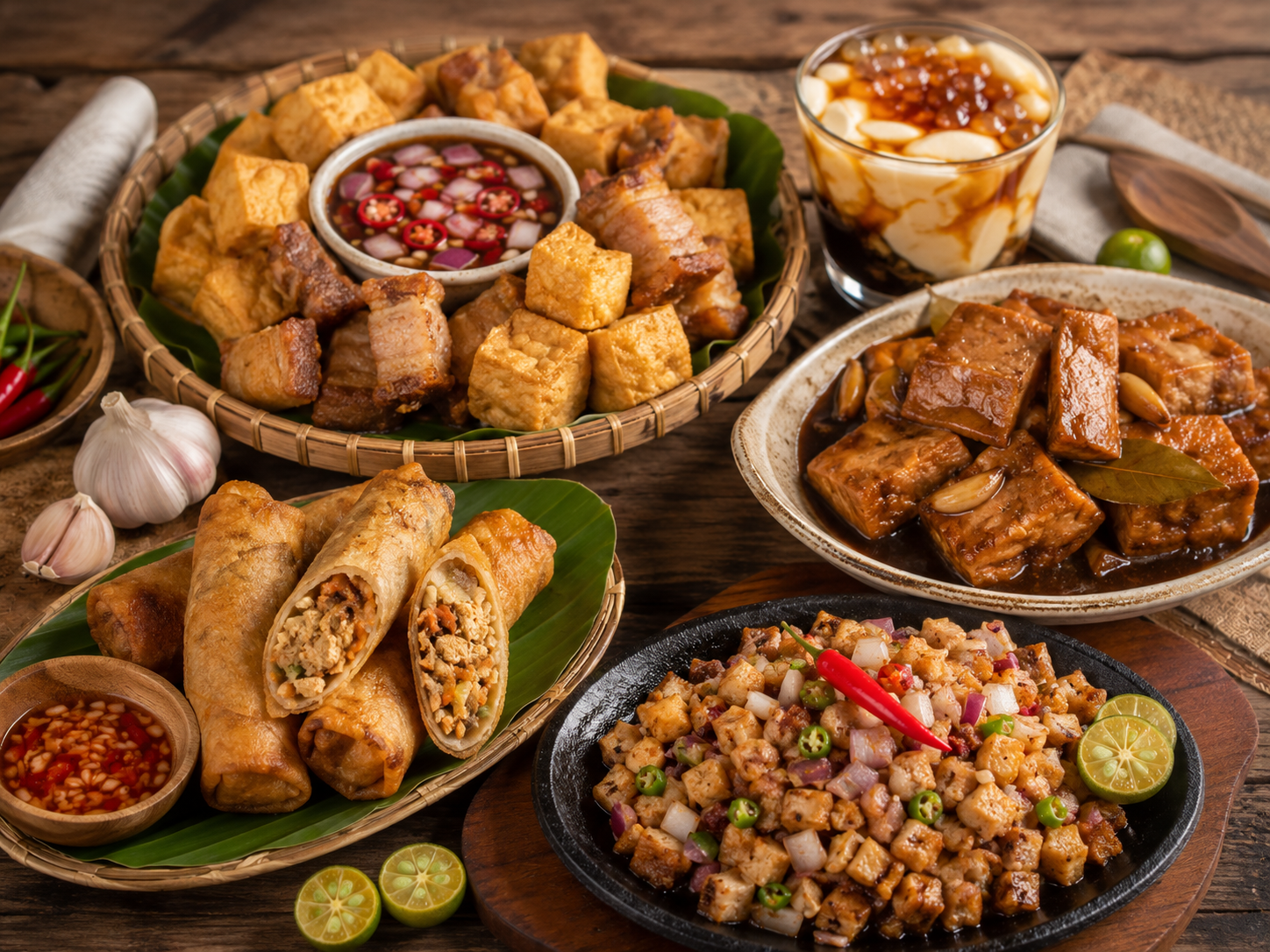
One of the most famous Filipino tofu dishes is Tokwa’t Baboy, which literally means tofu and pork. This dish usually combines deep-fried tofu cubes with boiled or fried pork, often pork belly or pig’s ears. The tofu is cooked until the outside becomes crisp while the inside remains soft. It is then served with a tangy dipping sauce made from vinegar, soy sauce, chopped onions, garlic, chili, and sometimes sugar. Tokwa’t Baboy is popular as pulutan, or food eaten with alcoholic drinks, but it is also commonly enjoyed with lugaw, a Filipino rice porridge.
Another well-loved tofu-based food is Taho, a sweet street food made from soft silken tofu. It is usually sold by vendors in the morning, carried in large metal containers while they call out “Taho!” in neighborhoods. Taho is served warm and topped with arnibal, a sweet brown sugar syrup, and chewy sago pearls. Unlike fried tokwa dishes, taho highlights tofu’s delicate and silky texture. It is light, comforting, and often enjoyed as breakfast or a mid-morning snack.
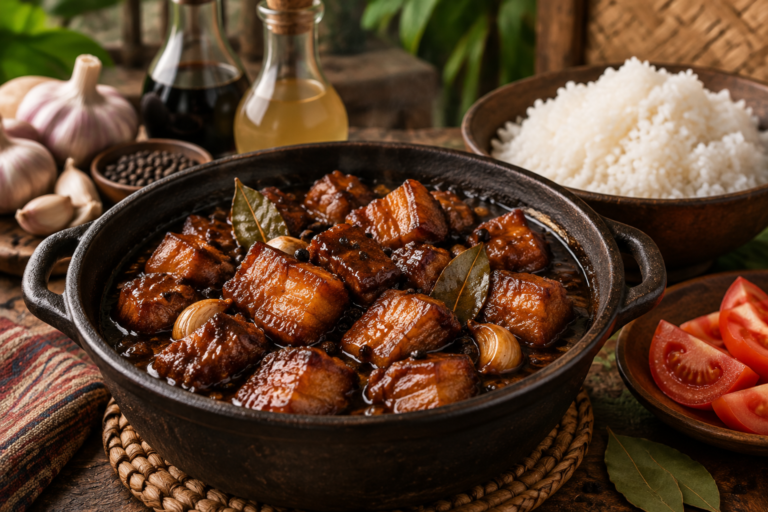
Filipino cooks also prepare Adobong Tokwa, a tofu version of the country’s iconic adobo. In this dish, tofu is fried first to give it a firm texture, then simmered in soy sauce, vinegar, garlic, bay leaves, and black pepper. Some versions include vegetables such as eggplant, green beans, or mushrooms. The tofu absorbs the salty, sour, and garlicky sauce, making it a satisfying meat-free dish that still carries the bold flavor of traditional Filipino adobo.
A modern favorite is Tofu Sisig, inspired by the famous sizzling pork dish from Pampanga. Instead of pork, tofu is fried and chopped into small pieces, then mixed with onions, chili, calamansi juice, and sometimes mayonnaise or an egg. It is often served on a hot sizzling plate. Tofu sisig is popular in restaurants and home kitchens because it offers the same spicy, tangy, and savory appeal of sisig while being lighter than the pork version.
Tofu is also used in vegetable dishes such as Lumpiang Tokwa or tofu spring rolls. In these rolls, tofu is mixed with vegetables like carrots, cabbage, bean sprouts, and green beans, then wrapped and fried until crispy. It may be served with vinegar dip, sweet chili sauce, or a garlic-based sauce.
Filipino tofu dishes show how simple ingredients can become rich, satisfying meals through seasoning, texture, and cooking style. Whether served sweet as taho, crispy in Tokwa’t Baboy, savory in adobo, or spicy as sisig, tofu has earned a special place in Filipino food culture.
About the Author