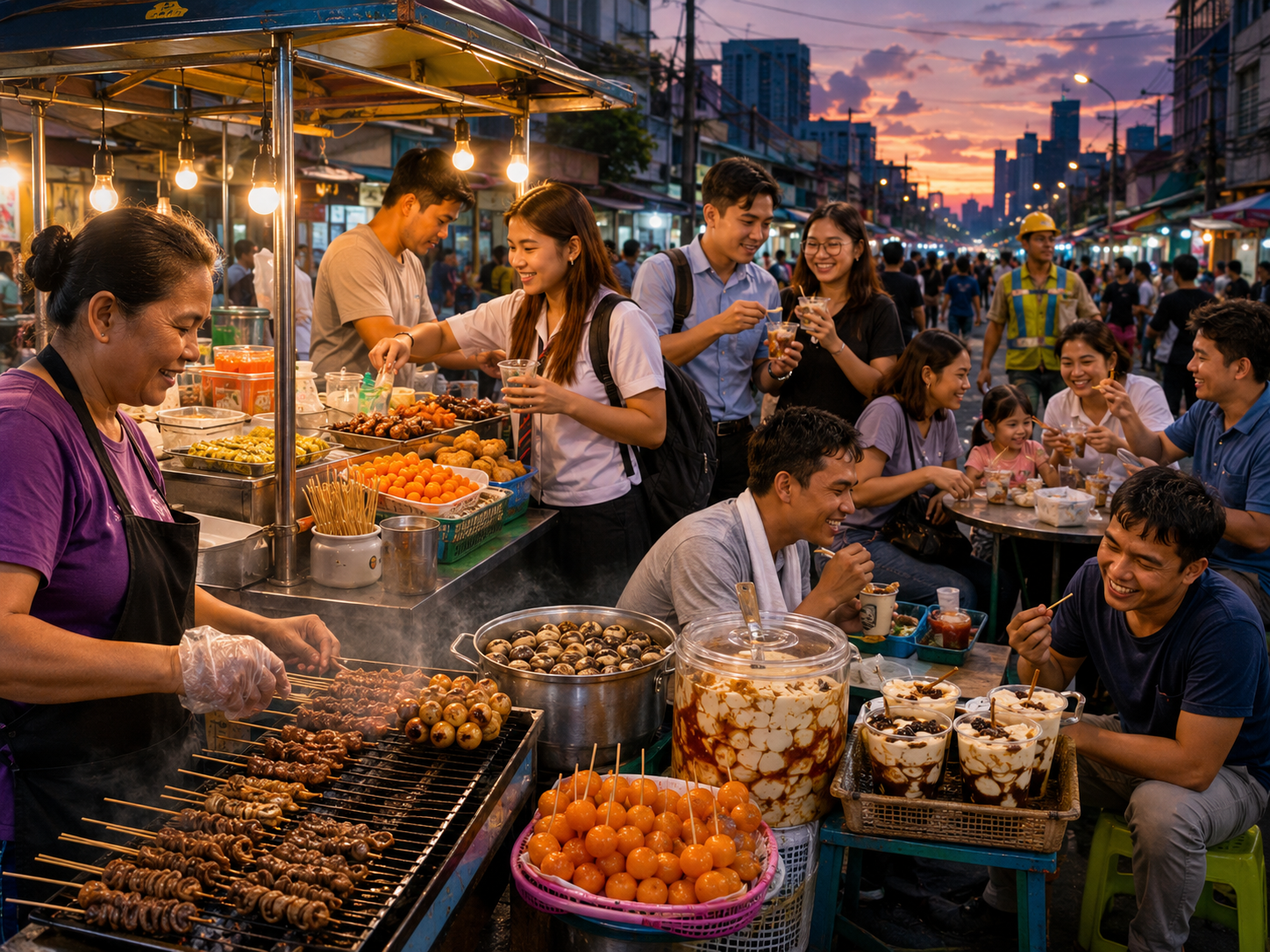
In the everyday rhythm of Philippine life, street food is a ubiquitous presence, offering more than just nourishment. It serves as a reflection of the nation’s culture, a source of income for countless small-scale entrepreneurs, and a connector of communities. Street food stalls are scattered across city streets, public markets, and transport hubs, providing convenient meals to busy commuters, students, and office workers who need quick, affordable sustenance.
Accessibility is one of the most prominent reasons street food is integral to Filipino life. With prices that accommodate nearly every budget, these vendors cater to individuals who may not have time or resources for sit-down meals. Items like fish balls, banana cue, and empanada are quick to prepare and easy to carry, making them practical options for people constantly on the move. Beyond mere convenience, this availability supports local economies, allowing small vendors to sustain livelihoods and contribute to the community’s economic vitality.
Street food also carries a profound cultural significance. Many dishes offered by street vendors have deep historical roots and regional specificity. For example, in Davao, durian-based snacks are a local favorite, while in Manila, taho is often enjoyed for breakfast. Traditional recipes are maintained and shared across generations, keeping culinary heritage alive. During festivals and public gatherings, street food becomes a symbol of celebration, reinforcing social traditions and regional identity.
Socially, street food operates as a communal experience. Eating at these stalls encourages interaction—friends and coworkers often gather around small tables or curbside spots, engaging in conversation while enjoying their snacks. In many ways, street food is a catalyst for social bonding, creating shared spaces where individuals from diverse backgrounds converge and interact, strengthening the sense of community.
The modern era has brought new considerations, particularly regarding hygiene and health. While street food has historically faced scrutiny due to concerns over cleanliness, many vendors have responded by improving cooking practices and maintaining safer food handling. Local authorities often offer educational programs and certifications to ensure that street food consumption is both enjoyable and safe. This awareness balances traditional culinary practices with contemporary health standards.
Innovation is another notable aspect of Philippine street food. Vendors frequently adapt classic recipes to cater to changing tastes and preferences. Fusion snacks, unique flavor combinations, and seasonal specialties are common, reflecting the creativity of local entrepreneurs and the dynamism of Filipino food culture. This adaptability ensures that street food remains a relevant and attractive choice for both locals and visitors.
Ultimately, street food is inseparable from daily life in the Philippines. It is not only a source of affordable nutrition but also a reflection of cultural heritage, a hub for social engagement, and an avenue for economic empowerment. Its enduring popularity demonstrates the essential role it plays in shaping the Filipino way of life.
About the Author