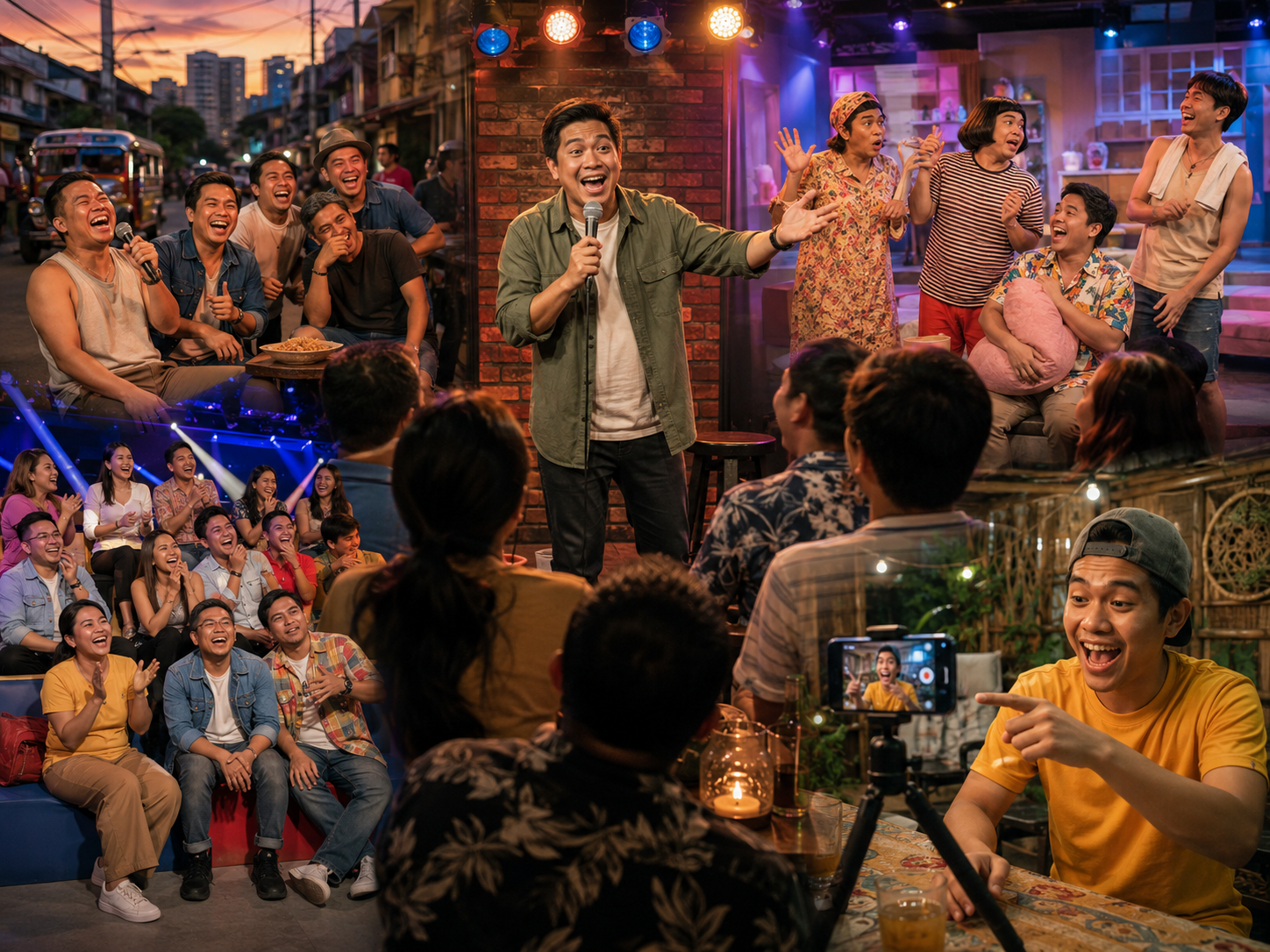
Filipino comedy has always been more than simple entertainment. In the Philippines, humor is closely connected to daily life, family culture, politics, language, and resilience. Comedy allows Filipinos to laugh at hardship, social problems, romantic struggles, and even national issues. This is why the world of Filipino comedy has produced many beloved comedians, memorable television programs, and live performance traditions that continue to influence Philippine entertainment.
One important feature of Filipino comedy is its strong connection to language. Many Filipino comedians perform in Tagalog, English, regional languages, or a mix known as Taglish. This makes their jokes feel natural and relatable to audiences from different backgrounds. Wordplay, exaggeration, facial expressions, impersonation, and physical humor are common techniques. Filipino comedy also often uses “hugot,” or emotionally charged humor, where jokes come from heartbreak, family pressure, poverty, or everyday disappointment.
The career path of a Filipino comedian can begin in several ways. Some start in local comedy bars, where performers test jokes directly in front of live audiences. Comedy bars in Metro Manila became important training grounds for stand-up comics, singers, impersonators, and hosts. Others begin through television variety shows, radio programs, online videos, theater, or acting roles in sitcoms and films. Many comedians become successful because they are flexible performers who can act, sing, host, improvise, and interact with audiences.
Some of the most recognized names in Filipino comedy include Dolphy, often called the country’s “King of Comedy.” His long career in film and television helped shape the image of the kind-hearted, witty, and relatable Filipino comic hero. Vic Sotto became famous through sitcoms, movies, and the long-running noontime show “Eat Bulaga!” Michael V. gained respect for his intelligent sketches, parodies, and character-based humor, especially through “Bubble Gang.” Vice Ganda brought a modern, sharp, and energetic style to mainstream comedy, combining stand-up, television hosting, film, and social commentary.
Television has played a major role in popularizing comedy in the Philippines. “Bubble Gang,” one of the longest-running sketch comedy shows in the country, became famous for its parodies, recurring characters, and satirical take on pop culture. “John en Marsha” reflected Filipino family life through humor and became a classic sitcom. “Home Along Da Riles,” starring Dolphy, used comedy to portray working-class life, family values, and everyday struggles. These shows succeeded because they mixed laughter with social familiarity.
Noontime and variety shows also contributed greatly to Filipino comedy. Programs such as “Eat Bulaga!” and “It’s Showtime” include comedic hosting, games, audience interaction, and spontaneous jokes. In these shows, comedians must be quick thinkers. They respond to contestants, co-hosts, and unexpected live moments. This has made hosting one of the most important skills in the Filipino comedy industry.
In recent years, digital platforms have changed the comedy landscape. Comedians now reach audiences through YouTube, TikTok, Facebook, podcasts, and streaming platforms. Online comedy often focuses on relatable situations such as school life, office work, family habits, dating, and Filipino stereotypes. This has allowed new comedians to build careers without relying only on television networks.
Filipino comedy remains powerful because it reflects the Filipino spirit. It is emotional, loud, clever, dramatic, and deeply human. Whether performed on stage, television, film, or social media, it continues to show how laughter can become a form of survival, connection, and cultural identity.
About the Author