
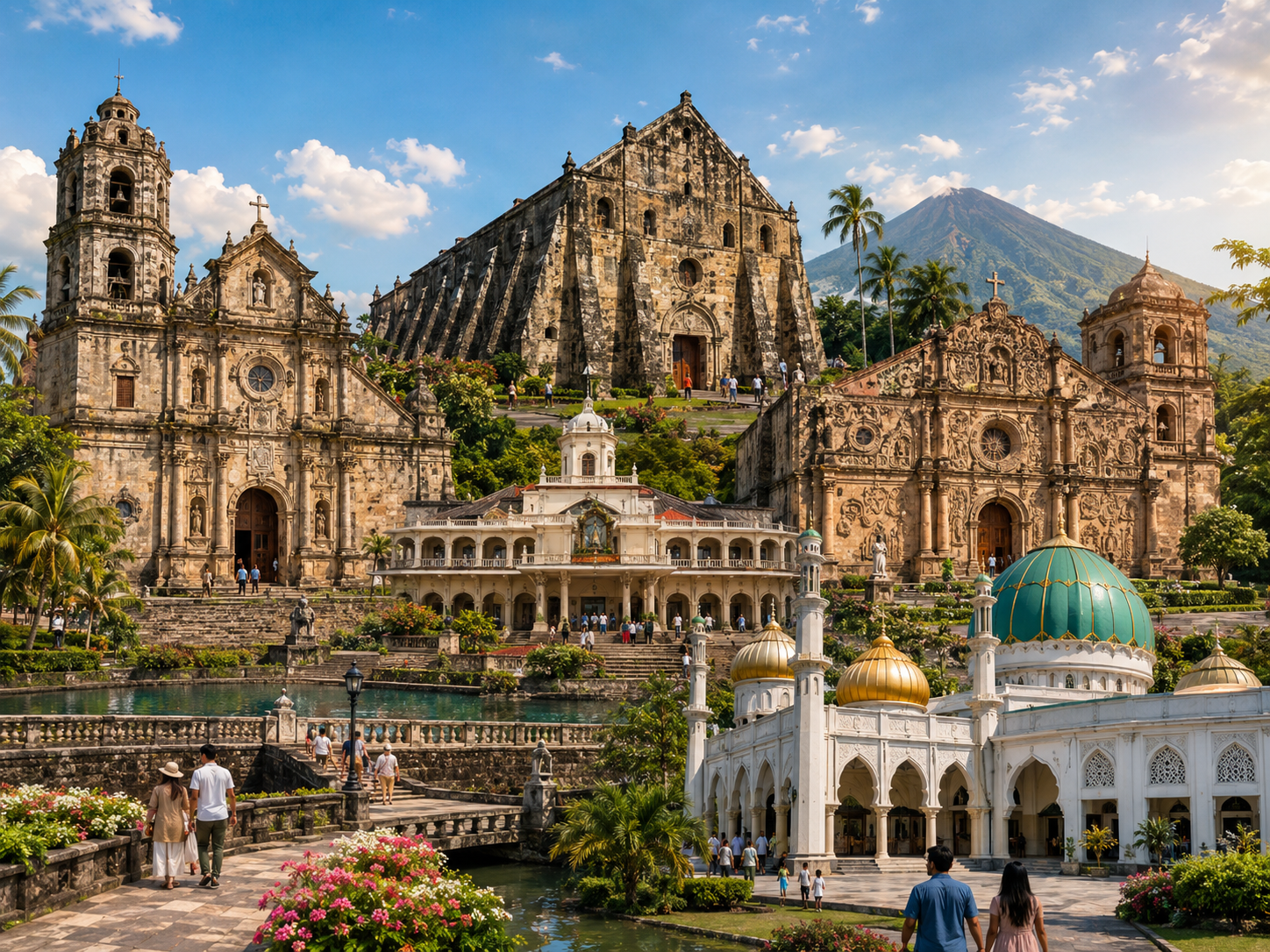
The Philippines, a nation deeply rooted in Catholicism and rich in religious heritage, is home to some of the most remarkable churches in Asia. Religious tourism in the country offers a unique glimpse into its colonial history, architectural splendor, and enduring spiritual traditions. Travelers seeking both cultural enrichment and spiritual reflection often find themselves drawn to these historic sites.
One of the most iconic destinations is San Agustin Church in Manila. Built in the late 16th century, it stands as the oldest stone church in the country. Its Baroque architecture, intricate trompe-l’oeil ceiling paintings, and ornate altar reflect centuries of devotion. The church has witnessed Spanish colonization, local revolts, and the growth of the Filipino faith, making it a treasure trove of history. San Agustin Church is also recognized as a UNESCO World Heritage Site, highlighting its global cultural importance.
In the northern region of Luzon, Paoay Church in Ilocos Norte presents a fascinating fusion of Baroque and local building techniques. Constructed with massive coral stones and bricks, its distinct buttresses were designed to withstand earthquakes, earning it the nickname “Earthquake Baroque Church.” Visitors are often mesmerized by its massive facade and the intricate carvings that decorate the interior, which narrate biblical stories and showcase centuries-old craftsmanship.
Travelers exploring the Visayas region will find Basilica Minore del Santo Niño in Cebu particularly compelling. This church houses the revered Santo Niño de Cebu statue, a relic believed to have been gifted by Ferdinand Magellan to the local queen in 1521. Pilgrims and tourists alike flock to witness its annual Sinulog Festival, which combines religious devotion with vibrant cultural celebrations. The Basilica’s centuries-old architecture, combined with its spiritual significance, makes it a central point of Filipino religious life.
Aside from these major sites, numerous smaller parish churches across the archipelago offer visitors intimate insights into local faith practices. Miagao Church in Iloilo, for example, is known for its distinct facade adorned with intricate bas-reliefs depicting native flora, fauna, and biblical scenes. The structure reflects the adaptation of European ecclesiastical design to local conditions and materials, emphasizing the creativity and resilience of early Filipino builders.
Religious tourism in the Philippines is not limited to Catholic sites alone. Places like Eid Prayer Halls in Mindanao showcase the nation’s Islamic heritage, offering travelers a broader understanding of the country’s spiritual diversity. Pilgrims and cultural enthusiasts can experience both solemn prayer rituals and the architectural beauty of mosques that have served communities for generations.
In visiting these sacred sites, travelers gain more than just photographic memories—they experience centuries of faith, devotion, and community spirit. Each church and place of worship tells a story of resilience, artistry, and the enduring human search for meaning. Exploring these locations provides a profound opportunity to appreciate the Philippines’ spiritual and cultural landscape while connecting with its rich historical narrative.
About the Author